Give us feedback!


 See all
Our philosophy is simple. We want to encourage you to dream. BIG! Then we help you plan your trip, get the most out of it while you're traveling and help you share your experience with friends.
Join Now It's FREE
Dream Packages
Duration: 11 hours
Price: $208.42
Price: $208.42
Duration: 8 days
Price: $1507.70
Price: $1507.70
Duration: 2 days
Price: $205.47
Price: $205.47
Duration: 10 hours
Price: $133.00
Price: $133.00
Dreams Still To Do
Checked-Off Dreams
Dreams Still To Do
Checked-Off Dreams
Advertisement
Explore Ancient Places & Ruins
-
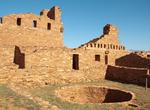
See Abó Ruins, New Mexico
The Abó Ruins are located about 9 miles west of Mountainair, at about 6,100 feet (1,859 m) above sea level. They are said to date back to the 1300s. It was a major trading station during its time. There is a visitor contact station, a 0.25 mile (0.4 km) trail through the mission ruins, and a 0.5 mile (0.8 km) trail around the unexcavated pueblo ruins. It was de... -
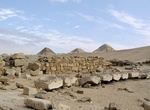
Visit Abu Gorab (Abu Ghurab), Cairo, Egypt
Abu Gorab (also known as Abu Gurab, Abu Ghurab) is a locality in Egypt situated 15 km (9.3 mi) south of Cairo, between Saqqarah and Al-Jīzah, about 1 km (0.62 mi) north of Abusir, on the edge of the desert plateau on the western bank of the Nile. The locality is best known for the solar temple of King Nyuserre Ini, the largest and best preserved solar temple, as well ... -
See Abu Mena, Egypt (UNESCO site)
Abu Mena was a town, monastery complex and Christian pilgrimage center in Late Antique Egypt, about 45 km southwest of Alexandria. Its remains were designated a World Heritage Site in 1979. There are very few standing remains, but the foundations of most major buildings, such as the great basilica, are easily discernible. Recent agricultural efforts in the area have l... -
Visit Abu Rawash Pyramid Boat Pit, Kerdasa, Egypt
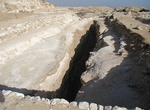
The boat pit contained red quartzite statuary fragments, including three painted heads from statues of Djedefre, one of which is believed to be the earliest known royal sphinx. -
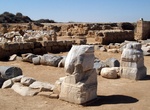
See Abu Simbel Temple, Egypt (UNESCO site)
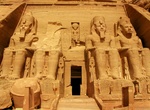
Abu Simbel temples refers to two massive rock temples in Abu Simbel in Nubia, southern Egypt on the western bank of Lake Nasser about 230 km southwest of Aswan (about 300 km by road). The complex is part of the UNESCO World Heritage Site known as the "Nubian Monuments," which run from Abu Simbel downriver to Philae (near Aswan). The twin temples were originally c... -
Visit Abusir, Egypt
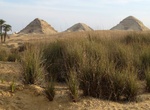
Abusir is the name given to an Egyptian archaeological locality – specifically, an extensive necropolis of the Old Kingdom period, together with later additions – in the vicinity of the modern capital Cairo. The name is also that of a neighbouring village in the Nile Valley, whence the site takes its name. Abusir is located several kilometres north of Saqq... -
Visit Acanceh, Mexico
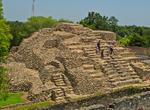
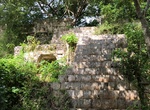
Acanceh is an ancient Maya archaeological site located in Mexico's Yucatán state. The modern town of Acanceh, where the ruins are located, is 21 kilometers from Mérida, the capital of Yucatán. Acanceh means "groan of the deer" in the Yucatec Maya language. Acanceh was founded sometime between 200 and 300, during the Early Classic period. The ancie... -
See Acanmul, Campeche, Mexico
Acanmul is a Maya archaeological site in the Mexican state of Campeche. It is located 25 km (16 mi) northeast of Campeche city. -
Visit Acre Hospitaller Refectory, Acre (Akko), Israel
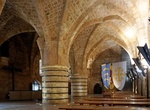
Under the citadel and prison of Acre, archaeological excavations revealed a complex of halls, which was built and used by the Knights Hospitaller. This complex was a part of the Hospitallers' citadel, which was included in the northern defences of Acre. The complex includes six semi-joined halls, one recently excavated large hall, a dungeon, a refectory (dining room) ... -
See Acropolis of Lindos, Rhodes, Greece
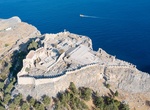
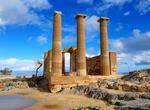
Lindos is an archaeological site, a town and a former municipality on the island of Rhodes, in the Dodecanese, Greece. Since the 2011 local government reform it is part of the municipality Rhodes, of which it is a municipal unit. It lies on the east coast of the island. It is about 55 km south of the town of Rhodes and its fine beaches make it a popular tourist and ho... -
Visit Acropolis of Pergamon, Turkey (UNESCO Site)
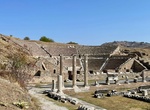
Pergamon was an ancient Greek city in modern-day Turkey, in Aeolis, today located 16 miles (26 km) from the Aegean Sea on a promontory on the north side of the river Caicus (modern day Bakırçay), that became the capital of the Kingdom of Pergamon during the Hellenistic period, under the Attalid dynasty, 281–133 BC. Pergamon is cited in the book of Revelat... -
Visit Acropolis of Rhodes, Greece
The Acropolis of Rhodes is an acropolis dating from the Hellenistic period (3rd–2nd century BC) 3 kilometers from the centre of Rhodes, in the island with the same name, Greece. The partially reconstructed part of the site consists of the "Temple of Apollo" (also, as alternatives Athena Polias and Zeus Polieus) below which is a stadium and a small theatre. It... -
Visit Adullam-France Park & Shu'a Caves, Israel
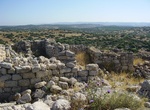
Adullam-France Park, also known as Parc dé France-Adoulam, is a sprawling park of 50,000 dunams (50 km2; 19 sq mi)(ca. 12,350 acres) in the Central District of Israel, located south of Beit Shemesh. The park, established in 2008 for public recreation, features two major hiking and biking trails, and four major archaeological sites from the Second Temple period.... -
Explore Aggersborg, Denmark
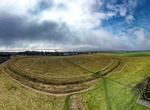
Aggersborg is the largest of Denmark's former Viking ring fortress, and one of the largest archaeological sites in Denmark. It is located near Aggersund on the north side of the Limfjord. It consists of a circular rampart surrounded by a ditch. Four main roads arranged in a cross connects the fortress center with the rampart's outer ring. The roads were tunneled under... -
Visit Ahu Akahanga, Easter Island, Chile
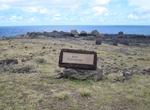
The tomb of the island's first king, with carved statues at the remains of an ancient settlement.
Price: $141.03