Give us feedback!


 See all
Our philosophy is simple. We want to encourage you to dream. BIG! Then we help you plan your trip, get the most out of it while you're traveling and help you share your experience with friends.
Join Now It's FREE
Dream Packages
Duration: 10 hours
Price: $133.00
Price: $133.00
Duration: 2 hours 30 minutes
Price: $126.15
Price: $126.15
Duration: 6 hours
Price: $106.95
Price: $106.95
Duration: 2 hours
Price: $69.67
Price: $69.67
Dreams Still To Do
Checked-Off Dreams
Dreams Still To Do
Checked-Off Dreams
Advertisement
Explore Architecture
-
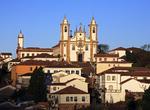
Visit Ouro Preto, Brazil (UNESCO site)
Ouro Preto (from Portuguese, Black Gold) is a city in the state of Minas Gerais, Brazil, a former colonial mining town located in the Serra do Espinhaço mountains and designated a World Heritage Site by UNESCO because of its outstanding Baroque architecture. Founded at the end of the 17th century, Ouro Preto (meaning Black Gold) was originally called Vila Rica,... -
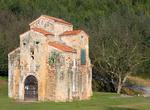
Visit Oviedo, Spain (UNESCO sites)
Oviedo is a cathedral city, capital of Principality of Asturias, in Northern Spain. It has an interesting old town with various monuments listed on the UNESCO World Heritage List. The best way to get around is by walking. Most of the center of the city can only be visited that way, because little motor traffic is allowed. Where traffic is possible, be prepared for jam... -
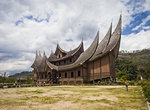
Visit Pagaruyung Palace, Sumatra, Indonesia
Pagaruyung Palace is the istana (royal palace) of the former Pagaruyung Kingdom, located in Tanjung Emas subdistrict near Batusangkar town, Tanah Datar Regency, West Sumatra, Indonesia. It was built in the traditional Minangkabau Rumah Gadang vernacular architectural style, but had a number of atypical elements including a three-story structure and a larger dimension ... -
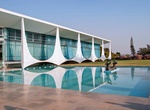
See Palácio da Alvorada, Brasília, Brazil
The Palácio da Alvorada (Portuguese pronunciation: [paˈlasju da awvoˈɾadɐ]) is the official residence of the President of Brazil. It is located in the national capital of Brasília, on a peninsula at the margins of Paranoá Lake. The building was designed by Oscar Niemeyer and built between 1957 and 1958 in the modernist style. It has been the resid... -
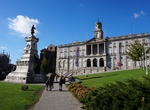
Visit Palácio da Bolsa, Porto, Portugal
Palácio da Bolsa is a historical building in Porto, Portugal. The palace was built in the 19th century by the city's Commercial Association (Portuguese: Associação Comercial do Porto) in Neoclassical style. It is located in the Infante D. Henrique Square in the historical centre of Porto, designated World Heritage Site by UNESCO. The Palác... -
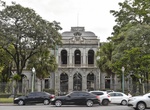
Visit Palácio da Liberdade, Minas Gerais, Brazil
Palácio da Liberdade is a building in Belo Horizonte, Brazil, which was for several years the office of the government of Minas Gerais state. It was built in 1897. In the 1950s the Governor Juscelino Kubitschek started building his new residence, the Palácio das Mangabeiras. Nowadays, the Palácio da Liberdade is part of the Circuito Cultural da Pr... -
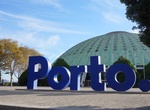
Visit Palácio de Cristal, Porto, Portugal
Palácio de Cristal was a building that existed in the former field of the Torre da Marca , in the parish of Massarelos, in the city of Porto, Portugal . Inaugurated in 1865 , the original Crystal Palace was eventually demolished in 1951 to make way for the Sports Pavilion , today the Rosa Mota Pavilion. The Crystal Palace, by the English architect Thomas Dillen... -
Visit Palacio de Minería, Mexico City
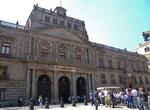
The Palace of Mining, also Palace of Mines, in Mexico City is one of the masterpieces of Neoclassical architecture in the Americas. It was designed and built between 1797 and 1813 by Valencian Spanish sculptor and architect Manuel Tolsá. It was built to house the Royal School of Mines and Mining of the Royal Court at the request of its director, Fausto Elhuyar,... -
See Palau de la Música Catalana, Barcelona, Spain (UNESCO site)
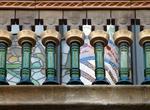
The Palau de la Música Catalana (Palace of Catalan Music) is a concert hall in Barcelona. Designed in the Catalanmodernista style by the architect Lluís Domènech i Montaner, it was built between 1905 and 1908 for the Orfeó Català, a choral society founded in 1891 that was a leading force in the Catalan cultural movement that came to ... -
Visit Palau de les Arts Reina Sofia, Valencia, Spain
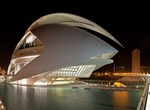
Palau de les Arts Reina Sofia ("Reina (Queen) Sofía Palace of the Arts") is an opera house and cultural centre in Valencia, Spain. It opened on 8 October 2005; its first opera staging was of Beethoven'sFidelioon 25 October 2006. Tenor and conductor Plácido Domingo has maintained a special relationship with the Palau since its founding and has established... -
See Palau Güell, Barcelona, Spain (UNESCO site)
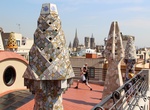
The Palau Güell is a mansion in Barcelona, Catalonia, Spain designed by the Catalan architect Antoni Gaudí for the Catalan industrial tycoon Eusebi Güell. It is part of the UNESCO World Heritage Site "Works of Antoni Gaudí". The home is centered on a main room for entertaining high society guests. Guests entered the home in horse drawn carriage... -
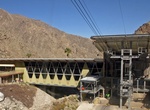
See Palm Springs Aerial Tramway Stations, Palm Springs, California
Both tramway stations were designed by notable mid-century architects. The Valley Station, finished in 1963, was designed by Albert Frey and Robson C. Chambers. The Mountain Station, built in 1961, was designed by architect E. Stewart Williams. -
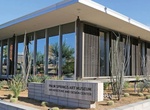
Visit Palm Springs Art Museum Architecture and Design Center, California
Palm Springs Art Museum Architecture and Design Center buiding itself is an architecture landmark recieving Class 1 Historic Site protective status with floor-to-ceiling windows that perfectly frame the cityscape and the surrounding San Jacinto Mountains Palm Springs Art Museum, which recently celebrated its 75th anniversary, holds major collections of modern and cont... -
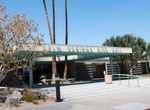
See Palm Springs City Hall, California
Theis Albert Frey design is another Palm Springs architectural gem was built in 1952 and is a must-see for your self-guided tour of Palm Springs modern architecture. -
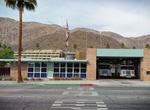
See Palm Springs Fire Station #1, California
Palm Spring's Fire Station No.1 was designed by Albert Frey and built in 1957. This fire station is associated with the development of the commercial core and serves as an example of a post-war, modern civic building. The tones of the unpainted block and corrugated metal fascias are complementary to the desert. A unique feature is the flagpole design, which pierces th...
Price: $67.70