Give us feedback!


 See all
Our philosophy is simple. We want to encourage you to dream. BIG! Then we help you plan your trip, get the most out of it while you're traveling and help you share your experience with friends.
Join Now It's FREE
Dream Packages
Duration: 5 days
Price: $726.42
Price: $726.42
Duration: 4 hours
Price: $78.00
Price: $78.00
Duration: 8 hours
Price: $82.76
Price: $82.76
Duration: 3 hours
Price: $30.00
Price: $30.00
Dreams Still To Do
Checked-Off Dreams
Dreams Still To Do
Checked-Off Dreams
Advertisement
Explore Arts & Culture
-
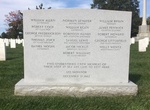
See USS Monitor Memorial. Gravesite, Arlington National Cemetery, Virginia
In Section 46 of Arlington National Cemetery, there stands a simple monument engraved with sixteen names. Beneath this unassuming stone marker lie two unknown sailors from the Civil War ironclad ship, Monitor—which sank in a gale off Cape Hatteras, North Carolina on New Year’s Eve, 1862. The two unknown sailors’ journey from the Monitor wreck site to... -
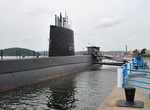
Visit USS Nautilus (SSN-571), Groton, Connecticut
USS Nautilus (SSN-571) was the world's first operational nuclear-powered submarine. The vessel was the first submarine to complete a submerged transit of the North Pole on 3 August 1958. Sharing names with Captain Nemo's fictional submarine in Jules Verne's Twenty Thousand Leagues Under the Sea, and named after another USS Nautilus (SS-168) that served with distinctio... -
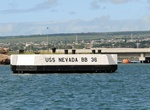
See USS Nevada (BB-36) Mooring Quay, Pearl Harbor, Hawaii
USS Nevada (BB-36), the second United States Navy ship to be named after the 36th state, was the lead ship of the twoNevada-class battleships. Launched in 1914,Nevadawas a leap forward in dreadnought technology; four of her new features would be included on almost every subsequent US battleship: triple gun turrets,[c] oil in place of coal for fuel, geared steam turbin... -
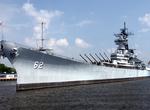
Visit USS New Jersey (BB-62), Camden, New Jersey
USS New Jersey ("Big J" or "Black Dragon") is an Iowa-class battleship, and was the second ship of the United States Navy to be named in honor of the U.S. state of New Jersey. New Jersey earned more battle stars for combat actions than the other three completed Iowa-class battleships, and is the only U.S. battleship to provide gunfire support during the Vietnam War. D... -
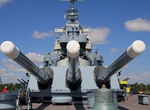
Visit USS North Carolina (BB-55), Wilmington, North Carolina
USS North Carolina (BB-55) was the lead ship of North Carolina-class battleships and the fourth warship in the U.S. Navy to be named for the State of North Carolina. She was the first newly constructed American battleship to enter service during World War II, and took part in every major naval offensive in the Pacific Theater of Operations; her 15 battle stars made he... -
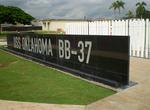
Visit USS Oklahoma (BB-37) Memorial, Pearl Harbor, Hawaii
USS Oklahoma (BB-37), the only ship of the United States Navy to ever be named for the 46th state, was a World War I-era battleship and the second of two ships in her class; her sister ship was Nevada. She, along with her sister, were the first two U.S. warships to use oil fuel instead of coal. Commissioned in 1916, Oklahoma served in World War I as a member of BatDiv... -
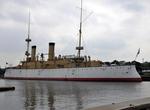
Visit USS Olympia (C-6), Philadelphia, Pennsylvania
USS Olympia (C-6) is a protected cruiser that saw service in the United States Navy from her commissioning in 1895 until 1922. This vessel became famous as the flagship of Commodore George Dewey at the Battle of Manila Bay during the Spanish-American War in 1898. The ship was decommissioned after returning to the U.S. in 1899, but was returned to active service in 190... -
Attend U.S. Space Camp, Huntsville, Alabama
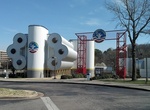
U.S. Space Camp is a camp and related programs owned and operated by the Alabama Space Science Exhibit Commission's U.S. Space & Rocket Center in Huntsville, Alabama. The camp provides residential and educational programs for children and adults. These programs include space oriented camp programs, aircraft themed Aviation Challenge camps, and robotics themed prog... -
Visit U.S. Space & Rocket Center (Marshall Space Flight Center), Huntsville, Alabama
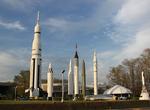
The U.S. Space & Rocket Center in Huntsville, Alabama is a museum operated by the government of Alabama, showcasing rockets, achievements, and artifacts of the U.S. space program. Sometimes billed as "Earth's largest space museum", astronaut Owen Garriott described the place as, "a great way to learn about space in a town that has embraced the space program from t... -
Visit USS Pampanito (SS-383), San Francisco, California
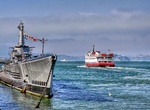
USS Pampanito (SS-383), aBalao-class submarine, was a United States Navy ship, the third one named for the pompano fish. She completed six war patrols from 1944 to 1945 and served as a Naval Reserve Training ship from 1960 to 1971. She is now a National Historic Landmark, preserved as a memorial and museum ship in the San Francisco Maritime National Park Association l... -
Visit USS Peary (DD-226) Memorial, Darwin, Northern Territory, Australia
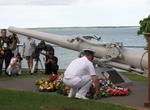
was aClemson-class destroyer of the United States Navy. She was commissioned in 1920 and sunk by Japanese aircraft at Darwin, Northern Territory, Australia, on 19 February 1942. Pearywas laid down by William Cramp & Sons of Philadelphia on 9 September 1919. The destroyer was launched on 6 April 1920, sponsored by Mrs. Edward Stafford daughter of Admiral Peary. The... -
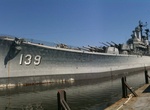
See USS Salem (CA-139), Quincy, Massachusetts
The third USS Salem (CA-139) is a Des Moines-class heavy cruiser, formerly commissioned in the United States Navy. She was the world's last all-gun heavy cruiser to enter commission, and is open to the public as a museum ship in Quincy, Massachusetts. In October 1994, Salem was returned to her birthplace in Quincy, Massachusetts where she is now a museum ship as part ... -
Visit USS San Diego Memorial, San Diego, California
The USS San Diego was the second most decorated military ship of World War II. The USS San Diego was a light cruiser that received 18 battle stars during World War II, more than any other ship except the famous aircraft carrier Enterprise. The ship engaged with the enemy on 34 different occasions, in battles throughout the Pacific, and never lost a single sailor durin... -
Visit USS San Francisco Memorial, San Francisco, California
WWII memorial crafted out of pieces of the USS San Francisco & dedicated to its servicemen. -
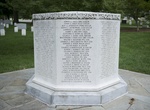
Visit USS Serpens (AK-97) Memorial, Arlington National Cemetery, Virginia
The destruction of the USS Serpens (AK-97) is the largest single disaster in the history of the United States Coast Guard. Named after the Serpens constellation, the USS Serpens was a cargo ship commissioned in May 1943. On the night of January 29, 1945, the 14,250-ton freighter was anchored off Lunga Beach, Guadalcanal in the British Solomon Islands, carrying ammunit...
Price: $159.98