Give us feedback!


 See all
Our philosophy is simple. We want to encourage you to dream. BIG! Then we help you plan your trip, get the most out of it while you're traveling and help you share your experience with friends.
Join Now It's FREE
Dream Packages
Duration: 13 hours
Price: $250.88
Price: $250.88
Duration: 13 hours
Price: $227.54
Price: $227.54
Duration: 2 days
Price: $350.00
Price: $350.00
Duration: 3 days
Price: $958.15
Price: $958.15
Dreams Still To Do
Checked-Off Dreams
Dreams Still To Do
Checked-Off Dreams
Advertisement
Explore Caves
-
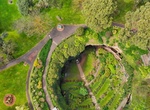
Explore Cave Gardens, SA, Australia
Cave Gardens are the garden located in the centre of Mount Gambier in the Australian state of South Australia that contain a 90-ft-deep cave. The cave was initially used as a water source for the town. In 1870 the area became a reserve, and by the 1890s trees, gas lamps and seating were installed in the area. On 2 August 2001, the Cave Gardens were declared a State He... -
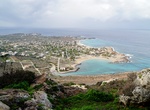
Hike to Cave Lera, Stavroa, Crete, Greece
Cave Lera (or Pan) is on the west slops of mount Vardies, 70 meteres above the lagoonof Stavros. The cave took its name after the chieftain of Cape Akrotiri, Stephanos Leras, who was hiding around the area between 1821 and 1833. -
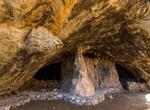
Visit Cave of Agios Ioannis (Saint John), Irakleia Island, Greece
The biggest caves in the Cyclades are located on Irakleia. There are two caves, one seems big and it's "only" a cave, the other seems a little hole, but you can access inside, and this is the cave you want to visit. Bring cold water and a torch!! It has impressive stalagmites and stalactites. Legend says, that from the stones that Polyphemus threw to Ulysses, rose the... -
Visit Cave of Altamira, Spain (UNESCO site)
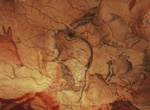
The Cave of Altamira (/ˌæltəˈmɪərə/AL-tə-MEER-ə; Spanish:Cueva de Altamira[ˈkweβa ðe altaˈmiɾa]) is a cave complex, located near the historic town of Santillana del Mar in Cantabria, Spain. It is renowned for prehistoric cave art featuring charcoal drawings and polychrome paintings of contemporary local fauna and human hands. The earliest paintings were... -
Visit Cave of Altamira & Paleolithic Cave Art of Northern Spain, Spain (UNESCO site)
Cave of Altamira and Paleolithic Cave Art of Northern Spain is the name under which are grouped 18 caves located in different regions of northern Spain to represent the apogee of Paleolithic cave art developed in Europe between 35,000 and 11,000 D.C. Chief among these caves is the Cave of Altamira, located within the town of Santillana del Mar in Cantabria. It remains... -
Visit Cave of Altxerri, Gipuzkoa, Spain (UNESCO site)
The Cave of Altxerri (in Spanish "Cueva de Altxerri", and in Basque Altxerriko leizea or Altxerriko koba) is located in the municipality of Aya (Gipuzkoa) in the Basque Country (Spain). The original grotto preserves rock paintings and engravings which have been dated from the end of the Upper Magdalenian period, within the Upper Paleolithic; the pictures situated in a... -
Visit Cave Of Antiparos, Antiparos Island, Greece
In the center of the island is the cave of Antiparos, one of the most beautiful and mysterious caves in the world. The cave has been used as a natural shelter from the Neolithic period onwards. The area was also used for pottery, and for the worship of the goddess Artemis, while at the entrance to the site is the church of Agios Ioannis Spiliotis. The cave is very ex... -
Visit Cave of Chufín, Spain (UNESCO site)
The cave of Chufín is located in the town of Riclones in Rionansa (Cantabria), Spain. Situated at the confluence of the Lamasón and Nansa rivers, several caves ornamented with rock art pock the steep slopes above the water. Chufín is one of the caves included in UNESCO’s list of World Heritage sites under the entry Cave of Altamira and Paleo... -
Visit Cave of Ispica, Sicily
The Cava Ispica (Cave of Ispica) consists of a series of housing units carved in rocky formations. Built prior to the Greek colonization, these houses were used until the end of the nineteenth century. This cave, the most important in Eastern Sicily, is 13 kilometres (8 mi) long and is divided among two other comunes, Modica and Rosolini. -
Explore Cave of Maltravieso, Extremadura, Spain
The Cave of Maltravieso in Cáceres, Extremadura, Spain, was discovered in 1951. It shows traces of human occupation from the Middle Paleolithic. It contains cave art, most notably a total of 71 hand stencils, enumerated in the 1990s using ultraviolet photography, but also linear designs and some animal paintings. In a 2018 study based on uranium-thorium dating,... -
Visit Cave of Pëllumbas, Albania
The Cave of Pëllumbas (Albanian:Shpella e Pëllumbasit or Shpella e Zezë) is a karst cave in central Albania, located in the Skorana Gorge close to the village of Pëllumbas in Tirana County. It lies about 500 m (1,600 ft) above the Adriatic, on the slopes of Dajti, a mountain chain that rises to an elevation of 1,613 m (5,292 ft). The cave has a len... -
Visit Cave of Philoctetes (Cave of Filoktitis), Lemnos Island, Greece
The cave of Philoctetes is situated near the sanctuary of Kaviria. The cave where Philoctetes lived is located under the archaeological site of Kaviria and visitors can go by boat or on foot. -
Visit Cave of Predjama Castle, Slovenia
A vertical natural shaft, which Erasmus ordered to be enlarged, leads out of the original castle, and leads to the exit located at the top of the cliff, 25 meters away from the cliff's edge. This shaft allowed Erasmus to secretly supply the castle with food in the time of the siege; he also used it to continue with his robberies. -
Visit Cave of Santo Hermano Pedro, Tenerife Island, Canary Islands
The Cave-Shrine of Santo Hermano Pedro, is a Roman Catholic cave-shrine dedicated to Saint Peter of Saint Joseph Betancur (Canary first saint). It is located in the municipality of Granadilla de Abona, near El Medano on the south of the island of Tenerife (Canary Islands, Spain), at the end of the Tenerife South Airport runway. This cave is considered one of the most... -
BASE Jump or Rappel Cave of Swallows, Mexico
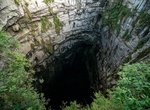
So maybe you’ve made a few BASE jumps in your extreme sports pursuits but did you ever dream of jumping into a cave? Imagine the thrill of free falling the length of the Chrysler Building down into this pit in the earth’s crust located in the rain forest near San Luis Potosi in central Mexico. BASE jumping enthusiasts lucky enough to have made this trek ha...

Price: $334.68