Give us feedback!


 See all
Our philosophy is simple. We want to encourage you to dream. BIG! Then we help you plan your trip, get the most out of it while you're traveling and help you share your experience with friends.
Join Now It's FREE
Dream Packages
Duration: 13 hours
Price: $250.88
Price: $250.88
Duration: 2 days
Price: $849.47
Price: $849.47
Duration: 13 hours
Price: $227.54
Price: $227.54
Duration: 2 days
Price: $350.00
Price: $350.00
Dreams Still To Do
Checked-Off Dreams
Dreams Still To Do
Checked-Off Dreams
Advertisement
Explore Caves
-
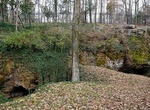
Explore Shannon Cave, Ireland & Northern Ireland
Shannon Cave is an active stream passage cave situated in County Fermanagh, Northern Ireland and County Cavan in the Republic of Ireland. At 130 metres (430 ft) vertical depth, it stands joint 6th with Poulnagree in County Clare in the deepest caves of Ireland. The cave is recorded at 5.4 kilometres (3.4 mi) in length (making it 6th longest on the island of Ireland), ... -
Visit Shapur Cave, Iran (UNESCO Site)
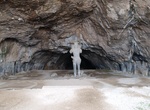
Shapur cave/ Shapour cave is located in the Zagros Mountains, in southern Iran, about 6 km from the ancient city of Bishapur. This cave is near Kazerun in Chogan valley, which was the site of polo (Persiančōgānچُوگان), in the Sasanian period. In the cave, on the fourth of five terraces, stands the colossal statue of Shapur I, the second ruler of the Sasanid Empire. Th... -
Visit Shell Grotto, Margate, England
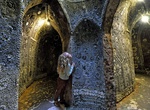
The Shell Grotto is an ornate subterranean passageway shell grotto in Margate, Kent. Almost all the surface area of the walls and roof is covered in mosaics created entirely of seashells, totalling about 190sq metres of mosaic, or 4.6 million shells. It was discovered in 1835 but its age and purpose remain unknown. The Grotto is a Grade I listed building and is o... -
Explore Shelta Cave, Huntsville, Madison County, Alabama
Shelta Cave is a 2,500-foot-long (760 m) cave and lake located in Huntsville, Madison County, Alabama, United States. It is described as one of the most bio-diverse caves within the Appalachian Mountains. The cave is currently owned and managed as a nature preserve by the National Speleological Society, with their main offices directly above the cave. It was declared ... -
Explore Shenandoah Caverns, Virginia
Shenandoah Caverns is a commercial show cave in the Shenandoah Valley of Virginia. Shenandoah Caverns is the only cavern in Virginia that has elevator access. The cavern tour can be up to 80% accessible to visitors who use wheelchairs or have other accessibility needs. The word Shenandoah has an uncertain Native American origin and meaning. One meaning is said to be "... -
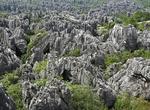
Explore Shilin Karst (Stone Forest), China (UNESCO site)
The South China Karst, a UNESCO World Heritage Site since June 2007, spans China's southern provinces of Guangxi, Guizhou, and Yunnan. The region of south China is particularly noted for its karst features and landscapes as well as rich biodiversity. The site comprises three clusters: Libo Karst, Shilin Karst and Wulong Karst. UNESCO describes the South China Karst as... -
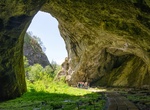
Visit Shulgan-Tash Cave, Bashkortostan, Russia (UNESCO Site)
Shulgan-Tash Cave (Bashkir: Шүлгәнташ, romanized: Şülgəntaş), also known as Kapova Cave (Russian: Капова пещера, romanized: Kapova peshchera), is a limestone karst cave in the Burzyansky District of Bashkortostan, Russia. It is located in the southern Ural Mountains, on the Belaya River in the Shulgan-Tash Nature Reserve, approximately 200 km (120 mi) south-east ... -
Visit Sibudu Cave, KwaZulu-Natal, South Africa
Sibudu Cave is a rock shelter in a sandstone cliff in northern KwaZulu-Natal, South Africa. It is an important Middle Stone Age site occupied, with some gaps, from 77000 years ago to 38000 years ago. Evidence of some of the earliest examples of modern human technology has been found in the shelter (although the earliest known spears date back 400000 years). The eviden... -
Hike to Sibyl's Cave (Grotta della Sibilla), Montemonaco, Marche, Italy
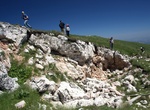
Sibyl's Cave (Grotta della Sibilla) is a cave, located at 2,150 m above sea level, carved into the rock, near the summit of Sibillini Mountains in the municipality of Montemonaco, reachable only on foot. There, above the peaks of the wild Apennines, Between the steep cliffs a cave appears; The sirens keep watch over that lighthouse, The songs tremble and make one deli... -
Explore Siju Cave, India
Siju Cave, also known as Bat Cave, is located in the North East Indian state of Meghalaya near the Napak Lake and Simsang River game reserve. It is a limestone cave, and is famous for its stalagmites and stalactites. The Siju cave-system is more than 4 kilometres long, but nearly all of it is filled with water and inaccessible. The limestone hills of Meghalaya, receiv... -
Explore Silica Ice Cave, Slovakia (UNESCO site)
Silica Ice Cave is among 12 caves of the Slovak Karst and is located in the southern part of Slovakia, southwest of the village of Silica. -
Explore Sima de las Cotorras, Chiapas, Mexico
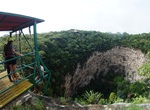
Sima de las Cotorras (in English: Sinkhole of the Parrots/Parakeets) is a sinkhole located in the El Ocote Biosphere Reserve in western Chiapas, southern Mexico. It is one of a number of sinkholes in the area, all produced by tectonic and erosive processes on the region's limestone. Although not the largest and deepest of the area's sinkholes, it is best known because... -
Dive Sistema Dos Ojos Cenotes, Yucatán, Mexico
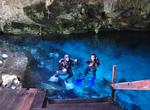
Dos Ojos (from Spanish meaning "Two Eyes"; officially Sistema Dos Ojos) is a flooded cave system located north of Tulum, on the Caribbean coast of the Yucatán Peninsula, in the state of Quintana Roo, Mexico. The exploration of Dos Ojos began in 1987 and still continues. The surveyed extent of the cave system is 81.9 kilometres / 50.9 miles and there are 28 know... -
Dive Sistema Naranjal (Cenote Naharon & Cenote Mayan Blue), Yucatán, Mexico
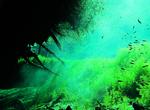
Sistema Naranjal in Yucatán, Mexico includes Cenote Naharon and Cenote Mayan Blue. Sistema Naranjal is most likely part of the much larger Sistema Ox Bel Ha, the world’s largest underwater cave. Cenote Naharon (“the dark cave") is different from other caves in the area with most of its walls and formations are stained a deep black. Cenote Mayan Bl... -
Dive Sistema Nohoch Nah Chich (Casa Cenote, Cenote Manati), Yucatán, Mexico
Sistema Nohoch Nah Chich (from Spanish and Yucatec Maya meaning "Giant Birdcage System") is an extensive water filled cave system connected with the Caribbean Sea via a coastal spring called a variety of names, including Casa Cenote for the restaurant located nearby, but also Cenote Manati, or Cenote Tankah. The explored cave system extends to approximately 8 kilomete...
Price: $618.62