Give us feedback!

Our philosophy is simple. We want to encourage you to dream. BIG! Then we help you plan your trip, get the most out of it while you're traveling and help you share your experience with friends.
Join Now It's FREE
Related Categories
Dreams Still To Do
Checked-Off Dreams
Dreams Still To Do
Checked-Off Dreams
Advertisement
Explore Extreme Foods
-
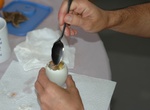
Eat Balut Eggs
A balut or balot is a developing duck embryo that is boiled alive and eaten in the shell. It is commonly sold as streetfood in the Philippines. They are common food in countries in Southeast Asia, such as Laos, Cambodia and Vietnam. They are often served with beer. The Tagalog and Malay wordbalut (balot) means "wrapped". In the Philippines, balut eaters prefer salt an... -
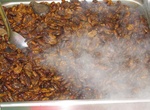
Eat Beondegi
Beondegi are a popular snack food in Korean cuisine. Literally meaning "chrysalis" or "pupa" in Korean, Beondegi are steamed or boiled silkworm pupae which are seasoned and eaten as a snack. Beondegi are often served by street vendors in little Dixie cups, as well as in restaurants and drinking establishments. They are also sold in cans in grocery stores and convenien... -
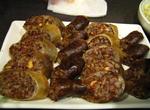
Try Black Pudding
Black pudding, blood pudding or blood sausage is a type of sausage made by cooking blood or dried blood with a filler until it is thick enough to congeal when cooled. The dish exists in various cultures from Asia to Europe and the Americas. Pig, cattle, sheep, duck and goat blood can be used depending on different countries. In Europe and the Americas, typical fillers... -
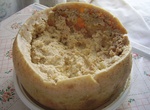
Eat Casu Marzu (Maggot Cheese)
Casu marzu (also called maggot cheese, casu modde, casu cundídu, casu fràzigu in Sardinian language, or in Italian formaggio marcio, "rotten cheese") is a traditional Sardinian sheep milk cheese, notable for containing live insect larvae. Although found mostly in Sardinia, Italy, the cheese is also found in Corsica, France (former Italian island until 17... -
Eat Century Egg
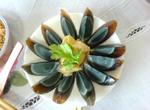
Century egg or pidan, also known as preserved egg, hundred-year egg, thousand-year egg, thousand-year-old egg, and millennium egg, is a Chinese cuisine ingredient made by preserving duck, chicken or quail eggs in a mixture of clay, ash, salt, lime, and rice hulls for fifty to one hundred years. Cheaper production methods may call for only periods of several weeks to s... -
Eat Deep Fried Tarantula
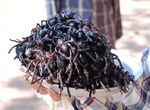
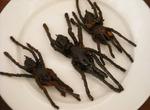
Fried spider is a regional delicacy in Cambodia. In the Cambodian town of Skuon (Cheung Prey, Kampong Cham Province), the vending of fried spiders as a specialty snack is a popular attraction for tourists passing through this town. Spiders are also available elsewhere in Cambodia — in Phnom Penh for instance — but Skuon, a market town on the highway 75 kil... -
Try Fried Scorpion
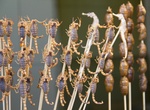
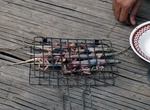
Fried scorpion is a traditional dish from Shandong, China. It is surprisingly tasty; salty, crispy, and similar to chicharrón. -
Eat Fried Spider
Fried spider is a regional delicacy in Cambodia. In the Cambodian town of Skuon (Cheung Prey, Kampong Cham Province), the vending of fried spiders as a specialty snack is a popular attraction for tourists passing through this town. Spiders are also available elsewhere in Cambodia — in Phnom Penh for instance — but Skuon, a market town on the highway 75 kil... -
Attend Hokitika Wildfoods Festival, New Zealand
The Hokitika Wildfoods Festival is an annual event held in Hokitika, New Zealand. The main attraction of the event is food stalls offering items not normally consumed on a regular basis. Join 20,000 other festival goers in March and try out some culinary goodies including, Escargot, earthworms, mountain oysters, huhu grubs, whisky sausages, possum, and deep-fried... -
Try Huhu Grub
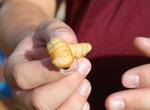
The huhu beetle, Prionoplus reticularisis the largest endemic beetle found in New Zealand. The Māori consider the huhu grub delicacy. But most others may have tried it as a dare during a wild food festival. It is said to have the taste and consistency of peanut butter. -
Try Iguana Meat
Iguana meat has historically been important in the culinary traditions of Mexico and Central America; particularly in the states of Jalisco, Michoacán and Colima. In Fray Sahagún's history of colonial Mexico, he mentions the iguana as a traditional food throughout Western Mexico and describes it as good to eat when properly prepared. Iguana meat is curre... -
Try Jellied Eels
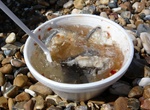
Jellied eels are a traditional English dish that originated in the 18th century, primarily in the East End of London. The dish consists of chopped eels boiled in a spiced stock that is allowed to cool and set, forming a jelly. It is eaten cold. The eel was a cheap, nutritious and readily available food source for the people of London; European eels were once so common... -
Eat Odori Ebi
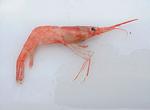
Odori Ebi is a delicacy of Sashimi. It is translated as living or dancing shrimp. The sushi contains baby shrimp (Pandalus borealis) still alive and able to still move its legs and antenna while being eaten. The meal is prepared quickly to keep the shrimp still alive, usually dunked into sake in order to intoxicate the shrimp. The person eating the shrimp would usuall... -
Eat Rocky Mountain Oysters
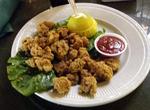
Rocky Mountain oysters are bull calf testicles used as food. They are often deep-fried after being peeled, coated in flour, pepper and salt, and sometimes pounded flat. This delicacy is most often served as an appetizer with a cocktail sauce dip. It is a well-known novelty dish in parts of the American West and Western Canada where cattle ranching is prevalent and cas... -
Eat Sannakji
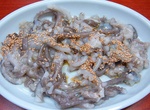
Sannakji or sannakji hoe is a variety of hoe, or raw dish, in Korean cuisine. It consists of livenakji (a small octopus) that has been cut into small pieces and served immediately, usually lightly seasoned with sesame and sesame oil. The nakji pieces are usually still squirming on the plate. It can also be served whole. Because the suction cups on the arm pieces are s...