Give us feedback!


 See all
Our philosophy is simple. We want to encourage you to dream. BIG! Then we help you plan your trip, get the most out of it while you're traveling and help you share your experience with friends.
Join Now It's FREE
Dream Packages
Duration: 3 days
Price: $707.56
Price: $707.56
Duration: 8 days
Price: $1507.70
Price: $1507.70
Duration: 4 days
Price: $643.58
Price: $643.58
Duration: 4 days
Price: $772.57
Price: $772.57
Dreams Still To Do
Checked-Off Dreams
Dreams Still To Do
Checked-Off Dreams
Advertisement
Explore Historical Buildings
-
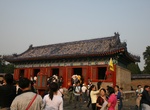
Visit Temple of Agriculture, Beijing, China
Temple of Agriculture or Altar of Agriculture is a historic site in Xuanwu District of Beijing, China, and located near the Temple of Heaven. The Temple of Agriculture was built in the 15th century. It was used by Ming and Qing emperors to perform sacrifices. The temple's Jufu Hall was included in the 1998 World Monuments Watch by the World Monuments Fund (WMF) when i... -
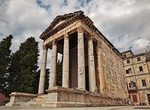
See Temple of Augustus, Pula, Croatia
The Temple of Augustus (Croatian:Augustov hram; Italian:Tempio di Augusto)[a] is a well-preserved Roman temple in the city of Pula, Croatia (known in Roman times asPietas Iulia). Dedicated to the first Roman emperor, Augustus, it was probably built during the emperor's lifetime at some point between 27 BC and his death in AD 14. It was built on a podium with a tetrast... -
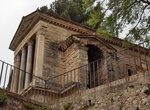
See Temple of Clitumnus, Umbria, Italy, (UNESCO Site)
The Tempietto del Clitunno (Temple of Clitumnus) is a small paleochristian church that sits along the banks of the Clitunno River near the town of Campello sul Clitunno between Spoleto and Trevi, Umbria, Italy. In 2011, it became a UNESCO World Heritage Site as part of a group of seven inscribed as Longobards in Italy. Places of the power (568-774 A.D.). There was ori... -
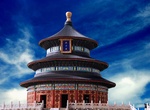
See Temple of Heaven in Beijing, China (UNESCO site)
The Temple of Heaven, literally the Altar of Heaven is a complex of Taoist buildings situated in the southeastern part of central Beijing. The complex was visited by the Emperors of the Ming and Qing dynasties for annual ceremonies of prayer to Heaven for good harvest. It is regarded as a Taoist temple, although Chinese Heaven worship, especially by the reigning ... -
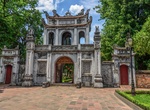
Visit Temple of Literature, Hanoi, Viet Nam
The Temple of Literature is a Temple of Confucius in Hanoi, northern Vietnam. The temple hosts the Imperial Academy (Quốc Tử Giám, 國子監), Vietnam's first national university. The temple was built in 1070 at the time of Emperor Lý Thánh Tông. It is one of several temples in Vietnam which is dedicated to Confucius, sages and scholars. The templ... -
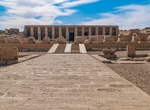
Visit Temple of Seti I, Abydos
The temple of Seti I also known as the Great Temple of Abydos is one of the main historical sites in Abydos. The temple was built by pharaoh Seti I. At the rear of the temple there is the Osireion. The temple is also notable for the Abydos graffiti, ancient Phoenician and Aramaic graffiti found on the temple walls. The temple was described by pioneer archaeologist Fli... -
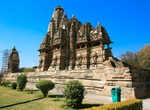
Visit Temples of Khajuraho, India (UNESCO site)
The Khajuraho Group of Monuments is a group of Hindu and Jain temples in Madhya Pradesh, India. About 620 kilometres (385 mi) southeast of New Delhi, they are one of the UNESCO World Heritage Sites in India. The temples are famous for their Nagara-style architectural symbolism and their erotic sculptures. Most Khajuraho temples were built between 950 and 1050 AD, duri... -
Visit Templo Mayor, Mexico City
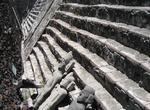
Templo Mayor was the main temple of the Mexica peoples in their capital city of Tenochtitlan, which is now Mexico City. Its architectural style belongs to the late Postclassic period of Mesoamerica. The temple was called the Huēyi Teōcalli [we:ˈi teoːˈkali] in the Nahuatl language. It was dedicated simultaneously to Huitzilopochtli, god of war, and Tlaloc, god of rain... -
Visit Ten Boom Museum, Holland
The Ten Boom Museum is a museum dedicated to The Hiding Place, the subject of a book by Corrie ten Boom. The house where the museum is located was purchased and restored in 1983 by the Corrie ten Boom Fellowship, a non-profit 501(c) 3 corporation governed by a board of directors. Mike Evans (journalist) serves as the chairman of the Board. The Ten Boom family ran a wa... -
See Tenczyn Castle, Poland
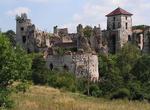
The Tenczyn Castle, otherwise known as the Tęczyn Castle, is a medieval castle in the village of Rudno, Poland. It was built as a seat of the powerful Tęczyński family. The castle fell into ruin during the Deluge in mid-17th century, after being pillaged and burned by Swedish-Brandenburgian forces looking for the Polish Crown Jewels and rumored treasures of the Tęczyń... -
Visit Tennessee State Capitol Building, Nashville
The Tennessee State Capitol, located in Nashville, Tennessee, is the home of the Tennessee legislature, the location of the governor's office, and a National Historic Landmark. Designed by architect William Strickland, it is one of Nashville's most prominent examples of Greek Revival architecture. It is one of only eleven state capitols (along with those of Delaware, ... -
See Terrace of the Leper King, Angkor, Cambodia
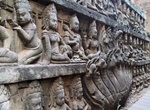
Terrace of the Leper King is located in the northwest corner of the Royal Square of Angkor Thom, Cambodia. It was built in the Bayon style under Jayavarman VII, though its modern name derives from a 15th-century sculpture discovered at the site. The statue depicts the Hindu god Yama, the god of death. The statue was called the "Leper King" because discolouration and m... -
Visit Territorial Abbey of Monte Oliveto Maggiore, Tuscany
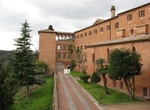
The Abbey of Monte Oliveto Maggiore is a large Benedictine monastery in the Italian region of Tuscany, 10 km south of Asciano. Its buildings, which are mostly of red brick, are conspicuous against the grey clayey and sandy soil—the Crete senesiwhich give this area of Tuscany its name. It is a territorial abbey whose abbot functions as the bishop of the land with... -
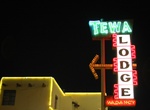
See Tewa Motor Lodge, Albuquerque, New Mexico
When wartime rationing and travel restrictions ended in 1945, Americans took to the road in unprecedented numbers, and Route 66 entered its golden age. Tourism was a growing industry in Albuquerque and development continued to push east and west along Central Avenue (Route 66) past the fringe of Albuquerque. Constructed on the cusp of this transition, the Tewa Motor L... -
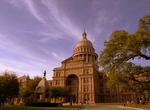
Visit Texas State Capitol Building, Austin
The Texas State Capitol is located in Austin, Texas, and is the fourth building to be the house of Texas state government in Austin. It houses the chambers of the Texas Legislature and the office of the governor of Texas. It was originally designed in 1881 by architect Elijah E. Myers, and was constructed from 1882 to 1888 under the direction of civil engineer Reuben ...


Price: $300.00