Give us feedback!


 See all
Our philosophy is simple. We want to encourage you to dream. BIG! Then we help you plan your trip, get the most out of it while you're traveling and help you share your experience with friends.
Join Now It's FREE
Dream Packages
Duration: 2 days
Price: $213.74
Price: $213.74
Duration: 2 days
Price: $205.47
Price: $205.47
Duration: 2 days
Price: $300.00
Price: $300.00
Duration: 8 days
Price: $1507.70
Price: $1507.70
Dreams Still To Do
Checked-Off Dreams
Dreams Still To Do
Checked-Off Dreams
Advertisement
Explore Historical Buildings
-
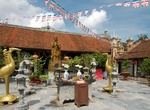
Visit Du Hang Pagoda, Hai Phong, Viet Nam
The pagoda has been rebuilt several times. The current building dates from the xvii th century under the Ly dynasty , away from the fishing village which then gave birth to the port of Haiphong developed by the French. The pagoda was built by a monk, a former officer of the Imperial Guard. It was renovated in 1899 with a new bell tower. It houses several statues from ... -
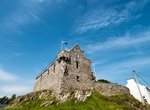
Visit Dunasead Castle, Baltimore, County Cork, Ireland
Dunasead Castle (Dún na Séadin Irish, meaningFort of the Jewels), sometimes known as Baltimore Castle, is a 17th-century fortified house situated in the town of Baltimore in western County Cork, Ireland. The tower house is built on the site of an earlier Norman-era structure, which itself replaced an earlier Bronze Age ringfort. Traditionally associated ... -
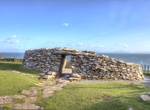
Visit Dunbeg Fort, Ireland
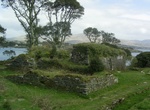
Dunbeg Fort (An Dún Beag) is a promontory fort built in the Iron Age near the modern village of Ventry in County Kerry, Ireland. Dunbeg Fort is located on a rocky promontory just south of Slea Head on the Dingle Peninsula, looking over Dingle Bay to the south and the Atlantic Ocean to the west. The cliffs have eroded since it was built, and much of the fort has... -
Visit Dunboy Castle Ruins, Ireland
Dunboy Castle is a ruined castle on the Beara Peninsula in south-west Ireland near the town of Castletownbere. It was a stronghold of the O'Sullivan Bere, a Gaelic clan leader and 'Chief of Dunboy', and was built to guard and defend the harbour of Berehaven. Its presence enabled O'Sullivan Bere to control the sea fisheries off the Irish coast and collect taxes from Ir... -
Visit Dunedin Railway Station, Dunedin, New Zealand
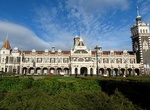
Dunedin Railway Station in New Zealand's South Island, designed by George Troup, is the city's fourth station. It earned its architect the nickname of "Gingerbread George". In an eclectic, revived Flemish renaissance style, (Renaissance Revival architecture), the station is constructed of dark basalt from Kokonga in the Strath-Taieri with lighter Oamaru stonefacings, ... -
Visit Dune Shacks of Peaked Hill Bars Historic District, Massachusetts
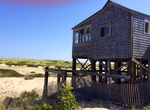
The Dune Shacks of Peaked Hill Bars Historic District is a historic district that includes dune shacks that were home to American artists and writers from the 1920s - today. The historic district, located in the Outer Cape towns of Provincetown and Truro, comprises 1,950 acres of the Cape Cod National Seashore. It was listed on the National Register of Historic Places... -
Visit Dunguaire Castle, Ireland
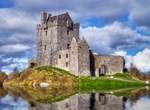
Dunguaire Castle (Dún Guaire) is a 16th-century tower house on the southeastern shore of Galway Bay in County Galway, Ireland, near Kinvarra (also spelled Kinvara). The name derives from the Dun of King Guaire, the legendary king of Connacht. The castle's 75-foot tower and its defensive wall have been restored, and the grounds are open to tourists during the su... -
Visit Dunham Massey Hall, Manchester, UK
Dunham Massey Hall usually known simply as Dunham Massey, is an English country house in the parish of Dunham Massey in the district of Trafford, near Altrincham, Greater Manchester. It is now a National Trust property, open to the public. During World War I it was the Stamford Military Hospital, The stately home was designated a Grade One listed-building on 5 March 1... -
Visit Dunimarle Castle, Fife, Scotland
Dunimarle Castle is located 1 km west of the centre of the village of Culross in Fife, Scotland. The name 'Dunimarle' means 'castle by the sea', although the original name of the estate was 'Castlehill'. The mansion house is a Category A listed building and the ruins of the medieval castle are Category B listed. The grounds are included in the Inventory of Gardens and... -
Visit Dunluce Castle, Northern Ireland
Dunluce Castle is a now-ruined medieval castle in Northern Ireland. It is located on the edge of a basalt outcropping in County Antrim (between Portballintrae and Portrush), and is accessible via a bridge connecting it to the mainland. The castle is surrounded by extremely steep drops on either side, which may have been an important factor to the early Christians and ... -
Visit Dunnottar Castle, Scotland
Dunnottar Castle is a ruined medieval fortress located upon a rocky headland on the north-east coast of Scotland, about 3 kilometres (1.9 mi) south of Stonehaven. The surviving buildings are largely of the 15th and 16th centuries, but the site is believed to have been fortified in the Early Middle Ages. Dunnottar has played a prominent role in the history of Scotland ... -
Visit Dunollie Castle, Scotland
Dunollie Castle is a small ruined castle located on a hill north of the town of Oban, on the west coast of Scotland in Argyll. The site enjoys views over towards the island of Kerrera and a view of the town, harbour, and outlying isles. The castle is open to the public as part of the Dunollie Museum, Castle and Grounds. There was a fortification on this high promontor... -
See Dunrobin Castle, Sutherland, Scotland
Dunrobin Castle is a stately home in Sutherland, in the Highland area of Scotland, and the family seat of the Earl of Sutherland and the Clan Sutherland. It is located 1 mile (1.6 km) north of Golspie, and approximately 5 miles (8.0 km) south of Brora, overlooking the Dornoch Firth. Dunrobin's origins lie in the Middle Ages, but most of the present building and the ga... -
Visit Dunstaffnage Castle & Chapel, Scotland
Dunstaffnage Castle is a partially ruined castle in Argyll and Bute, western Scotland. It lies 3 miles (4.8 km) N.N.E. of Oban, situated on a platform of conglomerate rock on a promontory at the south-west of the entrance to Loch Etive, and is surrounded on three sides by the sea. The castle dates back to the 13th century, making it one of Scotland's oldest stone cast... -
Visit Dunstanburgh Castle, England
Dunstanburgh Castle is a 14th-century fortification on the coast of Northumberland in northern England, located between the villages of Craster and Embleton. The castle was built by Earl Thomas of Lancaster between 1313 and 1322, taking advantage of the site's natural defences and the existing earthworks of a former Iron Age fort. Thomas was a leader of a baronial fac...


Price: $1186.79