Give us feedback!


 See all
Our philosophy is simple. We want to encourage you to dream. BIG! Then we help you plan your trip, get the most out of it while you're traveling and help you share your experience with friends.
Join Now It's FREE
Dream Packages
Duration: 2 days
Price: $604.85
Price: $604.85
Duration: 8 hours
Price: $436.02
Price: $436.02
Duration: 8 days
Price: $772.57
Price: $772.57
Duration: 13 hours
Price: $222.02
Price: $222.02
Dreams Still To Do
Checked-Off Dreams
Dreams Still To Do
Checked-Off Dreams
Advertisement
Explore Historical Events
-
Visit Battle of Chancellorsville Site, Virginia
The Battle of Chancellorsville was a major battle of the American Civil War, and the principal engagement of the Chancellorsville Campaign. It was fought from April 30 to May 6, 1863, in Spotsylvania County, Virginia, near the village of Chancellorsville. Two related battles were fought nearby on May 3 in the vicinity of Fredericksburg. The campaign pitted Union Army ... -
Visit Battle of Fredericksburg Site, Virginia
The Battle of Fredericksburg was fought December 11–15, 1862, in and around Fredericksburg, Virginia, between General Robert E. Lee's Confederate Army of Northern Virginia and the Union Army of the Potomac, commanded by Maj. Gen. Ambrose E. Burnside. The Union army's futile frontal attacks on December 13 against entrenched Confederate defenders on the heights be... -
Visit Battle of Hastings Site, England
The Battle of Hastings was fought on 14 October 1066 between the Norman-French army of Duke William II of Normandy and an English army under the Anglo-Saxon King Harold II, beginning the Norman conquest of England. It took place approximately 7 miles (11 kilometres) northwest of Hastings, close to the present-day town of Battle, East Sussex, and was a decisive Norman ... -
Visit Battle of Memphis Site, Mississippi River, Tennessee
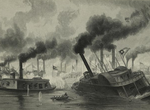
The First Battle of Memphis was a naval battle fought on the Mississippi River immediately above the city of Memphis on June 6, 1862, during the American Civil War. The engagement was witnessed by many of the citizens of Memphis. It resulted in a crushing defeat for the Rebels, and marked the virtual eradication of a Confederate naval presence on the river. Despite th... -
Visit Battle of Spotsylvania Court House Site, Virginia
The Battle of Spotsylvania Court House, sometimes simply referred to as the Battle of Spotsylvania (or the 19th century spelling Spottsylvania), was the second major battle in Lt. Gen. Ulysses S. Grant's 1864 Overland Campaign of the American Civil War. Following the bloody but inconclusive Battle of the Wilderness, Grant's army disengaged from Confederate General Rob... -
Visit Battle of Williamsburg Site, Virginia
The Battle of Williamsburg, also known as the Battle of Fort Magruder, took place on May 5, 1862, in York County, James City County, and Williamsburg, Virginia, as part of the Peninsula Campaign of the American Civil War. It was the first pitched battle of the Peninsula Campaign, in which nearly 41,000 Federals and 32,000 Confederates were engaged, fighting an inconcl... -
Visit Bay of Pigs, Cuba
The Bay of Pigs (Bahía de Cochinos) is an inlet of the Gulf of Cazones located on the southern coast of Cuba. By 1910, it was included in Santa Clara Province, and then instead to Las Villas Province by 1961, but in 1976, it was reassigned to Matanzas Province, when the original six provinces of Cuba were re-organized into 14 new Provinces of Cuba. This bay is ... -
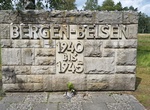
Visit Bergen-Belsen Concentration Camp, Germany
Bergen-Belsen [ˈbɛʁɡn̩.bɛlsn̩], or Belsen, was a Nazi concentration camp in what is today Lower Saxony in northern Germany, southwest of the town of Bergen near Celle. Originally established as a prisoner of war camp, in 1943, parts of it became a concentration camp. Initially this was an "exchange camp", where Jewish hostages were held with the intention of exchangin... -
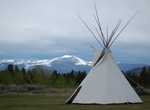
Visit Big Hole National Battlefield, Montana
Big Hole National Battlefield is a memorial located in Montana, United States. The Nez Percé, under Chief Joseph (although this is the popular American belief, they were led at this time by Looking Glass. During the battle Chief Joseph rescued the tribes horse herd from being captured by U.S. cavalry.) fought a delaying action against the 7th Infantry Regiment ... -
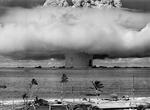
Visit Bikini Atoll Nuclear Test Site, Marshall Islands (UNESCO site)
Bikini Atoll is a World Heritage listed atoll in the Micronesian Islands of the Pacific Ocean, part of Republic of the Marshall Islands. It consists of 23 islands surrounding a deep 229.4-square-mile (594.1 km2) central lagoon. It is now universally significant to the world as follows: Bikini Atoll is open to visitors aboard vessels that are completely self-sufficient... -
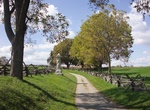
See Bloody Lane, Antietam National Battlefield, Maryland
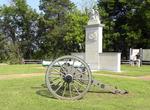
The Sunken Road, as it was known to area residents prior to the Battle of Antietam, was a dirt farm lane which was used primarily by farmers to bypass Sharpsburg and been worn down over the years by rain and wagon traffic. On September 17, 1862, Confederate Maj. Gen. Daniel Harvey Hill placed his division of approximately 2,600 men along the road, piled fence rails on... -
Visit Boston Massacre Site, Boston, Massachusetts
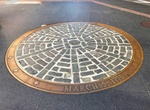
The Boston Massacre, known as the Incident on King Street by the British, was an incident on March 5, 1770, in which British Army soldiers killed five civilian men and injured six others. British troops had been stationed in Boston, capital of the Province of Massachusetts Bay, since 1768 in order to protect and support crown-appointed colonial officials attempting to... -
Visit Brices Cross Roads National Battlefield Site, Tennessee
Brices Cross Roads National Battlefield Site commemorates the Battle of Brice's Crossroads, in which the Confederate army, under Major General Nathan Bedford Forrest, defeated a much larger Union force on June 10, 1864, to ultimately secure supply lines between Nashville and Chattanooga, Tennessee. The site, in extreme northern Lee County, preserves only one acre of t... -
Visit Brown v. Board of Education National Historic Site, Topeka, Kansas
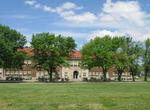
Brown v. Board of Education National Historic Site was established in Topeka, Kansas, on October 26, 1992, by the United States Congress to commemorate the landmark U.S. Supreme Court decision aimed at ending racial segregation in public schools. On May 17, 1954, the Supreme Court unanimously declared that "separate educational facilities are inherently unequal" and, ... -
Visit Buccaneer Cove, Santiago Island, Galápagos
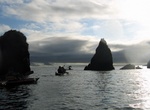
In 1835, an English naturalist named Charles Darwin camped for nine days at a beach now known as Buccaneer Cove on Santiago Island, Galápagos. During his time exploring the cove and the surrounding Galápagos Islands, Darwin observed and collected thousands of species of flora and fauna. The cove was a favorite hide-out of seventeenth- and eighteenth-cent...
Price: $707.35