Give us feedback!


 See all
Our philosophy is simple. We want to encourage you to dream. BIG! Then we help you plan your trip, get the most out of it while you're traveling and help you share your experience with friends.
Join Now It's FREE
Dream Packages
Duration: 2 days
Price: $1150.00
Price: $1150.00
Duration: 14 hours
Price: $949.99
Price: $949.99
Duration: 10 hours 30 minutes
Price: $567.54
Price: $567.54
Duration: 3 hours
Price: $157.00
Price: $157.00
Related Categories
Dreams Still To Do
Checked-Off Dreams
Dreams Still To Do
Checked-Off Dreams
Advertisement
Explore Landmarks (Man Made)
-
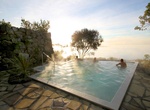
Visit Polynesian Spa, Rotorua, North Island
Polynesian Spa is a developed geothermal spa facility in Rotorua, North Island, New Zealand. Local Māori acclaimed the therapeutic benefits of the water and bathed for centuries in the acidic pool 'Te Pupunitanga', now called Priest’s Bath. European thermal bathing history at Polynesian Spa began in 1878 when a Catholic Priest named Father Mahoney bathed regular... -
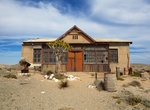
Visit Pomona, Namibia
Pomona is a ghost town in southern Namibia south of Lüderitz on the coast of the Atlantic Ocean. It is about 15 km south of Elizabeth Bay, Namibia, in an area called Sperrgebiet, a diamond mining zone with restricted access. Settlements that lie abandoned in the Sperrgebiet and can be visited only on an organised tour. Around 1910, at the time of the diamond rush... -
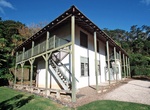
Visit Pompallier House, Russell, New Zealand
Pompallier House is a nineteenth-century building located in Russell, New Zealand which once served as the headquarters to the French Catholic mission to the Western Pacific. It is named after Jean Baptiste Pompallier, the first vicar apostolic to visit New Zealand, who founded a number of missions in the North Island. Pompallier House is owned and managed by the New ... -
Visit Pompeii, Italy (UNESCO site)
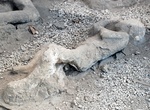
Pompeii was an ancient city located in what is now the comune of Pompei near Naples in the Campania region of Italy. Pompeii, along with Herculaneum and many villas in the surrounding area (e.g. at Boscoreale, Stabiae), was buried under 4 to 6 m (13 to 20 ft) of volcanic ash and pumice in the Eruption of Mount Vesuvius in 79 AD. Largely preserved under the ash, the ex... -
Visit Pompeii, Herculaneum and Torre Annunziata, Italy (UNESCO sites)
The city of Pompeii is a partially buried Roman town-city near modern Naples in the Italian region of Campania, in the territory of the comune of Pompei. Along with Herculaneum, its sister city, Pompeii was destroyed and completely buried during a long catastrophic eruption of the volcano Mount Vesuvius spanning two days in 79 AD. The eruption buried Pompeii under 4 t... -
Visit Pompidou Centre, Paris, France
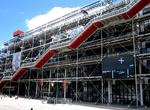
NOTE: The Centre Pompidou in Paris began its closure for a massive five-year renovation in September 2025, and is expected to reopen in 2030. Centre Georges Pompidou (Pompidou Centre) is a complex in the Beaubourg area of the 4th arrondissement of Paris, near Les Halles, rue Montorgueil and the Marais. It was designed in the style of high-tech architecture. It houses... -
Visit Po Nagar Cham Towers, Nha Trang, Viet Nam
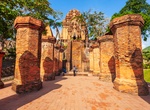
Po Nagar is a Cham temple tower founded sometime before 781 C.E. and located in the medieval principality of Kauthara, near modern Nha Trang in Vietnam. It is dedicated to Yan Po Nagar, the goddess of the country, who came to be identified with the Hindu goddesses Bhagavati and Mahishasuramardini, and who in Vietnamese is called Thiên Y Thánh Mâu. A... -
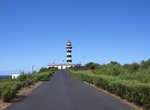
See Ponta da Barca Lighthouse, Santa Cruz da Graciosa, Azores
The Lighthouse of Ponta da Barca is a beacon/lighthouse located along the 24 metres (79 ft) cliffs of Ponta da Barca, near the hamlet of Bom Jesus, civil parish of Santa Cruz da Graciosa on the island of the same, the Portuguese archipelago of the Azores. Immediately near the lighthouse, is the emblematicbaleia de pedra(whale rock), a curious geological basaltic rock ... -
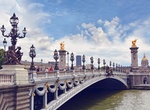
Cross Pont Alexandre III, Paris, France (UNESCO site)
The Pont Alexandre III is a deck arch bridge that spans the Seine in Paris. It connects the Champs-Élysées quarter with those of the Invalides and Eiffel Tower. The bridge is widely regarded as the most ornate, extravagant bridge in the city. It is classified as a French Monument historique since 1975. The Beaux-Arts style bridge, with its exuberant Art ... -
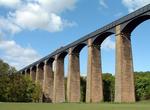
See Pontcysyllte Aqueduct and Canal, Wales (UNESCO site)
The Pontcysyllte Aqueduct is a navigable aqueduct that carries the Llangollen Canal over the valley of the River Dee in Wrexham in north east Wales. Completed in 1805, it is the longest and highest aqueduct in Britain, a Grade I Listed Building and a World Heritage Site. When the bridge was built it linked the villages of Froncysyllte, at the southern end of the bridg... -
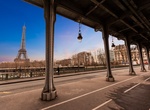
Cross Pont de Bir-Hakeim, Paris, France
The pont de Bir-Hakeim, formerly the pont de Passy, is a bridge that crosses the Seine River in Paris, France. It connects the city's 15th and 16th arrondissements, and passes through the île aux Cygnes. If offers a great view of the Eiffel Tower. The bridge, made of steel, is the second to have stood at the site. It was constructed between 1903 and 1905, replac... -
Cross Pont de la Concorde, Paris
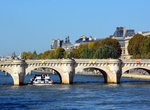
The Pont de la Concorde is an arch bridge across the River Seine in Paris connecting the Quai des Tuileries at the Place de la Concorde (on the Right Bank) and the Quai d'Orsay (on the Left Bank). It has formerly been known as the "Pont Louis XVI", "Pont de la Révolution", "Pont de la Concorde", "Pont Louis XVI" again during the Bourbon Restoration (1814), and ... -
Cross Pont de la Margineda, Santa Coloma, Andorra
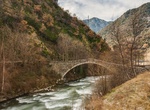
Pont de la Margineda is a bridge located in Santa Coloma, Andorra la Vella Parish, Andorra. It is a heritage property registered in the Cultural Heritage of Andorra. It was built in the 14-15th century. The bridge spans a river called the Gran Valira. The archstones are pumice, to keep the structure light. The walls are made of granite. -
See Pont de les Ferreres (Devil's Bridge), Tarragona, Spain (UNESCO site)
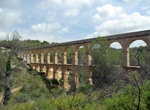
The Pont de les Ferreres, also known as Pont del Diable - Devil's Bridge) is a Roman bridge, part of the Roman aqueduct built to supply water to the ancient city of Tárraco, today Tarragona, in Catalonia, Spain. The aqueduct bridge is located 4 kilometers north of the city. The aqueduct is part of the Archaeological Ensemble of Tarraco, which was added to the U... -
Walk across Pont des Arts, Paris, France (UNESCO Site)
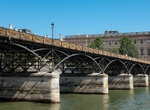
The Pont des Arts or Passerelle des Arts is a pedestrian bridge in Paris which crosses the River Seine. It links the Institut de France and the central square (cour carrée) of the Palais du Louvre, (which had been termed the "Palais des Arts" under the First French Empire). Accessed by foot from Quai Francois Mitterrand from the right bank of the Seine, and Qua...
Price: $520.24