Give us feedback!
Our philosophy is simple. We want to encourage you to dream. BIG! Then we help you plan your trip, get the most out of it while you're traveling and help you share your experience with friends.
Join Now It's FREE
Related Categories
Dreams Still To Do
Checked-Off Dreams
Dreams Still To Do
Checked-Off Dreams
Advertisement
Explore Main UNESCO Sites
-
Explore Orkhon Valley, Mongolia (UNESCO site)
Orkhon Valley Cultural Landscape sprawls along the banks of the Orkhon River in Central Mongolia, some 360 km west from the capital Ulaanbaatar. It was inscribed by UNESCO in the World Heritage List as representing evolution of nomadic pastoral traditions spanning more than two millennia. For many centuries, the Orkhon Valley was viewed as the seat of the imperial pow... -
Explore Osun-Osogbo Sacred Grove, Nigeria (UNESCO site)
Osun-Osogbo or Osun-Osogbo Sacred Grove is a sacred forest along the banks of the Oshun River just outside the city of Osogbo, Osun State, Nigeria. The Osun-Osogbo Grove is among the last of the sacred forests which usually adjoin the edges of most Yoruba cities before extensive urbanization. Osun-Osgogbo festival is celebrated every year. Osun- worshipers come from a... -
Visit Ōtsu, Japan (UNESCO sites)
Ōtsu is the capital city of Shiga Prefecture, Japan. Ōtsu is known as the main port of Lake Biwa, the largest lake in Japan. It briefly served as a capitol of Japan from 667 to 672 AD during the Asuka period (538 – 710). The city is home to numerous sites of historical importance, notably the temples of Mii-dera, Ishiyama-dera, and Enryaku-ji and the Hiyoshi Tai... -
Explore Ounianga Lakes, Chad (UNESCO site)
Lake Ounianga in Chad includes 18 interconnected lakes in the Ennedi region of the Sahara Desert. It constitutes an exceptional natural landscape of great beauty with striking colours and shapes. There is a total of 18 lakes in groups as follows: Ounianga Kébir group: Lake Yoa, Lake Katam, Lake Oma (or Ouma), Lake Béver, Lake Midji, Lake Forodom; Lake M... -
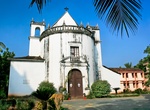
See Our Lady of the Rosary, Old Goa, India (UNESCO Site)
The Our Lady of the Rosary is a UNESCO site in Old Goa, India. It is one of the earliest churches to be built in the city. -
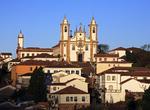
Visit Ouro Preto, Brazil (UNESCO site)
Ouro Preto (from Portuguese, Black Gold) is a city in the state of Minas Gerais, Brazil, a former colonial mining town located in the Serra do Espinhaço mountains and designated a World Heritage Site by UNESCO because of its outstanding Baroque architecture. Founded at the end of the 17th century, Ouro Preto (meaning Black Gold) was originally called Vila Rica,... -
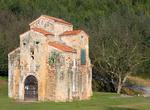
Visit Oviedo, Spain (UNESCO sites)
Oviedo is a cathedral city, capital of Principality of Asturias, in Northern Spain. It has an interesting old town with various monuments listed on the UNESCO World Heritage List. The best way to get around is by walking. Most of the center of the city can only be visited that way, because little motor traffic is allowed. Where traffic is possible, be prepared for jam... -
Explore Oxley Wild Rivers National Park, New South Wales, Australia (UNESCO site)
Oxley Wild Rivers National Park is in New South Wales, Australia, 445 kilometres north of Sydney and is named in memory of the Australian explorer John Oxley, who passed through the area in 1818. The park covers 145,000 ha, being one of the largest national parks in NSW. The Park is part of the Hastings-Macleay Group of the World Heritage Site Gondwana Rainforests of ... -
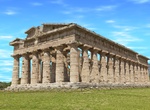
Visit Paestum & Velia, Italy (UNESCO site)
Paestum is the classical Roman name of a major Graeco-Roman city in the Campania region of Italy. It is located in the north of Cilento, near the coast about 85 km SE of Naples in the province of Salerno, and belongs to the commune of Capaccio, officially also named Capaccio-Paestum. The main features of the site today are the standing remains of three major temples i... -
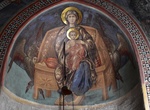
See Painted Churches in the Troodos Region, Cyprus (UNESCO sites)
ThePainted Churches in the Troödos Regionis a UNESCO World Heritage Site in the Troödos Mountains of central Cyprus. The complex comprises ten Byzantine churches and monasteries richly decorated with Byzantine and post-Byzantine murals: Church of Agios Nikolaos (St. Nicholas) tis Stegis in Kakopetria Agios Ioannis (St. John) Lampadistis Monastery in Kalopan... -
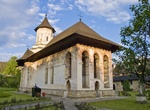
See Painted Churches of Moldavia, Romania (UNESCO site)
The painted churches of northern Moldavia are seven Romanian Orthodox churches in Romania in northern Moldavia, built approximately between 1487 and 1532. Since 1993, they have been listed by UNESCO as a World Heritage Site. Church of the Resurrection Suceviţa Monastery was added to the site in 2010. The churches are: Church of the Beheading of St. John the Bap... -
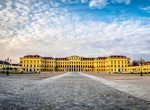
See Palace and Gardens of Schönbrunn, Austria (UNESCO site)
Schönbrunn Palace is a former imperial 1,400-room Rococo summer residence in Vienna, Austria. One of the most important cultural monuments in the country, since the 1960s it has been one of the major tourist attractions in Vienna. The palace and gardens illustrate the tastes, interests, and aspirations of successive Habsburg monarchs. The sculpted garden space be... -
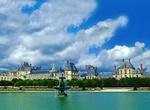
Explore Palace and Park of Fontainebleau, France (UNESCO site)
The Palace of Fontainebleau, located 55 kilometres from the centre of Paris, is one of the largest French royal châteaux. The palace as it is today is the work of many French monarchs, building on an early 16th century structure of Francis I. The building is arranged around a series of courtyards. The city of Fontainebleau has grown up around the remainder ... -
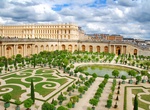
See Palace and Park of Versailles, France (UNESCO site)
The Palace of Versailles, is a royal château in Versailles in the Île-de-France region of France. In French it is the Château de Versailles. When the château was built, Versailles was a country village; today, however, it is a suburb of Paris, some twenty kilometres southwest of the French capital. The court of Versailles was the center of poli... -
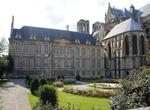
See Palace of Tau, Reims, France (UNESCO site)
The Palace of Tau in Reims, France, was the palace of the Archbishop of Reims. It is associated with the Kings of France, whose coronation was held in the nearby cathedral of Notre-Dame de Reims. A large Gallo-Roman villa still occupied the site of the palace in the 6th and 7th centuries, and later became a Carolingian palace. The first documented use of the name date...