Give us feedback!
Our philosophy is simple. We want to encourage you to dream. BIG! Then we help you plan your trip, get the most out of it while you're traveling and help you share your experience with friends.
Join Now It's FREE
Related Categories
Dreams Still To Do
Checked-Off Dreams
Dreams Still To Do
Checked-Off Dreams
Advertisement
Explore Main UNESCO Sites
-
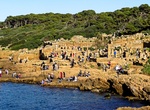
Visit Tipasa, Algeria (UNESCO site)
Tipaza (formerly Tefessedt) is a Berber-speaking town on the coast of Algeria, capital of the Tipaza province. The modern town, founded in 1857, is remarkable chiefly for its sandy beach, and ancient Berber and Roman ruins. Tipaza was founded by the Phoenicians. It was made a Roman military colony by the emperor Claudius, and afterwards became a municipium. The Roman ... -
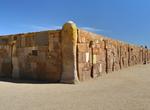
Visit Tiwanaku, Bolivia (UNESCO site)
Tiwanaku (Tiahuanaco and Tiahuanacu) is an important Pre-Columbian archaeological site in western Bolivia, South America. Tiwanaku is recognized by Andean scholars as one of the most important precursors to the Inca Empire, flourishing as the ritual and administrative capital of a major state power for approximately five hundred years. The ruins of the ancient city st... -
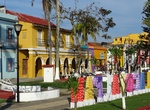
Visit Tlacotalpan, Mexico (UNESCO site)
The city of Tlacotalpan is located in the eastern coastal region of the Mexican state of Veracruz. Although the area had been inhabited since pre-Columbian times, the modern-day settlement was founded as a river port on the banks of the Río Papaloapan in the mid-16th century. It serves as the municipal seat for the municipality of the same name. Tlacotalpan was... -
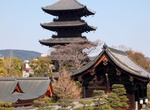
Visit Tō-ji, Kyoto, Japan (UNESCO Site)
Tō-ji is a Buddhist temple of the Shingon sect in Kyoto, Japan. It once had a partner, Sai-ji (West Temple) and, together, they stood alongside the Rashomon, gate to the Heian capital. It was formally known as Kyō-ō-gokoku-ji (教王護国寺,The Temple for the Defense of the Nation by Means of the King of Doctrines?) which indicates that it previously functioned as a temple pr... -
Wine Tasting in Tokaj Wine Region, Slovakia & Hungary (UNESCO site)
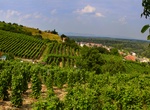
Tokaj-Hegyalja is a historical wine region located in southeastern Slovakia and northeastern Hungary. Hegyalja means "foothills" in Hungarian, and this was the original name of the region. The region consists of 28 named villages and 7,000 hectares of classified vineyards, of which an estimated 5,000 are currently planted. Tokaj has been declared a World Heritage... -
Visit Toledo, Spain (UNESCO site)
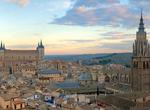
Toledo is a municipality located in central Spain, 70 km south of Madrid. It is the capital of the province of Toledo. It is also the capital of autonomous community of Castile-La Mancha. It was declared a World Heritage Site by UNESCO in 1986 for its extensive cultural and monumental heritage as one of the former capitals of the Visigothic Kingdom and the Spanish Emp... -
See Toledo Cathedral, Toledo, Spain (UNESCO site)
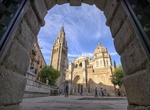
The Primate Cathedral of Saint Mary of Toledo (Catedral Primada Santa María de Toledo) is a Roman Catholic cathedral in Toledo, Spain, see of the Metropolitan Archdiocese of Toledo. The cathedral of Toledo is one of the three 13th-century High Gothic cathedrals in Spain and is considered, in the opinion of some authorities, to be the magnum opus of the Gothic s... -
See Tomb of Askia, Mali (UNESCO site)
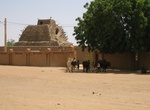
The Tomb of Askia, in Gao, Mali, is believed to be the burial place of Askia Mohammad I, one of the Songhai Empire's most prolific emperors. It was built at the end of the fifteenth century and is designated as a UNESCO World Heritage Site. UNESCO describes the tomb as a fine example of the monumental mud-building traditions of the West African Sahel. The complex incl... -
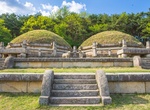
Visit Tomb of King Kongmin, Kaesong, North Korea (UNESCO Site)
The Tomb of King Kongmin, more correctly known as the Hyonjongrung Royal Tomb, is a 14th-century mausoleum located in Haeson-ri, Kaepung County just outside of the city of Kaesong, North Korea. It is one of the Royal Tombs of the Koryo Dynasty. The site consists of two separate burial mounds, Hyonrung, which contain the remains of Kongmin, 31st king of the Koryo ... -
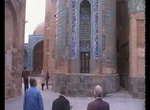
See Tomb of Sheikh Safi-ad-din Ardabili, Ardabil, Iran (UNESCO site)
Sheikh Safi al-Din Khānegāh and Shrine Ensemble is the tomb of Sheikh Safi-ad-din Ardabili located in Ardabil, Iran. In 2010, it was registered on the UNESCO World Heritage List. The Mausoleum of Sheikh Safi, in Ardabil, was built by his son Sheikh Sadr al-Dīn Mūsā, after Sheikh Safi’s death in 1334. The mausoleum consists of many sections that have served a var... -
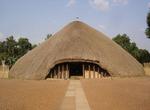
See Tombs of Buganda Kings at Kasubi, Uganda (UNESCO site)
The Kasubi Tombs in Kampala, Uganda, is the site of the burial grounds for four kabakas (kings of Buganda), and a UNESCO World Heritage Site. On 16 March 2010, some of the major buildings there were almost completely destroyed by a fire, the cause of which is under investigation. The outraged Buganda Kingdom has vowed to rebuild the tombs of their kings and President ... -
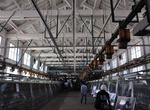
Visit Tomioka Silk Mill, Gunma Prefecture, Japan (UNESCO Site)
Tomioka Silk Mill is Japan's oldest modern model silk reeling factory, established in 1872 by the government to introduce modern machine silk reeling from France and spread its technology in Japan. The factory is designated by the government as a historical site and all its buildings are preserved in very good condition. It is a big factory in the old city of Tomioka,... -
Explore Tongariro National Park, New Zealand (UNESCO site)
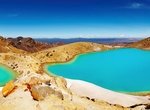
Tongariro National Park is the oldest national park in New Zealand, located in the central North Island. It has been acknowledged by UNESCO as one of the 25 mixed cultural and natural World Heritage Sites. Tongariro National Park was the fourth national park established in the world. The active volcanic mountains Ruapehu, Ngauruhoe, and Tongariro are located in t... -
Visit Topkapı Palace, Istanbul, Turkey (UNESCO Site)
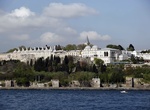
The Topkapı Palace is a large palace in Istanbul, Turkey, that was the primary residence of the Ottoman Sultans for approximately 400 years (1465-1856) of their 624-year reign. As well as a royal residence, the palace was a setting for state occasions and royal entertainments. It is now a major tourist attraction and contains important holy relics of the Muslim world ... -
See Torre de San Martín, Teruel, Spain (UNESCO site)
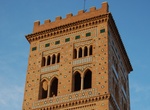
The Torre de San Martín (St. Martin's Tower) is a medieval structure in Teruel, Aragon, northern Spain. Built in Aragonese Mudéjar style in 1316 and renovated in the 16th century, it was added to the UNESCO Heritage List in 1986 together with other Mudéjar structures in Teruel. The tower was built between in 1315 and 1316. In 1550 its lower s...