Give us feedback!


 See all
Our philosophy is simple. We want to encourage you to dream. BIG! Then we help you plan your trip, get the most out of it while you're traveling and help you share your experience with friends.
Join Now It's FREE
Dream Packages
Duration: 2 days
Price: $331.50
Price: $331.50
Duration: 17 hours
Price: $445.99
Price: $445.99
Duration: 8 days
Price: $1507.70
Price: $1507.70
Dreams Still To Do
Checked-Off Dreams
Dreams Still To Do
Checked-Off Dreams
Advertisement
Explore Mayan Archaeological Sites
-
Visit Lamanai, Belize
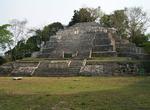
Lamanai ("submerged crocodile" in Yucatec Maya) is a Mesoamerican archaeological site, and was once a considerably sized city of the Maya civilization, located in the north of Belize, in Orange Walk District. The site's name is pre-Columbian, recorded by early Spanish missionaries, and documented over a millennium earlier in Maya inscriptions as Lam'an'ain. The vast m... -
Visit Lubaantun, Belize
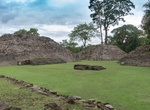
Lubaantun is a pre-Columbian ruined city of the Maya civilization in southern Belize, Central America. Lubaantun is in Belize's Toledo District, about 42 kilometres (26 mi) northwest of Punta Gorda, and approximately 3.2 kilometres (2 mi) from the village of San Pedro Columbia, at an elevation of 61 metres (200 ft) feet above mean sea level. One of the most distinguis... -
Visit Mixco Viejo, Guatemala
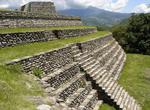
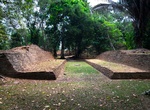
Mixco Viejo ("Old Mixco"), occasionally spelt Mixcu Viejo, is an archaeological site in the north east of the Chimaltenango department of Guatemala, some 50 kilometres (31 mi) to the north of Guatemala City and 4 kilometres (2.5 mi) from the junction of the rivers Pixcaya and Motagua. It is a moderate sized ruined city of the Postclassic Maya civilization. The archaeo... -
Visit Nim Li Punit, Belize
Nim Li Punit is a Maya Classic Period site in the Toledo District of the nation of Belize, located 40 kilometres north of the town of Punta Gorda, at 16° 19' N, 88° 47' 60W. Nim Li Punit is sometimes known as Big Hat or Top Hat; the name is Kekchi Maya for "Big Hat", referring to the large elaborate head-dress on a stela sculpture found on site depicting one o... -
Visit San Andrés, El Salvador
San Andrés is a pre-Hispanic site of El Salvador, whose occupation began around the year 900 BC as an agricultural town in the valley of Zapotitán in the department of La Libertad. This early establishment was vacated by the year 250 because of the enormous eruption of the caldera of Lago Ilopango, and was occupied again in the 5th Century, along with ma... -
Visit San Gervasio, Cozumel, Mexico
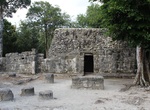
San Gervasio is an archaeological site of the pre-Columbian Maya civilization, located in the northern third of the island of Cozumel off the northeastern coast of the Yucatán Peninsula, in what is now the Mexican state of Quintana Roo. San Gervasio's pre-Hispanic name was Tantun Cuzamil, Mayan for Flat Rock in the place of the Swallows. The ruins were once a h... -
Explore Tak'alik Ab'aj, Guatemala (UNESCO Site)
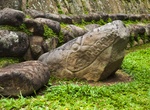
Tak'alik Ab'aj is a pre-Columbian archaeological site in Guatemala. It was formerly known as Abaj Takalik; its ancient name may have been Kooja. It is one of several Mesoamerican sites with both Olmec and Maya features. The site flourished in the Preclassic and Classic periods, from the 9th century BC through to at least the 10th century AD, and was an important centr... -
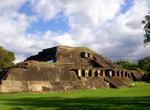
Visit Tazumal, El Salvador
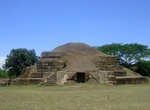
Tazumal is a Pre-Columbian Maya archeological site in Chalchuapa, El Salvador. Tazumal means, "the place where the victims were burned," in K'iche'. The site is located in the heart of Chalchuapa in the department of Santa Ana, some 60 kilometers from the capital, San Salvador. This zone is within the archaeological area of Chalchuapa, which covers an approximate area... -
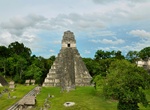
Explore Tikal National Park, Guatemala (UNESCO)
Tikal is the ruin of an ancient city, which was likely to have been called Yax Mutal, found in a rainforest in Guatemala. Ambrosio Tut, a gum-sapper, reported the ruins to La Gaceta, a Guatemalan newspaper, which named the site Tikal. After the Berlin Academy of Sciences' magazine republished the report in 1853, archeologists and treasure hunters began visiting the fo... -
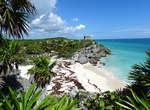
Visit Tulum, Mexico
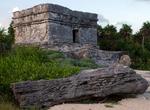
The 3rd most visited archeological site in all of Mexico is found in Tulum. Located in the Mexican State of Quintana Roo along the coast, the walled city perches on a bluff overlooking the Caribbean and is easily accessible from Cancun by car or cab via a modern 4 lane highway. One of the most beautiful archeological zones in all of Mexico may be found in Tulum. The M... -
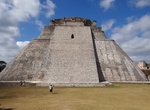
Visit Uxmal, Mexico (UNESCO site)
Uxmal is a large pre-Columbian ruined city of the Maya civilization in the state of Yucatán, Mexico. The place name is Pre-Columbian and it is usually assumed to be an archaic Maya language phrase meaning "Built Three Times", although some scholars of the Maya language dispute this derivation. The currently used names for many of the structures were given by th... -
Visit Xcaret & Eco Park, Mexico
Xcaret is a Maya civilization archaeological site located on the Caribbean coastline of the Yucatán Peninsula, in the modern-day state of Quintana Roo in Mexico. The site was occupied by the pre-Columbian Maya and functioned as a port for navigation and an important Maya trading center. Some of the site's original structures are contained within a modern-day to... -
Visit Xunantunich, Belize
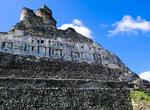
Xunantunich is an Ancient Mayan archaeological site in western Belize, about 80 miles (130 km) west of Belize City, in the Cayo District. Xunantunich is located atop a ridge above the Mopan River, well within sight of the Guatemala border – which is a mere 1 kilometre (0.62 mi) to the west. It served as a Maya civic ceremonial center in the Late and Terminal Cla... -
Visit Yaxchilan, Mexico
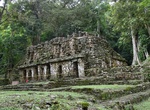
Yaxchilan (also sometimes historically referred to by the names Menché and City Lorillard) is an ancient Maya city located on the bank of the Usumacinta River in what is now the state of Chiapas, Mexico. In the Late Classic Period Yaxchilan was one of the most powerful Maya states along the course of the Usumacinta, with Piedras Negras as its major rival. Archi... -
Visit Yaxhá, Guatemala
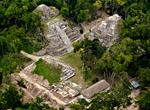
Yaxha is a Mesoamerican archaeological site in Guatemala in the northeast of the Petén Basin region, and a former ceremonial centre and city of the pre-Columbian Maya civilization. Yaxha was the third largest city in the region and experienced its maximum power during the Early Classic period (c. AD 250–600). The city was located on a ridge overlooking La...
Price: $180.00