Give us feedback!


 See all
Our philosophy is simple. We want to encourage you to dream. BIG! Then we help you plan your trip, get the most out of it while you're traveling and help you share your experience with friends.
Join Now It's FREE
Dream Packages
Duration: 10 hours
Price: $133.63
Price: $133.63
Duration: 5 days
Price: $707.35
Price: $707.35
Duration: 3 hours 30 minutes
Price: $179.75
Price: $179.75
Duration: 6 hours
Price: $334.68
Price: $334.68
Related Categories
Dreams Still To Do
Checked-Off Dreams
Dreams Still To Do
Checked-Off Dreams
Advertisement
Explore Unusual Wonders of Nature
-
Visit La Parguera Bioluminescent Bay, Lajas, Puerto Rico
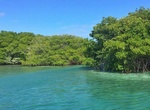
A place where the water glows. The biobay at La Parguera with the least number of dynoflagellates as the two other Bioluminescent Bays in Puerto Rico (Mosquito Bay & Laguna Grande). Due to overdevelopment, light pollution, lack of protection and poor enforcement of the rules that do exist, bioluminescence is very poor compared to how it was 25 years ago. So it mi... -
See La Portada, Chile
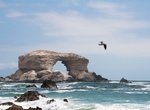
La Portada ("The Gateway") is a natural arch on the coast of Chile, 18 km (11 mi) north of Antofagasta. It is one of fifteen natural monuments included among the protected areas of Chile. The La Portada Natural Monument covers an area of 31.27 hectares (77.27 acres), and its geomorphological features and remaining fossils stand out in the form of an arch. The arch of ... -
See La Tour Percée, Chartreuse Mountains, France
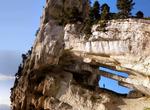
Situated in the Chartreuse mountains in France is la Tour Percée, a unique double arch and at 32 meters the longest span in the Alps. The existence of this arch was only documented in 2005 (see attached article for a good story on how it was discovered). The arch lies on private and while not strictly forbidden, access is not exactly encouraged either. There i... -
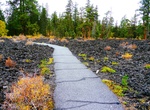
Hike Lava Cast Forest, Newberry National Volcanic Monument, Oregon
Lava Cast Forest is a visitor destination within the Newberry National Volcanic Monument near Bend, Oregon, of the United States. It is a geologic feature containing a 6,000 year old lava flow that created lava molds of ancient trees. It's located about 25 total miles south of Bend and is accessible via a 9-mile (14 km) gravel road from U.S. Highway 97. The site inclu... -
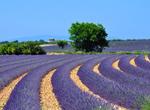
See Lavender Fields in Provence, France
Lavender blooms from late June to the end of August in the many fields of the Provence region of France planted to this aromatic, useful and colorful blossom. “Blue Gold” as the lavender is nick-named is displayed in multi-hued oceans of the sensual flowers planted in perfect rows crossing the color spectrum from steely grey to violet. The impressive Luber... -
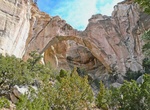
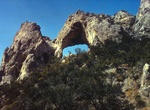
See La Ventana Arch, El Malpais National Conservation Area, New Mexico
La Ventana Arch is one of the largest sandstone arches in New Mexico can be found just 18 miles south of the interstate. A 1/2 mile trail leads to a viewpoint of the arch. The trail leading up to the base of the arch is primitive. The arch is located about 9 miles south on SR 117 from the BLM Ranger Station (which is located 9 miles south of 1-40 on Highway 117). The... -
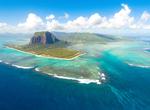
Explore Le Morne Brabant, Mauritius (UNESCO site)
Le Morne Brabant is a peninsula at the extreme south-western tip of Mauritius and the most windward side of the island. It is highlighted by an eponymous single standing basaltic rock with a summit of 556 metres above sea level which belongs to the most imposing sight on Mauritius. The summit covers an area of more than 12 hectares. There are many overhanging caves at... -
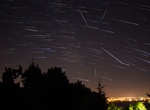
See Leonids Meteor Shower
The Leonids is a prolific meteor shower associated with the comet Tempel-Tuttle. The Leonids get their name from the location of their radiant in the constellation Leo: the meteors appear to radiate from that point in the sky. They tend to peak in November. Earth moves through the meteoroid stream of particles left from the passages of a comet. The stream comprises so... -
Hike Lexington Arch Trail, Great Basin National Park, Nevada
Lexington Arch at 7,440 feet (2,320 m) is one of the largest limestone arches in the Western United States. The 3.4 miles (5.5 km) trail leads to a six-story limestone arch. The trail has some steep sections and has a 820 feet (255 m) elevation gain. The trailhead is outside of the park, about 25 miles (48 km) south of Baker. The road is unpaved. Check at the visitor... -
Explore Libo Karst, China (UNESCO sites)
The South China Karst, a UNESCO World Heritage Site since June 2007, spans China's southern provinces of Guangxi, Guizhou, and Yunnan. The region of south China is particularly noted for its karst features and landscapes as well as rich biodiversity. The site comprises three clusters: Libo Karst, Shilin Karst and Wulong Karst. UNESCO describes the South China Karst as... -
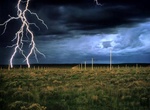
Visit Lightning Field, New Mexico
The Lightning Field (1977) is a land art work in Catron County, New Mexico, by sculptor Walter De Maria. It consists of 400 stainless steel poles with solid, pointed tips, arranged in a rectangular 1 mile × 1 kilometre grid array. Open for only six months out of the year (May through October), the installation can only be visited by making an advance reservation... -
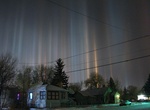
See a Light Pillar
A light pillar is a visual phenomenon created by the reflection of light from ice crystals with near horizontal parallel planar surfaces. The light can come from the Sun (usually at or low to the horizon) in which case the phenomenon is called a sun pillar or solar pillar. It can also come from the Moon or from terrestrial sources such as streetlights. Light pillars a... -
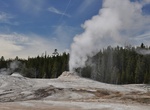
See Lion Geyser, Upper Geyser Basin, Yellowstone National Park
Lion Geyser is a cone-type geyser in the Upper Geyser Basin of Yellowstone National Park in the United States. It is located in the Geyser Hill complex. It was named for the roaring sound of steam releasing during an eruption. Eruptions can reach 90 feet (27 m) and last from 1 to 7 minutes. Lion is the largest of the Lion Group which includes Little Cub Geyser and the... -
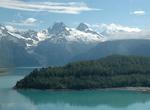
Visit Lituya Bay, Alaska
Lituya Bay is a fjord located on the coast of the Southeast part of the U.S. state of Alaska. Lituya Bay is also famous for hosting four recorded tsunamis over 100 feet: in 1854 (395 feet high), 1899 (200 feet), 1936 (490 feet), and 1958 (1740 feet). The bay is 14.5 km (9.0 mi) long and 3.2 km (2.0 mi) wide at its widest point. The smaller Cascade Glacier and Crillon ... -
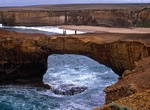
See London Arch (London Bridge), Port Campbell National Park, Australia
London Arch is a natural arch in the Port Campbell National Park, Australia and is one of the tourist attractions along the Great Ocean Road near Port Campbell in Victoria. This stack was formed by a gradual process of erosion, and until 1990 formed a complete double-span natural bridge. The arch closest to the shoreline collapsed unexpectedly on 15 January 1990,...
Price: $606.00