Give us feedback!


 See all
Our philosophy is simple. We want to encourage you to dream. BIG! Then we help you plan your trip, get the most out of it while you're traveling and help you share your experience with friends.
Join Now It's FREE
Dream Packages
Duration: 11 days
Price: $1534.00
Price: $1534.00
Duration: 9 hours
Price: $163.30
Price: $163.30
Duration: 2 days
Price: $469.00
Price: $469.00
Duration: 6 days
Price: $606.00
Price: $606.00
Related Categories
Dreams Still To Do
Checked-Off Dreams
Dreams Still To Do
Checked-Off Dreams
Advertisement
Explore See Wild Things
-
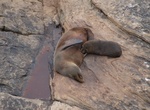
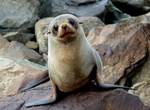
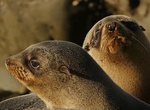
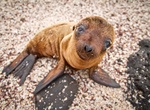
Visit Fur Seal Lookout, Flinders Chase National Park, South Australia
Fur Seal Lookout is a great spot for seeing long-nosed seals. -
Hike to See Fur Seals at Cape Foulwind (Tauranga Bay), New Zealand
Cape Foulwind is a prominent headland on the West Coast of New Zealand's South Island, overlooking the Tasman Sea. It is located ten kilometres west of the town of Westport. It was previously named Rocky Cape by Abel Tasman, the first European to visit it, in 1642. The present name was bestowed upon this promontory by English explorer James Cook in 1770 after his... -
See Fur Seals at Cape Palliser, New Zealand
Cape Palliser is a promontory on the southern coast of New Zealand's North Island and is the southernmost point of North Island - it is in fact considerably further south than Nelson or Blenheim in the South Island. It is located at the eastern end of Palliser Bay, 50 kilometres southeast of Wellington - 100 kilometres by road. A small settlement - Ngāwī - is situated... -
Visit Galápagos Islands, Ecuador (UNESCO Sites)
The Galapagos Islands, owned by Ecuador, is an archipelago located in the Eastern Pacific Ocean serving as the background for studies by amateur and professional natural historians due to its unusual flora and fauna. The famous naturalist Charles Darwin was inspired by the Galapagos Islands as he developed his Theory of Natural Selection. The islands, volcanic in orig... -
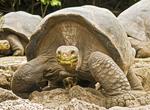
See Galápagos Tortoise in the Wild
The Galápagos tortoise or Galápagos giant tortoise (Chelonoidis nigra) is the largest living species of tortoise and 10th-heaviest living reptile, reaching weights of over 400 kg (880 lb) and lengths of over 1.8 meters (5.9 ft). With life spans in the wild of over 100 years, it is one of the longest-lived vertebrates. A captive individual lived at least ... -
Explore Gamsberg Nature Reserve, Namibia
Gamsberg Nature Reserve is a protected reserve of Namibia, located west of Rehoboth. -
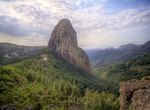
Explore Garajonay National Park, Canary Islands, Spain (UNESCO site)
Garajonay National Park is located in the center and north of the island of La Gomera, one of the Canary Islands (Spain). It was declared a national park in 1981 and a World Heritage Site by UNESCO in 1986. It occupies 40 km2 (15 sq mi) and it extends into each of the municipalities on the island. The park is named after the rock formation of Garajonay, the highest po... -
Dive with Garden Eels off Kona, Hawaii
It's called Garden Eel Cove by day and Manta Heaven by night. This dive site is about 30 minutes ride by boat from Honokohau Marina in Kailua-Kona, Hawaii. The garden eels are the subfamily Heterocongrinae in the conger eel family Congridae. The greatest species richness is in the Indo-Pacific, but there are also species in warmer parts of the Atlantic Ocean (includin... -
Explore Gates of the Arctic National Park, Alaska
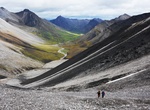
Gates of the Arctic National Park and Preserve is a U.S. National Park in Alaska. It is the northernmost national park in the U.S. (the entirety of the park lies north of the Arctic Circle) and the second largest at 13,238 mi² , about the same size as Switzerland. The park consists primarily of portions of the Brooks Range of mountains. It was first protected as ... -
Explore Gates of the Arctic National Preserve, Alaska
Gates of the Arctic National Preserve is a located in the U.S. National Park in Alaska and lies north of the Arctic Circle. It was first protected as a U.S. National Monument on December 1, 1978, before becoming a national preserve two years later in 1980 upon passage of the Alaska National Interest Lands Conservation Act. Sport hunting and trapping for Brown bears, G... -
See Gentoo Penguins at Waterboat Point, Antarctica
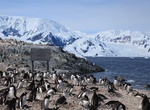
Waterboat Point (Península Munita) is the low westernmost termination of the peninsula between Paradise Harbor and Andvord Bay on the west coast of Graham Land. This feature has "island" characteristics, but it is only separated from the mainland at high water and is more usefully described as a "point". Chile's González Videla Antarctic Base is located ... -
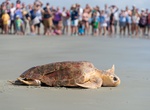
Visit Georgia Sea Turtle Center, Jekyll Island, Georgia
Georgia Sea Turtle Center on Jekyll Island is an educational center devoted to the study, care & rehabilitation of sea turtles & their environment. -
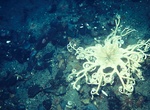
See a Giant Basket Star at night
The giant basket star (Astrophyton muricatum), is an echinoderm found in shallow parts of the tropical western Atlantic and throughout the Caribbean Sea and the Gulf of Mexico. It is the only species in the genusAstrophyton. During the day, it curls up into a tight ball shape to protect itself from predators. At night, it climbs to an elevated point to feed by extendi... -
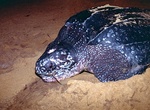
See Giant Leatherback Turtles on Hattes Beach (Plage des Hattes), French Guiana
See Giant Leatherback Turtles on Hattes Beach (Plage des Hattes). Located in the northwest corner of French Guiana, the beach is the most important single nesting site in the world for giant leatherback turtles. -
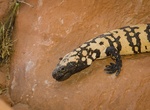
See a Gila Monster
The Gila monster--as its name implies--often gets a bad rap. It’s sort of like the great white shark of the lizard world in that it gets accused of actively seeking out humans and harming them, when in reality, it would rather avoid them. Most of this misunderstanding comes from folklore. Some say the Gila monster spits venom, some say it can kill a person with ...
Price: $496.29