Give us feedback!


 See all
Our philosophy is simple. We want to encourage you to dream. BIG! Then we help you plan your trip, get the most out of it while you're traveling and help you share your experience with friends.
Join Now It's FREE
Dream Packages
Duration: 11 hours
Price: $241.79
Price: $241.79
Duration: 1 hour 30 minutes
Price: $138.60
Price: $138.60
Duration: 7 days
Price: $940.00
Price: $940.00
Duration: 12 hours
Price: $135.99
Price: $135.99
Related Categories
Dreams Still To Do
Checked-Off Dreams
Dreams Still To Do
Checked-Off Dreams
Advertisement
Explore See Wild Things
-
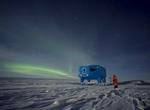
Visit British Antarctic Territory (Graham Land), Antarctica
The British Antarctic Territory (BAT) is a sector of Antarctica claimed by the United Kingdom as one of its 14 British Overseas Territories. It comprises the region south of 60°S latitude and between longitudes 20°W and 80°W, forming a wedge shape that extends to the South Pole. The Territory was formed on 3 March 1962, although the UK's claim to this port... -
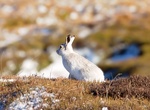
See British Mountain Hares in Winter, Peak District National Park, England
England's only population of mountain hares lives in the Peak District, where the animal was reintroduced in the 1800s. They can be spotted in their snow-white winter coats between November and April, bathing in the pale sunlight in areas of moorland and heather. One of their favoured haunts is Bleaklow, a mountain along the Pennine Way. -
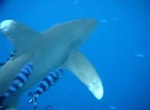
Dive Brothers Islands, Egypt
The Brothers, or El Akhawein, are two small islands in the middle (width-ways) of the Red Sea. Big Brother and Little Brother are a 5 minute boat ride apart. The Brothers have never been a highly dived site, due to their inaccessible position 100 miles offshore in the middle of the (southern Egyptian) Red Sea opposite Al Quseir. The larger Brother is home to a ligh... -
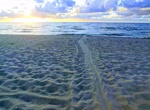
Attend Turtle Release at Broward County Sea Turtle Conservation Program, Fort Lauderdale, Florida
B Ocean Resort in Fort Lauderdale partners with the Broward County Sea Turtle Conservation Program, reducing artificial lights on the beach and organizing night walks to watch over hatchlings as they make their way to the water. From March through October, which is turtle nesting season in Greater Fort Lauderdale, guests can participate in eco tours, turtle treks and ... -
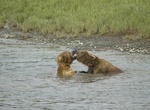
See Brown Bears at McNeil River State Game Sanctuary, Alaska
The McNeil River is a river on the eastern drainage of the Alaska Peninsula near its base and conjunction with the Alaska mainland. The McNeil emerges from glaciers and alpine lakes in the mountains of the Aleutian Range. The river's destination is the Cook Inlet in Alaska's southwest. The McNeil is the prime habitat of numerous animals, but it is famous for its salmo... -
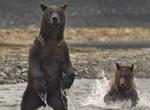
See Brown Bears at Pack Creek Brown Bear Viewing Area (Admiralty Island), Alaska
For a truly incredible Alaskan experience, head to Admiralty Island in Alsaka and visit the Pack Creek Brown Bear Viewing Area, known as the ‘Fortress of the Bears’ by the indigenous Tlingit people. This protected habitat has the largest brown bear population in the world (with four times as many brown bears as Yellowstone National Park!). Admiralty Island... -
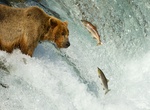
See Brown Bears Fishing for Salmon, Brooks Falls, Katmai NP, Alaska
In several parts of coastal Alaska and the Kamchatka peninsula in Russia, brown bears feed on spawning salmon, whose nutrition and abundance explain the enormous size of the bears in these areas. The fishing techniques is often to congregate around falls when the salmon are forced to breach the water, at which point the bears will try to catch the fish in mid-air (of... -
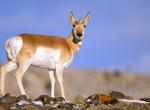
Explore Buenos Aires National Wildlife Refuge, Arizona
Buenos Aires National Wildlife Refuge provides 117,107 acres (473.92 km2) of habitat for threatened and endangered plants and animals. The semidesert grassland supports the reintroduction of masked bobwhite quail and pronghorns. Prescribed and natural fires play a major role in maintaining and restoring the sea of grass that once filled the Altar Valley. Riparian (wet... -
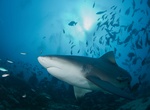
Dive with Bull Sharks off Beqa Lagoon, Fiji
Beqa Lagoon in Fiji has many different shark species, but is really known for the Bull Sharks. These hugh bull sharks are hand-fed by the local Fijians. An impressive thing to see since see these supposedly super-aggressive sharks being gently hand-fed like puppy dogs. Other sharks you can see in Beqa Lagoon are tigers, hammerheads. -
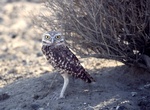
See a Burrowing Owl in Lake Mead NRA
The burrowing owl has it all figured out. A small owl about as tall as a robin, just a little plumper, this daytime owl knows how to live the good life. Build its own home from scratch? Nah! Burrowing owls move into old prairie dog and squirrel burrows and do a little light redecorating. They collect bits of metal foil, bottle caps, and other pieces of trash for the e... -
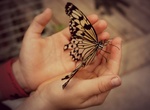
Visit Butterfly Creek, Auckland, New Zealand
Butterfly Creek has a unique collection of animals, insects and critters. There is also a Butterfly House with up to 700 butterflies, Alligators, Tropical Aquaria and a full Petting Zoo. -
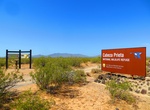
Explore Cabeza Prieta National Wildlife Refuge, Arizona
The Cabeza Prieta National Wildlife Refuge is located in the Sonoran Desert in southwestern Arizona in the United States. The refuge, established in 1939 to protect Desert Bighorn Sheep, is located along 56 miles (90 km) of the U.S.-Mexico border, and covers 860,010 acres (3,480 km²) — larger than the land area of the state of Rhode Island. Spanish for "dar... -
Birding at Cache River National Wildlife Refuge, Arkansas
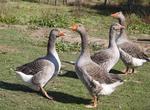
The Cache River National Wildlife Refuge is a 55,000 acre (223 km²) wildlife refuge in the state of Arkansas managed by the United States Fish and Wildlife Service. The refuge is one of the Ramsar wetlands of international importance under the Ramsar Convention signed in 1971. It is also the most important wintering area for ducks and the largest remaining tract ... -
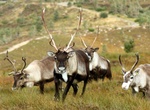
See Cairngorm Reindeer Herd, Scotland
The Cairngorms are a mountain range in the eastern Highlands of Scotland closely associated with the mountain of the same name—Cairn Gorm. The Cairngorms national park is known for its wildlife. The area also features an ancient woodland, one of the last major ones of its kind in the British Isles, known as the Caledonian Forest. Much of the remains of this fore... -
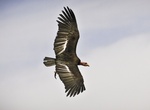
See a California Condor in Baja California
The California Condor (Gymnogyps californianus) is a New World vulture, the largest North American land bird. This condor became extinct in the wild in 1987 (all remaining wild individuals were captured) but has been reintroduced to northern Arizona and southern Utah (including the Grand Canyon area and Zion National Park), coastal mountains of central and southe...
Price: $184.27