Give us feedback!


 See all
Our philosophy is simple. We want to encourage you to dream. BIG! Then we help you plan your trip, get the most out of it while you're traveling and help you share your experience with friends.
Join Now It's FREE
Dream Packages
Duration: 2 days
Price: $350.00
Price: $350.00
Duration: 15 hours
Price: $571.07
Price: $571.07
Duration: 8 hours
Price: $204.19
Price: $204.19
Related Categories
Dreams Still To Do
Checked-Off Dreams
Dreams Still To Do
Checked-Off Dreams
Advertisement
Explore Space
-
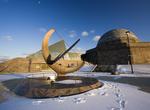
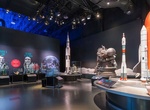
Visit Adler Planetarium & Astronomy Museum, Chicago, Illinois
The Adler Planetarium & Astronomy Museum in Chicago, Illinois was the first planetarium built in the Western Hemisphere and is the oldest in existence today. Adler was founded and built in 1930 by the philanthropist Max Adler, with the assistance of the first director of the planetarium, Philip Fox. The Adler Planetarium opened to the public on May 12, 1930. On th... -
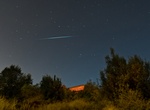
See Alpha Capricornids Meteor Shower
Alpha Capricornids is a meteor shower that takes place as early as 15 July and continues until around 10 August. The meteor shower was discovered by Hungarian astronomer Miklos von Konkoly-Thege in 1871. This shower has infrequent but relatively bright meteors, with some fireballs. Parent body is comet 169P/NEAT. Peter Jenniskens and Jeremie Vaubaillon identified the ... -
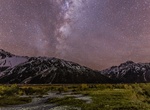
Visit Aoraki Mackenzie International Dark Sky Reserve, New Zealand
The Aoraki Mackenzie International Dark Sky Reserve is an area of 4,367 km2 (1,686 sq mi) that was designated as an International Dark Sky Reserve by the International Dark-Sky Association in June 2012. The reserve is located in the Mackenzie District in the South Island of New Zealand. At the time of the designation in 2012, the reserve was the largest in the world, ... -
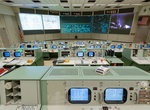
Visit Apollo Mission Control Center, Johnson Space Center in Houston, Texas
NASA's Christopher C. Kraft Jr. Mission Control Center (MCC-H, initially called Integrated Mission Control Center, or IMCC), also known by its radio callsign, Houston, is the facility at the Lyndon B. Johnson Space Center in Houston, Texas that manages flight control for America's human space program, currently involving astronauts aboard the International Space Stati... -
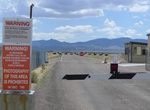
See Area 51, Nevada
Area 51 is a military base, and a remote detachment of Edwards Air Force Base. It is located in the southern portion of Nevada in the western United States, 83 miles north-northwest of Las Vegas. Situated at its center, on the southern shore of Groom Lake, is a large military airfield. The base's primary purpose is undetermined, however, based on historical evidence, ... -
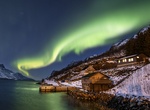
See Aurora Borealis In Norway
See Aurora Borealis In Norway. The Northern Lights have spawned myths and legends related to their source among indigenous peoples wherever they are seen. The magical streaks and curtains of glowing greens, blues, yellows and reds, best experienced under the night sky, are the result of enhanced solar winds commensurate with sunspot activity blowing over Earth’s... -
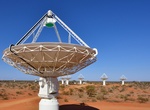
See Australian Square Kilometre Array Pathfinder (ASKAP), Western Australia
The Australian Square Kilometre Array Pathfinder (ASKAP) is a radio telescope array located at Murchison Radio-astronomy Observatory (MRO) in the Mid West region of Western Australia. The facility began as a technology demonstrator for the international Square Kilometre Array (SKA), an internationally planned radio telescope which will be larger and more sensitive. Th... -
See Australia Telescope Compact Array (ATCA), New South Wales, Australia
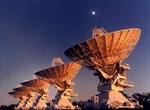
The Australia Telescope Compact Array (ATCA) is a radio telescope operated by CSIRO at the Paul Wild Observatory, twenty five kilometres (16 mi) west of the town of Narrabri in New South Wales, Australia. Its opening ceremony took place on September 2, 1988. The telescope is an array of six identical 22-metre (72 ft) diameter dishes, which commonly operate in aperture... -
Visit Baikonur Cosmodrome, Kazakhstan
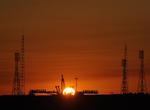
The Baikonur Cosmodrome, also called Tyuratam, is the world's first and largest operational space launch facility. It is located in the desert steppes of Kazakhstan, about 200 kilometres (124 mi) east of the Aral Sea, north of the Syr Darya river, near Tyuratam railway station, at 90 metres above sea level. It is leased by the Kazakh government to Russia (currently un... -
Visit Canada Aviation and Space Museum, Ottawa, Ontario
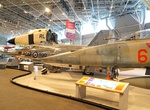
The Canada Aviation and Space Museum (French:Musée de l'Aviation et de l'Espace du Canada) (formerly the Canada Aviation Museum and National Aeronautical Collection) is Canada's national aviation history museum. The museum is located in Ottawa, Ontario, Canada, at the Ottawa/Rockcliffe Airport. The museum was first formed in 1964 at RCAF Station Rockcliffe as t... -
Visit Canberra Deep Space Communication Complex, Tidbinbilla, Australian Capital Territory
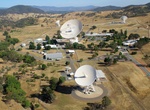
The Canberra Deep Space Communication Complex (CDSCC) is an Earth station in Australia located at Tidbinbilla in the Australian Capital Territory. Opened in 1965, the complex was used for tracking the Apollo Lunar Module. Deep Space Network of NASA's Jet Propulsion Laboratory (JPL), managed in Australia by the Commonwealth Scientific and Industrial Research Organisati... -
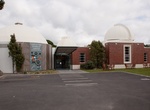
Visit Carter Observatory, Wellington, New Zealand
Space Place at Carter Observatory stands at the top of the Botanic Gardens in Wellington, New Zealand. It re-opened in March 2010 following a NZ$5 million refurbishment, with a new exhibition and digital planetarium celebrating the culture, heritage and science of the Southern Skies. Space Place at Carter Observatory houses two main telescopes within its main building... -
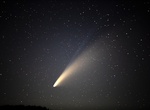
See a Comet
A comet is an icy, small Solar System body that, when passing close to the Sun, warms and begins to release gases, a process that is called outgassing. This produces a visible atmosphere or coma, and sometimes also a tail. These phenomena are due to the effects of solar radiation and the solar wind acting upon the nucleus of the comet. Comet nuclei range from a few hu... -
Visit Cosmodôme, Laval, Quebec
Cosmodome is a space science museum and education center located in Laval, Quebec, Canada. Cosmodome is the home to both Space Camp Canada and the Space Science Center (a museum). Space Camp Canada welcomed its first campers in July 1994 while the Space Science Center opened its doors to the public in December 1994. The Space Science Center is the only museum in Canad... -
See Draconids Meteor Shower
The October Draconids, in the past also unofficially known as the Giacobinids, are a Northern Hemisphere meteor shower whose parent body is the periodic comet 21P/Giacobini-Zinner. They are named after the constellation Draco, where they seemingly come from. Almost all meteors which fall towards Earth ablate long before reaching its surface. The Draconids are best vie...
Price: $246.07