Give us feedback!
Our philosophy is simple. We want to encourage you to dream. BIG! Then we help you plan your trip, get the most out of it while you're traveling and help you share your experience with friends.
Join Now It's FREE
Dreams Still To Do
Checked-Off Dreams
Dreams Still To Do
Checked-Off Dreams
Advertisement
Explore Spiritual & Self
-
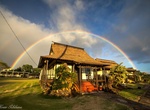
See Koloa Jodo Mission, Kauai, Hawaii
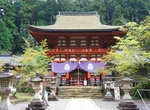
Buddhist temples provided Japanese immigrants a place to worship, study their language, learn martial arts and participate in social events. This Jodo Mission used a specialist in temple architecture from Japan to build the large temple’s interior. Hand-painted, wooden ceiling tiles were a gift from the Japanese artist who rendered them. A short tour is availab... -
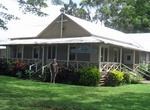
See Koloa Missionary Church, Kauai, Hawaii
Koloa Missionary Church sanctuary is part of a homestead once owned by Dr. James W. Smith, a medical missionary. In 1842, he began a practice of over 40 years, later becoming an ordained minister at The Church at Koloa. His grandson, Dr. Alfred Herbert Waterhouse, added a clinic to the homestead in 1933. It is the last stop along the Koloa Heritage Trail, a 10 mile w... -
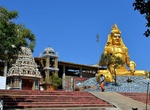
Visit Koneswaram Temple, Sri Lanka
Koneswaram temple, also known as Dakshinakailasha is a classical-medieval Hindu temple dedicated to Lord Shiva in Trincomalee, Eastern Sri Lanka. The temple is situated atop Konesar Malai, a promontory that overlooks the Indian Ocean, the nearby eastern coast (the Trincomalee District), as well as Trincomalee Harbour or Gokarna Bay. Konesvaram is revered as one the Pa... -
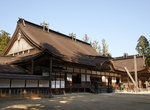
See Kongōbu-ji Temple, Kii Peninsula, Japan (UNESCO site)
Kongōbu-ji (金剛峯寺) is the ecclesiastic head temple of Kōyasan Shingon Buddhism, located on Mount Kōya (高野山, Kōya-san), Wakayama Prefecture, Japan. Its name means Temple of the Diamond Mountain Peak. It is part of the "Sacred Sites and Pilgrimage Routes in the Kii Mountain Range" UNESCO World Heritage Site. The temple was first constructed as Seigan-ji Temple in 1593 by... -
See Kópavogskirkja, Iceland
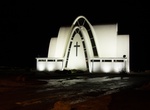
Kópavogskirkja is the oldest church in Kópavogur. It is located on the hill Borgarholt and offers a great view over Kópavogur, Reykjavík and surrounding area. Work on it began in 1958 and it was opened on December 16, 1963. Its architecture is unusual, it is the cross section of two wide arches. Its profile is prominent in the Kópavo... -
Visit Korčula Cathedral, Korčula, Croatia
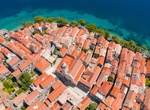
The Cathedral of St. Mark also called Korčula Cathedral, is the Roman Catholic cathedral of Korčula, Croatia. It occupies an elevated position in the town centre. The cathedral was built by local masters from the fifteenth century to the mid-sixteenth century. In 1557, an organ was placed in the cathedral. Tintoretto painted the altarpiece. The portal is the work of B... -
Visit Košljun Monastery, Krk Island, Croatia
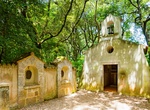
Košljun Monastery is a Franciscan Monastery located in an island Košljun. It’s built on the site of a 12th-century Benedictine abbey. If you plan to visit, keep in mind that you should dress in a modest way. -
Tour Kota Kinabalu City Mosque, Kota Kinabalu, Sabah, Malaysia
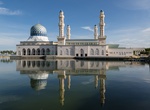
The Kota Kinabalu City Mosque (Masjid Bandaraya Kota Kinabalu) is the second main mosque for the city of Kota Kinabalu in Likas, Kota Kinabalu, Sabah, Malaysia, after the State Mosque in Sembulan. The head imam is Hafiz Bin Hamzah. Preparations for the mosque began in 1989, and the installation of foundation piles began in 1992. Construction was delayed between 1993 a... -
See Kōtoku-in Great Buddha, Kamakura, Japan
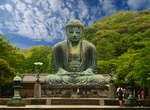
Kōtoku-in is a Buddhist temple of the Jōdo-shū sect in the city of Kamakura in Kanagawa Prefecture, Japan. The temple is renowned for its "Great Buddha", a monumental outdoor bronze statue of Amida Buddha which is one of the most famous icons of Japan. The Great Buddha of Kamakura is a monumental outdoor bronze statue of Amitābha Buddha located at the Kōtoku-in Temple... -
Visit Koulata Ethnographic Complex, Kazanluk, Bulgaria
The charming cobbled Mirska Street is in the oldest part of the city – Koulata District, near the world-famous Thracian Tomb of Kazanlak. This is where traditional architecture from the period of the Bulgarian National Revival (18th–19th centuries) can be found. The traditional buildings there constitute the Koulata Ethnographic Complex, restored and open ... -
Visit Koutloumousiou Monastery, Mount Athos
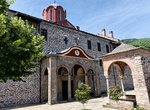
The Koutloumousiou Monastery (Greek: Μονή Κουτλουμουσίου) or Koutloumousi (Κουτλουμούσι) is an Eastern Orthodox monastery in the monastic state of Mount Athos in Greece. The monastery ranks sixth... -
Visit Kōyasan area of Kii Mountains, Japan (UNESCO site)
The Sacred Sites and Pilgrimage Routes in the Kii Mountain Range is a UNESCO World Heritage Site located on the Kii Peninsula in Japan. The locations and paths for this heritage site were based on their historical and modern importance in religious pilgrimages. It was also noted for its fusion of Shinto and Buddhist beliefs, and a well documented history of tradi... -
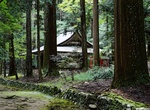
Visit Kōzan-ji, Kyoto, Japan (UNESCO Site)
Kōzan-ji officially Toganōsan Kōsan-ji is a Buddhist temple of the Omuro sect of Shingon Buddhism in Umegahata Toganōchō, Ukyō Ward, Kyoto, Japan. Kōzan-ji is also known as Kōsan-ji and Toganō-dera. The temple was founded by the Shingon scholar and monk Myōe (1173 – 1232) and is renowned for its numerous national treasures and important cultural properties. The ... -
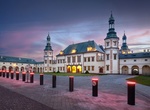
Visit Kraków Bishops Palace & The National Museum in Kielce, Kielce, Poland
The Palace of the Kraków Bishops in Kielce, was built in the 17th century as a summer residence of bishops of Kraków in Kielce, Poland. The architecture of the palace constitutes a unique mélange of Polish and Italian traditions and reflects political ambitions of its founder. Currently the palace houses a branch of the National Museum with an imp... -
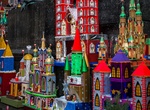
Attend Kraków Szopka Nativity Cribs Festival, Poland
Kraków szopka, or nativity scene, is a Christmas tradition originating from Kraków, Poland, and dating back to the 19th century. An unusual and characteristic feature of the szopka is the use of historical buildings of Kraków as backdrop for the Nativity of Jesus. Nativity scenes, common in Christian cultures, originated with St. Francis of Assisi...