Give us feedback!
Our philosophy is simple. We want to encourage you to dream. BIG! Then we help you plan your trip, get the most out of it while you're traveling and help you share your experience with friends.
Join Now It's FREE
Related Categories
Dreams Still To Do
Checked-Off Dreams
Dreams Still To Do
Checked-Off Dreams
Advertisement
Explore US Historic Sites (NHS)
-
Visit Hubbell Trading Post National Historic Site, Arizona
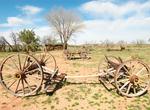
Hubbell Trading Post National Historic Site is a meeting ground of two cultures, the Navajo and settlers who came to the area to settle in what is now northeastern Arizona in the late 19th century. These settlers came from Mexico from the south and eastern United States. In 1878, John Lorenzo Hubbell purchased this trading post, ten years after Navajos were allowed to... -
Visit Independence Mines, Palmer, Alaska
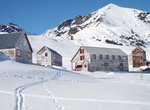
The Independence Mines, now Independence Mine State Historic Park, is the site of a former gold mining operation in the Talkeetna Mountains, across Hatcher Pass from Palmer, Alaska. The area's mining history dates to at least 1897, when active claims were reported in the vicinity of Fishook Creek. These early mining efforts were eventually joined to form the Wasilla M... -
Visit James A. Garfield National Historic Site, Ohio
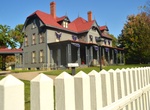
James A. Garfield National Historic Site is a United States National Historic Site located in Mentor, Ohio. The site preserves the property associated with the 20th President of the United States, James Abram Garfield. Garfield acquired the home in 1876 to accommodate his large family. The home, named Lawnfield by reporters, was the site of the first successful front ... -
Visit James Monroe Law Office, Fredericksburg, Virginia
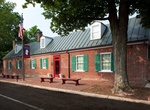
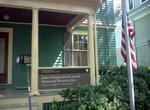
The James Monroe Museum and Memorial Library is a historic museum at 908 Charles Street in Fredericksburg, Virginia. It is located on the site of the James Monroe Law Office, used by future United States President James Monroe from 1786 to 1789. It was declared a National Historic Landmark in 1966. It is now owned by the Commonwealth of Virginia and operated by the Un... -
Visit Jimmy Carter National Historic Site, Georgia
The Jimmy Carter National Historic Site, located in Plains, Georgia, preserves sites associated with James Earl "Jimmy" Carter, Jr. (1924–present), 39th President of the United States. These include his residence, boyhood farm, school, and the town railroad depot, which served as his campaign headquarters during the 1976 election. The building which used to be P... -
Visit John Fitzgerald Kennedy National Historic Site, Massachusetts
John Fitzgerald Kennedy National Historic Site, located in Brookline, Massachusetts' Coolidge Corner neighborhood, is a historical site that commemorates the life of President John F. Kennedy, who was assassinated in 1963. Tours of his home are offered, and a film is presented. The Kennedy home in Brookline, Massachusetts, is the birthplace and childhood home of futur... -
Visit John Frank House, Sapulpa, Oklahoma
The John Frank House was built in 1955 in Sapulpa, Oklahoma, United States. It was designed by architect Bruce Goff. It was designed for John Frank, founder of Frankoma Pottery. It was specifically designed to showcase the Franks' love for pottery. John and Grace Lee Frank glazed and fired the ceramic tiles located throughout the house. The home is listed on the Natio... -
Visit John Muir National Historic Site, California
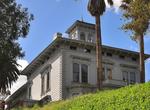
The John Muir National Historic Site is located in the San Francisco Bay Area, in Martinez, Contra Costa County, California. It preserves the 14-room Italianate Victorian mansion where the naturalist and writer John Muir lived, as well as a nearby 325 acres (132 ha) tract of native oak woodlands and grasslands historically owned by the Muir family. The main site ... -
Visit Kentucky Camp, Arizona
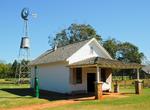
Kentucky Camp is a ghost town and former mining camp along the Arizona Trail in Pima County, Arizona, United States, near the community of Sonoita. The Kentucky Camp Historic District is listed on the National Register of Historic Places and has been since 1995. As it is located within Coronado National Forest, the United States Forest Service is responsible for the u... -
Explore Knife River Indian Villages National Historic Site, North Dakota
The Knife River Indian Villages National Historic Site, which was established in 1974, preserves the historic and archaeological remnants of the Northern Plains Indians. This area was a major trading and agricultural area. There were three villages that occupied the Knife area. In general, these three villages are known as the Hidatsa villages. Broken down, the indivi... -
Visit Laura Plantation, Vacherie, Louisiana
Laura Plantation is a restored historic Louisiana Creole plantation on the west bank of the Mississippi River near Vacherie, Louisiana, (U.S.), open for guided tours. Formerly known as Duparc Plantation, it is significant for its early 19th-century Créole-style raised big house and several surviving outbuildings, including two slave cabins. It is one of only 15... -
See Lehman Orchard and Aqueduct, Baker, Nevada
The Lehman Orchard and Aqueduct were established by Absalom Lehman, the discoverer of Lehman Caves in what would become Great Basin National Park in eastern Nevada. Lehman's orchard covered more than 7 acres (2.8 ha), with about 40 apricot, pear, peach, crabapple, plum and apple trees in the 1930s, of more than 100 trees at its peak. Seven apricot trees and one peach ... -
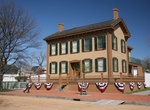
Visit Lincoln Home National Historic Site, Illinois
Lincoln Home National Historic Site preserves the Springfield, Illinois home and a historic district where Abraham Lincoln lived from 1844 to 1861, before becoming the 16th President of the United States. The presidential memorial includes the four-blocks surrounding the home and a visitor center. The house, purchased by Lincoln and his wife, Mary Todd Lincoln in 1844... -
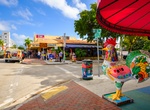
Visit Little Havana, Miami, Florida
Little Havana is a neighborhood of Miami, Florida, United States. Home to many Cuban exiles, as well as many immigrants from Central and South America, Little Havana is named after Havana, the capital and largest city in Cuba. Little Havana is noted as a center of social, cultural, and political activity in Miami. Its festivals, including the Calle Ocho Festival, Vier... -
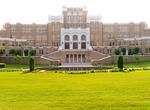
Visit Little Rock Central High School National Historic Site, Arkansas
Little Rock Central High School is a high school in Little Rock, Arkansas, United States. Central High School was the site of forced school desegregation during the American Civil Rights Movement. Central is located at the intersection of Daisy L. Gatson Bates Drive (named for the civil rights leader and formerly known as 14th Street) and Park Street. Central High Sch...