Give us feedback!
Our philosophy is simple. We want to encourage you to dream. BIG! Then we help you plan your trip, get the most out of it while you're traveling and help you share your experience with friends.
Join Now It's FREE
Related Categories
Dreams Still To Do
Checked-Off Dreams
Dreams Still To Do
Checked-Off Dreams
Advertisement
Explore US Parks & Landmarks
-
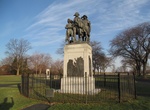
Visit Fallen Timbers Battlefield and Fort Miamis National Historic Site, Ohio
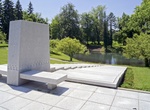
The Fallen Timbers Battlefield was the site of the Battle of Fallen Timbers on 20 August 1794. The site was declared a National Historic Landmark in 1960. This photo is of the Fallen Timbers Battlefield Memorial Site, whose centerpiece is the Battle of Fallen Timbers Monument. The memorial site was originally believed to have been near the actual battlefield below, on... -
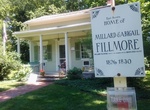
Visit Fillmore House, Erie County, New York
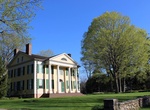
The Fillmore House, or Millard Fillmore House, is a historic house museum at 24 Shearer Avenue in East Aurora in Erie County, New York. Built in 1826, it was from then until 1830 the residence of the 13th President of the United States, Millard Fillmore. Moved twice and significantly altered, it is the only surviving building other than the White House associated with... -
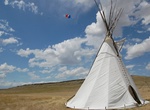
Explore First Peoples Buffalo Jump State Park, Montana
First Peoples Buffalo Jump State Park is a Montana state park in Cascade County, Montana in the United States. The park is 1,481 acres (599 ha) and sits at an elevation of 3,773 feet (1,150 m). It is located about 3.5 miles (5.6 km) northwest of the small town of Ulm, which is near the city of Great Falls. First Peoples Buffalo Jump State Park contains the Ulm Pishkun... -
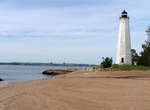
See Five Mile Point Light, New Haven, Connecticut
Five Mile Point Light, also known as Five Mile Point Lighthouse or Old New Haven Harbor Lighthouse, is a lighthouse in New Haven, Connecticut, United States, on the harbor entrance to Long Island Sound, five miles (8 km) from Downtown New Haven. Originally in 1805, a 30-foot (9.1 m) octagonal wooden tower was built by Abisha Woodward. In 1847, a new 80-foot (24 m) oct... -
Visit Florence Griswold Museum, Old Lyme, Connecticut
The Florence Griswold Museum is an art museum at 96 Lyme Street in Old Lyme, Connecticut centered on the home of Florence Griswold (1850-1937), which was the center of the Old Lyme Art Colony, the main center of development of American Impressionism. The museum is noted for its collection of American Impressionist paintings. The house was designated a National Histori... -
Visit Forestiere Underground Gardens, Fresno, California
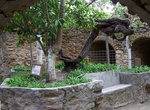
Forestiere Underground Gardens Located at 5021 West Shaw Avenue in Fresno, California are an unusual manmade creation built by Baldasare Forestiere, an immigrant from Sicily, over a period of 40 years from 1906 to until his death in 1946. It is operated by members of the Forestiere family through the Forestiere Historical Center, and can be considered a spectacular an... -
Visit Forest Lawn Cemetery, Buffalo, New York
Forest Lawn Cemetery in Buffalo, New York was founded in 1849 by Charles E. Clarke. It covers over 269 acres (1 km²) and over 152,000 are buried there. Notable graves include U.S. President Millard Fillmore, singer Rick James, and inventor Lawrence Dale Bell. Forest Lawn is on the National Register of Historic Places. Since its inception, Forest Lawn has served a... -
Visit Fort Barrancas, Warrington, Florida
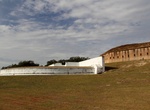
Fort Barrancas (1839) or Fort San Carlos de Barrancas (from 1787) is a United States military fort and National Historic Landmark in the former Warrington area of Pensacola, Florida, located physically within Naval Air Station Pensacola, which was developed later around it. The hill-top fort, connected to a sea level water battery, overlooks Pensacola Bay. From 1839&n... -
Visit Fort Bridger State Historic Site, Wyoming
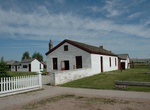
Fort Bridger was originally a 19th-century fur trading outpost established in 1842 on Blacks Fork of the Green River and later a vital resupply point for wagon trains on the Oregon Trail, California Trail and Mormon Trail. The Army established a military post here in 1858 during the Utah War until it was finally closed in 1890. A small town, Fort Bridger, Wyoming, rem... -
Visit Fort Christian, St. Thomas, USVI
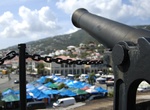
Fort Christian is a Danish-built fort in Charlotte Amalie, Saint Thomas, U.S. Virgin Islands. Governor Jørgen Iversen Dyppel led the second expeditionary force from Denmark to St. Thomas, where he arrived on 25 May 1672; there, he initiated construction of Fort Christian, named after King Christian V. In the 18th century, the fort was expanded and in 1874 a new... -
Visit Fort Craig National Historic Site, New Mexico
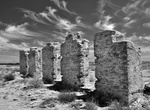
The 160 acre Fort Craig Historic Site, managed by the BLM in the ruggedly-beautiful Socorro County in western New Mexico. Commissioned in 1854, Fort Craig was one of the largest and most important frontier forts in the West. The Fort was situated on El Camino Real de Tierra Adentro (the Royal Road to the Interior Lands) — the 1,200-mile Spanish colonial trail f... -
Visit Fort Kearny State Historical Park, Nebraska
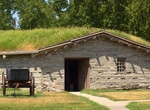
Fort Kearny was a historic outpost of the United States Army founded in 1848 in the western U.S. during the middle and late 19th century. The outpost was located along the Oregon Trail near present-day Kearney, Nebraska, which took its name from the fort. In 1928, the Fort Kearny Memorial Association was formed by Nebraska citizens to raise money to purchase and ... -
Visit Fort Kent Railroad Station, Maine
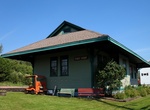
The Fort Kent Railroad Station is a historic railroad station at Main and Market Streets in Fort Kent, Maine. It was built in 1902 by the Fish River Railroad, a line that was used in service until 1979. The station is now home to a museum operated by the Fort Kent Historical Society, dedicated to the local history of the railroad and its influence on the region. The b... -
Visit Fort Kent State Historic Site, Maine
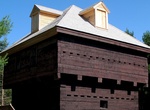
Fort Kent State Historic Site is a Maine state park in the town of Fort Kent, Maine. Located at the confluence of the Fish and Saint John Rivers, it includes Fort Kent, the only surviving American fortification built during border tensions with neighboring New Brunswick known as the Aroostook War. The fort was declared a National Historic Landmark in 1973. The park fe... -
Visit Fort Ross, California
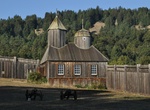
Fort Ross, originally Fortress Ross is a former Russian establishment on the west coast of North America in what is now Sonoma County, California, in the United States. It was the hub of the southernmost Russian settlements in North America between 1812 to 1842. It has been the subject of archaeological investigation and is a California Historical Landmark, a National...