Give us feedback!
Our philosophy is simple. We want to encourage you to dream. BIG! Then we help you plan your trip, get the most out of it while you're traveling and help you share your experience with friends.
Join Now It's FREE
Dreams Still To Do
Checked-Off Dreams
Dreams Still To Do
Checked-Off Dreams
Advertisement
Explore Wildlife
-
Birding at Cape May National Wildlife Refuge, New Jersey
The Cape May National Wildlife Refuge is a protected area on the Cape May Peninsula in Cape May County, New Jersey. It provides habitat for large numbers of migratory birds. The Cape May area is world-famous for the observation of migrating birds. Every spring and fall, thousands of migrating birds pass through the area. Subsequently, birders from all over the world h... -
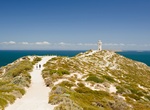
Explore Cape Portland, Tasmania, Australia
Cape Portland (indigenous name: Lumaranatana) is both a geographical feature and a locality near the north-eastern tip of Tasmania, Australia. It points west across Ringarooma Bay. It was named after the Duke of Portland by Matthew Flinders during his 1798 circumnavigation of the island in the sloopNorfolkwith George Bass. It is the site of the 67 km2 Cape Portland Im... -
Birding at Cape Romain National Wildlife Refuge, South Carolina
The Cape Romain National Wildlife Refuge is a 66,287 acre (267 km²) refuge in southeastern South Carolina. Established in 1932 as a haven for migratory birds, Cape Romain National Wildlife Refuge is additionally managed for the protection of threatened and endangered species such as the loggerhead sea turtle, wood stork, and piping plover. Every year loggerhead s... -
Visit Cape Saunders, Otago Peninsula, New Zealand
Kaimata, or Cape Saunders, is the prominent headland on the Pacific Ocean coast of Muaupoko, the Otago Peninsula, in the far south-east of Aotearoa New Zealand's Te Wai Pounamu, the South Island. It is home to the Cape Saunders Lighthouse. Captain James Cook sighted the landmark on 25 February 1770, and named it in honour of Admiral Sir Charles Saunders, under whom Co... -
Explore Cape York Peninsula, Queensland, Australia
Cape York Peninsula is a large remote peninsula located in Far North Queensland at the tip of the state of Queensland, Australia, the largest unspoilt wilderness in northern Australia and one of the last remaining wilderness areas on Earth. Although the land is mostly flat and about half of the area is used for grazing cattle, and wildlife is threatened by introduced ... -
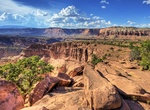
Explore Capitol Reef National Park, Utah
Capitol Reef National Park is located in south-central Utah. It is 100 miles (160 km) long but fairly narrow. The park, established in 1971, preserves 378 mi² (979 km²) and is open all year, although May through September are the most popular months. Called "Wayne Wonderland" in the 1920s by local boosters Ephraim P. Pectol and Joseph S. Hickman, Capitol Ree... -
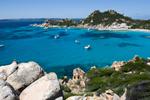
Visit Caprera Island, Sardinia
Caprera is a small island off the coast of Sardinia, Italy, located in the Maddalena archipelago. The island has been declared a natural reserve for the particular species of seabirds living on it (royal seagull, cormorant and peregrine falcon). The island's name is linked to that of Giuseppe Garibaldi, an Italian patriot and fighter who lived in the 19th century and ... -
Explore Capricornia Cays National Park, Queensland, Australia
Capricornia Cays is both a national park and a scientific national park in Queensland (Australia), located 486 km and 472 km north of the state capital Brisbane respectively. Collectively they comprise 241 ha of coral cays. Popular recreational activities in the park includes bird, whale and turtle watching as well as camping, walking, swimming, boating, snorkelling a... -
Birding on Carcass Island, West Falkland, Falkland Islands
Carcass Island is the largest of the West Point Island Group of the Falkland Islands. It lies north-west of West Falkland and south-east of the Jason Islands. It is 10 km (6.2 mi) in length, has a maximum width of 2.5 km (1.6 mi), and is 19 km2 (7.3 sq mi) in area. The highest points of the island are Stanley Hill and Mount Byng at 220 m (720 ft). The north-eastern co... -
Trek Cardamom Mountains, Koh Kong, Cambodia
The Krâvanh Mountains, literally the "Cardamom Mountains" is a mountain range in the south west of Cambodia and Eastern Thailand. The mountain range extends along a southeast-northwest axis from Koh Kong Province on the Gulf of Thailand to the Veal Veang District in Pursat Province, and is extended to the southeast by the Dâmrei (Elephant) Mountains. The n... -
Visit Cardiff Bay Wetlands Reserve, Cardiff, Wales
Cardiff Bay Wetlands Reserve is located in Cardiff Bay in the city of Cardiff. It covers an area of approximately 8 hectares (19.8 acres). The area was officially opened as a wildlife reserve on 25 July 2002 in what was previously an area of Site of Special Scientific Interest (SSSI) up until the opening of the Cardiff Bay Barrage in April 2001. The area had previousl... -
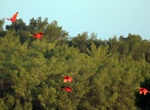
See Caribbean Flamingos on Anegada Salt Water Ponds, BVI
Anegada is also known for the large salt ponds which cover much of the west end of the island, These ponds, which support unique fauna, were designated a Ramsar Site on 11 May 1999. In the 1830s, thousands of Caribbean flamingos lived in these ponds, but they were hunted for food and feathers throughout the 19th and early 20th centuries and disappeared by 1950; they a... -
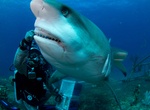
Dive with Caribbean Reef Sharks
Dive with Caribbean Reef Sharks at Cara a Cara dive site in Roatan, Honduras. The dive site is named ‘Cara a Cara’ which in Spanish means ‘face to face’. The Caribbean reef shark (Carcharhinus perezi) is a species of requiem shark, family Carcharhinidae. It is found in the tropical waters of the western Atlantic Ocean from Florida to Brazil, an... -
Explore Caroni Swamp, Trinidad and Tobago
The Caroni Swamp is the second largest mangrove wetland in Trinidad and Tobago. It is located on the west coast of Trinidad, south of Port of Spain and northwest of Chaguanas, where the Caroni River meets the Gulf of Paria. The Caroni Swamp is an estuarine system comprising 5,611 hectares of mangrove forest and herbaceous marsh, interrupted by numerous channels, and b... -
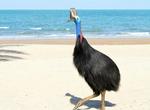
See Cassowary
The cassowaries are ratites, very large flightless birds, in the genusCasuariusnative to the tropical forests of New Guinea, nearby islands, and northeastern Australia. There are three extant species recognized today. The most common of these, the Southern Cassowary, is the third tallest and second heaviest living bird, smaller only than the ostrich and emu. Cassowari...