Give us feedback!
Our philosophy is simple. We want to encourage you to dream. BIG! Then we help you plan your trip, get the most out of it while you're traveling and help you share your experience with friends.
Join Now It's FREE
Dreams Still To Do
Checked-Off Dreams
Dreams Still To Do
Checked-Off Dreams
Advertisement
Explore Wildlife
-
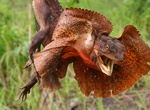
See a Frilled-Necked Lizard
The frilled-necked lizard (Chlamydosaurus kingii), also known commonly as the frilled agama, frilled dragon or frilled lizard, is a species of lizard in the family Agamidae. The species is endemic to northern Australia and southern New Guinea. This species is the only member of the genusChlamydosaurus. Its common names come from the large frill around its neck, which ... -
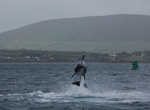
See Fungie Dolphin Statue, Dingle, Ireland
Fungie, also known as the Dingle Dolphin, was a male common bottlenose dolphin. He became separated from other wild dolphins and lived in very close contact with the people of Dingle on the southwest coast of Ireland. Wild bottlenose dolphins are estimated to have a median lifespan between 8.3 and 17.4 years, while one bottlenose has been observed to live for at least... -
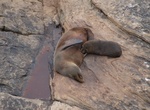
Visit Fur Seal Lookout, Flinders Chase National Park, South Australia
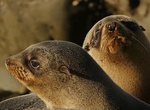
Fur Seal Lookout is a great spot for seeing long-nosed seals. -
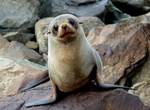
Hike to See Fur Seals at Cape Foulwind (Tauranga Bay), New Zealand
Cape Foulwind is a prominent headland on the West Coast of New Zealand's South Island, overlooking the Tasman Sea. It is located ten kilometres west of the town of Westport. It was previously named Rocky Cape by Abel Tasman, the first European to visit it, in 1642. The present name was bestowed upon this promontory by English explorer James Cook in 1770 after his... -
See Fur Seals at Cape Palliser, New Zealand
Cape Palliser is a promontory on the southern coast of New Zealand's North Island and is the southernmost point of North Island - it is in fact considerably further south than Nelson or Blenheim in the South Island. It is located at the eastern end of Palliser Bay, 50 kilometres southeast of Wellington - 100 kilometres by road. A small settlement - Ngāwī - is situated... -
See Galapagos Hawk in the Wild
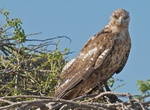
The Galapagos hawk (Buteo galapagoensis) is a large hawk endemic to the Galapagos Islands. Similar in size to the red-tailed hawk (Buteo jamaicensis) and the Swainson's hawk (Buteo swainsoni) of North America, but the size is variable across the islands as is recorded for many animals native to the Galapagos. The Galapagos hawk can range from 45 to 58 cm (18 to 23 in)... -
Visit Galápagos Islands, Ecuador (UNESCO Sites)
The Galapagos Islands, owned by Ecuador, is an archipelago located in the Eastern Pacific Ocean serving as the background for studies by amateur and professional natural historians due to its unusual flora and fauna. The famous naturalist Charles Darwin was inspired by the Galapagos Islands as he developed his Theory of Natural Selection. The islands, volcanic in orig... -
Birding around Galápagos Islands, Ecuador
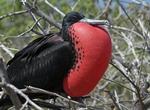
The Galápagos Islands has over 58 species of birds residing on the islands, of which 28 are endemic. Having evolved without predators, the birds of the Galapagos harbor little fear of humans and allow birders a chance to get up-close and personal with them. The safe environment helped cause the Galapagos Cormorant to lose the ability to fly. Walk the islands i... -
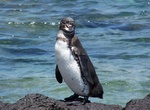
See Galapagos Penguins in the Wild
The Galápagos penguin (Spheniscus mendiculus) is a penguin endemic to the Galápagos Islands. It is the only penguin that lives north of the equator in the wild. It can survive due to the cool temperatures resulting from the Humboldt Current and cool waters from great depths brought up by the Cromwell Current. The Galápagos penguin is one of the ba... -
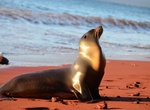
See Galápagos Sea Lions in the Wild
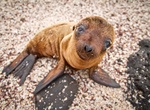
The Galápagos sea lion (Zalophus wollebaeki) is a species of sea lion that exclusively breeds on the Galápagos Islands and – in smaller numbers – on Isla de la Plata (Ecuador). Being fairly social, and one of the most numerous species in the Galápagos archipelago, they are often spotted sun-bathing on sandy shores or rock groups or gli... -
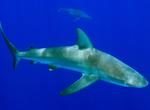
Dive with Galápagos Sharks
Few sharks can rival the beauty and classic shark "form" of the Galapagos Shark. Getting it's name from it's original discovery in waters off of the Galapagos Islands. Although they have been implicated in attacks on swimmers, like many sharks, these sharks are not normally dangerous to humans. The Galapagos shark is a species of requiem shark, family Carcharhinidae, ... -
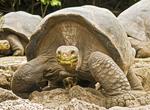
See Galápagos Tortoise in the Wild
The Galápagos tortoise or Galápagos giant tortoise (Chelonoidis nigra) is the largest living species of tortoise and 10th-heaviest living reptile, reaching weights of over 400 kg (880 lb) and lengths of over 1.8 meters (5.9 ft). With life spans in the wild of over 100 years, it is one of the longest-lived vertebrates. A captive individual lived at least ... -
Hike to Galway Beach Seal Colony, Westland Tai Poutini National Park, New Zealand
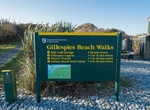
Galway Beach is a long 3 and a half hour track from Gillespies Beach. There are often seals resting here, especially during winter. Be careful, seals can be very aggressive. Don’t get close to seals and never stand between them and the sea. -
Explore Gamsberg Nature Reserve, Namibia
Gamsberg Nature Reserve is a protected reserve of Namibia, located west of Rehoboth. -
Explore Garajonay National Park, Canary Islands, Spain (UNESCO site)
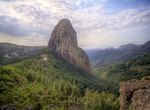
Garajonay National Park is located in the center and north of the island of La Gomera, one of the Canary Islands (Spain). It was declared a national park in 1981 and a World Heritage Site by UNESCO in 1986. It occupies 40 km2 (15 sq mi) and it extends into each of the municipalities on the island. The park is named after the rock formation of Garajonay, the highest po...