Give us feedback!
Our philosophy is simple. We want to encourage you to dream. BIG! Then we help you plan your trip, get the most out of it while you're traveling and help you share your experience with friends.
Join Now It's FREE
Dreams Still To Do
Checked-Off Dreams
Dreams Still To Do
Checked-Off Dreams
Advertisement
Explore Wildlife
-
Visit Solomon Islands
The Solomon Islands are a South Pacific archipelago east of Papua New Guinea. They occupy a strategic location on sea routes between the South Pacific Ocean, the Solomon Sea, and the Coral Sea. The Solomon Islands archipelago is part of two distinct terrestrial ecoregions. Most of the islands are part of the Solomon Islands rain forests ecoregion. These forests have c... -
See Solomon Roadhouse, Alaska
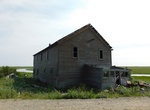
The Solomon Roadhouse, also known as the Curran's Roadhouse, is a historic travel accommodation in northwestern Arctic Alaska. It is a two-story frame building located a short way north of the small community of Solomon, which is at the mouth of the Solomon River about 30 miles (48 km) east of Nome on the Nome-Council Highway. The roadhouse was built in 1904, d... -
Visit Somerset Island, Nunavut, Canada
In the Canadian Arctic Archipelago, Somerset Island is a large, uninhabited island north of the 2 km wide Bellot Strait in Nunavut, Canada. The island lies between Prince of Wales Island and Baffin Island. Around 1000 AD, the north coast of Somerset Island was inhabited by the Thule people, as evidenced by whale bones, tunnels and stone ruins. William Edward Parry was... -
Go Birding at Sonny Bono Salton Sea National Wildlife Refuge, California
The Sonny Bono Salton Sea National Wildlife Refuge is located 40 miles (64 km) north of the Mexican border at the southern end of the Salton Sea in California’s Imperial Valley. Situated along the Pacific Flyway, the Refuge is the only one of its kind, located 227 feet (69 m) below sea level. Because of its southern latitude, elevation and location in the Colora... -
Birding at Sonoita Creek & Patagonia Lake, Arizona
Sonoita Creek State Natural Area and Patagonia Lake State Park are designated as an Important Bird Area by the Audubon Society. If you are a bird watcher you may hit the jackpot here. During spring migration, late January through early April, a guided bird walk of a few hours could bring over 60 species to your attention. The complete bird list is over 300 species. Yo... -
Explore Sør-Spitsbergen National Park, Spitsbergen, Svalbard, Norway
Sør-Spitsbergen National Park (Norwegian:Sør-Spitsbergen nasjonalpark, English: South Spitzbergen National Park) encompasses the southern end of Spitsbergen island in the Svalbard archipelago, Norway. The park was opened in 1973 and includes Wedel Jarlsberg Land, Torell Land and Sørkapp Land. Over 65% of the region is ice cap, with much of the res... -
Birding at South East Mutton Bird Islet, Tasmania, Australia (UNESCO site)
South East Mutton Bird Islet is a steep islet, with an area of 0.52 ha, in south-eastern Australia. Its highest point is 22 m asl. It is part of the Mutton Bird Island Group, lying close to the southern end of the south-western coast of Tasmania. Mutton Bird Island is an irregularly shaped island, with an area of 44 ha, in south-eastern Australia. Its highest point is... -
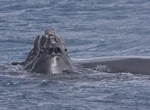
See Southern Right Whales off Hermanus, South Africa
Hermanus is a town on the southern coast of the Western Cape province of South Africa. It is famous as a place from which to watch Southern Right whales, during the southern winter and spring and is a popular retirement town. It has in recent years grown younger as there are 10+ schools and loads of new comers in the area. The whales can be seen from the cliffs in the... -
See Southern Right Whales off Nullarbor National Park, South Australia
Spot southern right whales during winter and spring in Nullarbor National Park. -
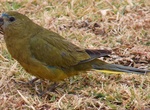
Birding at Southern Yorke Peninsula, South Australia
The Southern Yorke Peninsula Important Bird Area is a 348 square kilometres (134 sq mi) tract of land consisting of most of the south-western tip of the Yorke Peninsula in South Australia about 300 kilometres (190 mi) west of Adelaide. The area is known to locals as the ‘Bottom End.’ The Important Bird Area (IBA) includes most of the south-western tip of Y... -
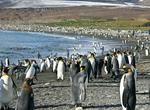
Visit South Georgia & South Sandwich Islands
South Georgia and the South Sandwich Islands (SGSSI) is a British overseas territory in the southern Atlantic Ocean. It is a remote and inhospitable collection of islands, consisting of South Georgia and a chain of smaller islands, known as the South Sandwich Islands. South Georgia is 167.4 kilometres (104 mi) long and 1.4 to 37 km (0.9 to 23.0 miles) wide and is by f... -
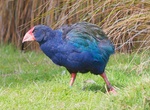
See a South Island Takahē
The takahē (Porphyrio hochstetteri), also known as the South Island takahē or notornis, is a flightless bird indigenous to New Zealand, and the largest living member of the rail family. First encountered by Europeans in 1847, just four specimens were collected in the 19th century. After the final bird was captured in 1898, and no more were to be found, the species was... -
Explore South Luangwa National Park, Zambia
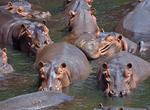
South Luangwa National Park in eastern Zambia, the southernmost of three national parks in the valley of the Luangwa River, is a world-renowned wildlife haven. It supports large populations of Thornicroft's Giraffe, and herds of elephant and buffalo often several hundred strong, while the Luangwa River supports abundant crocodiles and hippopotamuses. It is one of the ... -
Visit South Orkney Islands, UK
The South Orkney Islands are a group of islands in the Southern Ocean, about 604 kilometres (375 mi) north-east of the tip of the Antarctic Peninsula. They have a total area of about 620 square kilometres (240 sq mi). The islands have been part of the British Antarctic Territory since 1962 (previously they were a Falkland Islands Dependency), and the British Antarctic... -
Visit South Shetland Islands
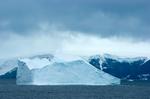
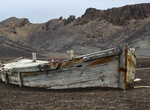
The South Shetland Islands are a group of Antarctic islands, lying about 120 kilometres (75 mi) north of the Antarctic Peninsula, with a total area of 3,687 square kilometres (1,424 sq mi). By the Antarctic Treaty of 1959, the Islands' sovereignty is neither recognized nor disputed by the signatories and they are free for use by any signatory for non-military purposes...