Give us feedback!
Our philosophy is simple. We want to encourage you to dream. BIG! Then we help you plan your trip, get the most out of it while you're traveling and help you share your experience with friends.
Join Now It's FREE
Related Categories
Dreams Still To Do
Checked-Off Dreams
Dreams Still To Do
Checked-Off Dreams
Advertisement
Explore Wreck Diving
-
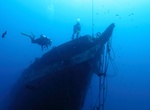
Wreck Dive Carthaginian II, Maui, Hawaii
Carthaginian IIwas a steel-hulled sailing boat, which served as a symbol of the whaling industry in the harbor of the former whaling town Lāhainā on the Hawaiian island of Maui. Built in 1920 and brought to Maui in 1973, it served as a whaling museum until 2005, and after being sunk to create an artificial reef, now serves as a diving destination. The boat was built i... -
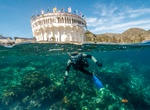
Dive or Snorkel Casino Point State Marine Conservation Area, Catalina Island, California
Casino Point State Marine Conservation Area(SMCAs) is a marine protected areas that include offshore, island marine habitat just outside of Avalon Harbor off the casino. The SMCAs cover .06 square miles. These SMCAs function essentially as dive areas in this popular diving and water sports area. The SMCAs protect marine life by limiting the removal of marine wildlife ... -
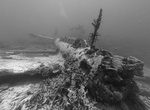
Wreck Dive Chuuk Lagoon (Truk Atoll), Fujikawa Maru, Micronesia
In 1969, French oceanographer Jacques Cousteau and his team explored Truk Lagoon. Following Cousteau's 1971 television documentary about the lagoon and its ghostly remains, the place became a scuba diving paradise, drawing wreck divingenthusiasts from around the world to see its numerous, virtually intact sunken ships. The shipwrecks and remains are sometimes referred... -
Wreck Dive City Of Atlanta, Cape Hatteras, North Carolina
The City of Atlanta rests in about 90 feet of water due east of Buxton, North Carolina. After the ship sank, it was considered a navigational hazard and wired dragged; therefore, today the site consists predominantly of a large debris field. However, the engine and boilers are prominent amidships with the prop shaft running aft to the propellers. A large circular stru... -
Dive Cooper Island Wreck Alley, BVIs
Cooper Island is a small island of the British Virgin Islands in the Caribbean. The island lies adjacent to "wreck alley", a popular wreck diving site in the British Virgin Islands where a number four wrecks have been deliberately sunk as dive sites. Wreck Alley is a collection of four shipwrecks (Mary L, Pat, Beatta and Island Seal) deliberately sunk in about 90 fee... -
Wreck Dive Coron Bay, Philippines
Coron Bay in the Philippines is known for several Japanese shipwrecks of World War II vintage. The area around the wrecks has rock formations which provide for snorkeling opportunities, with underwater visibility extending up to 80 feet (24 m). The water is often calm. Coron is one of the most visited destinations for wreck diving in the Philippines. Wreck dive sites ... -
Wreck Dive Cristobal Colon, Bermuda
This 499-foot Spanish luxury liner is the largest known shipwreck in Bermuda’s waters. Launched in 1923, this transatlantic luxury liner was the most advanced design of her time. She was wrecked on October 25, 1936, when she wedged herself into a coral reef at a speed of 15 knots. It crashed into the coral reefs off the Bermuda’s North Shore as the captain... -
Wreck Dive or Snorkel Curaçao Tugboat, Curaçao
Tugboat is one of Curaçao’s most famous and popular dive sites. Named after the tugboat that was accidentally sunk years ago, this little wreck rests at just 5 m (17ft). -
Wreck Dive Curtiss SB2C-1 Helldiver, Mā`alaea Bay, Maui, Hawaii
NOTE: This location is only approximate. Go on a dive tour for exact location. An historic two-seat naval aircraft sits upright in the sand of Mā`alaea Bay near Kīhei, landing gear retracted. This wreck is just one example of WWII history that can be found in the sanctuary. Discovered in 2010 by local dive shop owner Brad Varney, the wreck of the Helldiver is unique... -
Wreck Dive Defiance Shipwreck, Thunder Bay, Michigan
During the 1850s, the push for speed on the Great Lakes led to more wrecks than ever before. In the fall of 1854, ship owners and sailors reeled from the most costly season to date: 119 lives, 70 ships, and $2 million in property losses. Defiance and John J. Audubon were victims of that dangerous year. On October 20, 1854, Audubon sailed ... -
Wreck Dive or Snorkel Diaz Ordaz, Isla del Carmen, BBaja California Sur, Mexico
BAHIA SALINAS on Isla del Carmenhas an old sunken 120-foot tuna boat that sits in 27 feet of water. This sunken ship suppose the only reef in the area, and therefore has become an oasis of life for the fish. -
Wreck Dive Dixie Arrow, Cape Hatteras, North Carolina
World War II-era Dixie Arrow is one of the most exceptional dive-able shipwrecks within the Graveyard of the Atlantic. Sunk by a U-boat in 1942, the 468-foot oil tanker now rests in 90 feet (27 m) of water, 15 miles (24 km) south of the Hatteras Inlet. Built in 1921, Dixie Arrow spent two decades ferrying oil along the North Atlantic coast of the United States, the G... -
Wreck Dive D.M. Wilson, Lake Huron, Michigan
D.M. Wilson was headed for Milwaukee with a load of coal when it sprang a leak and began sinking. The steamers Hudson and Samuel Mitchell took it in tow, but it foundered in 40 feet of water two miles north of Thunder Bay Island. The crew was rescued by a fourth ship. D.M. Wilson was broken up by a gale ten days later and debris was driven as far south as Tawas. Much... -
Wreck Dive or Snorkel Duncan City Shipwreck, Thunder Bay, Michigan
Three well-preserved shipwrecks that tell the story of Rogers City's limestone industry rest just offshore of the Calcite quarry loading docks in clear, shallow water. All three have mooring buoys maintained by Thunder Bay National Marine Sanctuary, and divers, paddlers, and snorkelers can easily access them. The Michigan Limestone and Chemical Company (MLCC) purchase... -
Wreck Dive Dunnottar Castle Shipwreck, Kure Atoll, Papahanaumokuakea Marine National Monument, Hawaii
One July 23rd, 2006, the NOAA ship Hiialakai returned to Honolulu following a 28-day research cruise to the Northwestern Hawaiian Islands. The multidisciplinary expedition included six maritime archaeologists with NOAA's National Marine Sanctuary Program conducting non-invasive survey at Kure Atoll and Pearl and Hermes Atoll. The NOAA team included: Brenda Altmeier (F...