Give us feedback!
 Tweet
Share via E-mail
Tweet
Share via E-mail


 See all
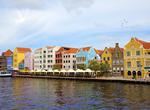
Visit St George, Bermuda (UNESCO site)
The Town of Saint George, habitually called by locals St. George's, in St. George's Parish is the second town and former capital of Bermuda.
St. George's is described as the oldest, continually inhabited English settlement in the new world. In 1609, Admiral Sir George Somers named the town not after himself but in honor of the Patron Saint of England, St. George; it served as the capital of Bermuda until eclipsed by Hamilton in 1815. Because of a shift of business and government to Hamilton, St. George's did not have its streets and buildings demolished and rebuilt as in Hamilton, and therefore looks very much like it did 250 years ago. In fact, because of its many heritage buildings, it was declared a UNESCO World Heritage Site during the 1990s.
Bermudian convention, where a toponym contains the name of a person, is to render the person's name in the possessive form. The place is rarely treated as equivalent to the person. For instance, Bermudians will always say St. George's and St. David's are the largest islands in St. George's Parish, and never St. George and St. David are the largest islands in St. George Parish. As many maps and other printed materials featuring Bermuda are produced abroad, it is extremely common to find maps, books and other material using the non-possessive forms, but visitors to Bermuda should be aware that using the non-possessive forms when speaking to Bermudians is likely to cause as much awkwardness as saying "Bermudan" (although Bermudians, who pride themselves on politeness, are unlikely to respond rudely).
St. George's Parish stands at the northeasternmost part of the island chain, containing a small part of the main island around Tucker's Town and the Tucker's Town Peninsula, as well as the big islands of St. George's and St. David's (where the airport is), and many smaller islands, notably Coney, Paget, Nonsuch, Castle, and Smith's Islands.
St. George's is described as the oldest, continually inhabited English settlement in the new world. In 1609, Admiral Sir George Somers named the town not after himself but in honor of the Patron Saint of England, St. George; it served as the capital of Bermuda until eclipsed by Hamilton in 1815. Because of a shift of business and government to Hamilton, St. George's did not have its streets and buildings demolished and rebuilt as in Hamilton, and therefore looks very much like it did 250 years ago. In fact, because of its many heritage buildings, it was declared a UNESCO World Heritage Site during the 1990s.
Bermudian convention, where a toponym contains the name of a person, is to render the person's name in the possessive form. The place is rarely treated as equivalent to the person. For instance, Bermudians will always say St. George's and St. David's are the largest islands in St. George's Parish, and never St. George and St. David are the largest islands in St. George Parish. As many maps and other printed materials featuring Bermuda are produced abroad, it is extremely common to find maps, books and other material using the non-possessive forms, but visitors to Bermuda should be aware that using the non-possessive forms when speaking to Bermudians is likely to cause as much awkwardness as saying "Bermudan" (although Bermudians, who pride themselves on politeness, are unlikely to respond rudely).
St. George's Parish stands at the northeasternmost part of the island chain, containing a small part of the main island around Tucker's Town and the Tucker's Town Peninsula, as well as the big islands of St. George's and St. David's (where the airport is), and many smaller islands, notably Coney, Paget, Nonsuch, Castle, and Smith's Islands.
Bermuda Heritage Museum,29 Water Street(corner of W Water St & Duke of York St),Tu-Sa 10AM-3PM.This building used to be called the Samaritan Lodge. It was the head office of the Order of Good Samaritans & Daughters of Samaria - A society formed in the 1800s to help the blacks after they were freed from slavery in 1834. Since 1994, the Smaritan's lodge is the home of Bermudian Heritage Museum which is the only Black History Museum in Bermuda.
Bridge House,Bridge St.A circa 1700 mansion, one of the earliest in the area, once near a bridge across a creek from the sea. It was once the home of Governor Benjamin Bennett in the early 18th century . Later the American-born Revolutionary War Loyalist and privateer Hon. Bridger Goodrich and his wife Elizabeth lived here. Goodrich stood in the local Legislature, hence his Honorable title. There's a memorial to him in St. Peter's Church.
Bermuda National Trust Museum (the Globe Hotel, Confederate Museum), 32 Duke of York St.This 17th century building was constructed by Governor Samuel Day in 1699, using government provided land and wood. Later in the mid 19th century, it became "The Globe Hotel"; a Confederate agent during the US Civil War, wanting to smuggle goods in from Europe in return for American cotton, used it as his office. It was opened as a museum in 1961. You will find an amazing replica of a machine commissioned by the congress of the Confederate States that stamped a seal for all their official documents.
HMS Deliverance.A great little replica ship remembering the 1609 wreck, when the colonists, passengers of the Deliverance and Jamestown, got stranded in Bermuda.
The Old Rectory,39 York St.
St. George's Historical Society Museum,39 Duke of Kent Street.
St. Peter's Church.The oldest parts of the current structure date to 1620, though the building has been much expanded and improved since. It is reportedly the oldest surviving Anglican church in continuous use outside the British Isles, as well as the oldest continuously used Protestant church in the New World.
Somers Garden, Government Hill Road.
State House. Built in 1620, it was the first purpose-built House of Assembly, which then constituted the only chamber of the Parliament of Bermuda. Other than fortifications, it was Bermuda's first stone building. It is the oldest surviving Bermudian building.
The Town Hall, Water Street.
Tucker House Museum, 5 Water Street.
Unfinished Church, Blockade Alley.
The town boasts some notable museums and attractions:
Fanny Fox's Cottage.
Featherbed Alley Printshop,Mitchell House, 39 Duke of Kent Street.Dedicated to the history of Bermuda's first newspaper and printing business, The Bermuda Gazette. Has a replica Gutenberg press.
Fort St. Catherine, 15 Coot Pond Road.Has displays and dioramas and replica Crown Jewels.
Major Donald H. Burns Memorial Park. The Major Donald H. (Bob) Burns Memorial Park on the island includes the Desmond Hale Fountain statue of Admiral Sir George Somers (credited as the founder of Bermuda, and at the helm of the Sea Venture when she was driven on the reefs) which was unveiled by Princess Margaret, Countess of Snowdon in 1984, during the 375th anniversary of the shipwrecking. The Memorial Park was unveiled on 20 April 1997 during the Twinning Ceremonies with Lyme Regis.
One Gun Alley.
Ordnance Island.The island is joined to St. George's Island by a concrete bridge. Most of the buildings erected by the Army and the US Navy have been razed. One large Army building, the Storekeeper's House remains, and has been refurbished as offices for the Corporation of St. George.
Queen's Warehouse.
St. George's Foundation.
Stella Maris Church, 3 Duke of Clarence St.Dedicated to the Virgin Mary in her title Stella Maris, or "Star of the Sea", inaugurated and blessed in February 1948.
Tiger Bay.
World Heritage Centre
Source: WikiVoyage
Show more
 "Pin It") Tweet
Share via E-mail
Tweet
Share via E-mail
 Loading...
Stats for this Dream
Join Now, it's FREE!
Dream Packages
Duration: 7 hours
Price: $175.00
Price: $175.00
Duration: 5 hours
Price: $78.00
Price: $78.00
Duration: 3 hours
Price: $204.11
Price: $204.11