Give us feedback!
Things To Do for:








Things To Do for:
Visit Rome, Italy (UNESCO sites)
“The Eternal City” as it is lovingly nicknamed, Rome is one of the great cities of the world. Besides its elevated status as the capital of Italy, while also its largest city, Rome has been a center of culture and prestige for most of its more than 2,500 years of existence. The city is replete with splendid palaces, churches and basilicas of great historical...
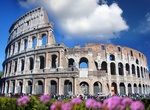
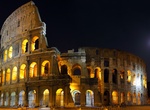
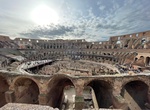
Visit The Colosseum, Rome, Italy (UNESCO site)
The city of Rome, Italy is loaded with ancient monuments as the designation of the city center as a UNESCO World Heritage site attests. Among the Roman Baths, forums, historic markets and the Roman Forum is found the iconic Colosseum...
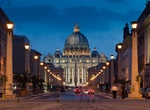
Visit Vatican City (UNESCO site)
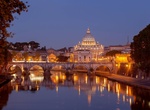
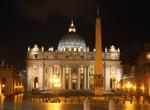
Perhaps the Vatican needs no introduction. The center of Catholicism, and encompassing the Vatican City state, as well as the surrounding Roman neighborhoods of the Vaticano, Prati, and Monte Mario, this small slice of the city is...
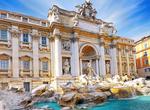
See Trevi Fountain, Rome, Italy
The Trevi Fountain is a fountain in the Trevi rione in Rome, Italy. Standing 26 metres (85.3 feet) high and 20 metres (65.6 feet) wide, it is the largest Baroque fountain in the city and one of the most famous fountains in the...
Visit Vatican Museums, Vatican City
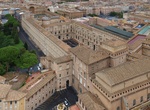
The Vatican Museums, in Viale Vaticano in Rome, inside the Vatican City, are among the greatest museums in the world, since they display works from the immense collection built up by the Roman Catholic Church throughout the centuries...
See Roman Forum, Rome, Italy
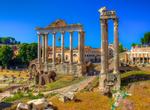
The Roman Forum is a rectangular forum (plaza) surrounded by the ruins of several important ancient government buildings at the center of the city of Rome. Citizens of the ancient city referred to this space, originally a...
Visit The Pantheon, Rome, Italy
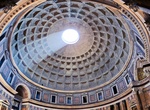
The Pantheon (an adjective meaning "to every god") is a building in Rome, Italy, commissioned by Marcus Agrippa as a temple to all the gods of Ancient Rome, and rebuilt by Emperor Hadrian in about 126 AD.
Every April 21st at noon...
See St. Peter's Basilica, Vatican City
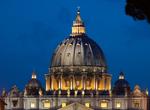
The Papal Basilica of Saint Peter, officially known in Italian as Basilica Papale di San Pietro in Vaticano and commonly known as St. Peter's Basilica, is a Late Renaissance church located within the Vatican City. St. Peter's Basilica...
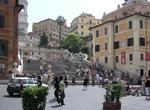
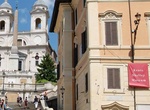
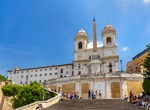
Walk the Spanish Steps (Scalinata della Trinità dei Monti), Rome, Italy
The Spanish Steps (Italian: Scalinata della Trinità dei Monti) are a set of steps in Rome, Italy, climbing a steep slope between the Piazza di Spagna at the base and Piazza Trinità dei Monti, dominated by the...
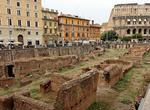
See Ludus Magnus (The Great Gladiatorial Training School), Rome, Italy
The Ludus Magnus or The Great Gladiatorial Training School is the largest of the gladiatorial arenas in Rome, Italy. It was built by the emperor Domitian (81-96 AD) in the valley between the Esquiline and the Caelian hills, an area...
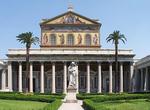
See Basilica of Saint Paul Outside the Walls, Rome, Italy (UNESCO site)
The Papal Basilica of St Paul Outside the Walls, commonly known as St Paul's Outside the Walls, is one of four churches that are the great ancient major basilicas or papal basilicas of Rome: the basilicas of St. John Lateran, St. Mary...
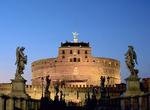
Visit Castel Sant'Angelo (Mausoleum of Hadrian), Rome, Italy
The Mausoleum of Hadrian, usually known as the Castel Sant'Angelo (Castle of the Holy Angel), is a towering cylindrical building in Parco Adriano, Rome, Italy. It was initially commissioned by the Roman Emperor Hadrian as a mausoleum...
Live in Rome, Italy
The city of Rome is one of the most amazing places to live in the world. Famous and spectacular art, a culturally rich 2,500 year history and some of the most well-known buildings, squares, fountains and monuments on the planet make...
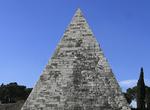
See Pyramid of Cestius, Rome, Italy
The Pyramid of Cestius (Piramide di Caio Cestio or Piramide Cestia) is an ancient pyramid in Rome, Italy, near the Porta San Paolo and the Protestant Cemetery. It stands in a fork between two ancient roads, the Via Ostiensis and...
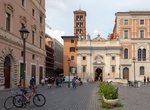
See Basilica di San Clemente, Rome, Italy
The Basilica of Saint Clement is a Roman Catholic minor basilica dedicated to Pope Clement I located in Rome, Italy.
Archaeologically speaking, the structure is a three-tiered complex of buildings: (1) the present basilica built just...
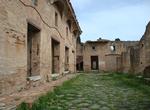
Visit Ostia Antica, Rome, Italy
Ostia Antica is a large archeological site, close to the modern suburb of Ostia (Rome), that was the location of the harbour city of ancient Rome, which is approximately 30 km to the northeast. "Ostia" in Latin means "mouth". At the...
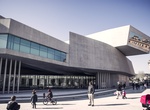
Visit MAXXI – National Museum of the 21st Century Arts, Rome, Italy
The MAXXI – National Museum of the 21st Century Arts is a national museum dedicated to contemporary creativity, located in the Flaminio neighbourhood of Rome, Italy. It was designed as a multidisciplinary space by Zaha Hadid and...
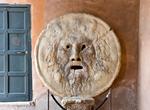
See Bocca della Verità (Mouth of Truth), Rome, Italy
La Bocca della Verità ("the Mouth of Truth") is an image, carved from Pavonazzetto marble, of a man-like face, located in the portico of the church of Santa Maria in Cosmedin in Rome, Italy. The sculpture is thought to be part...
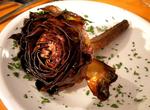
Eat Carciofi Alla Giudia
Carciofi alla giudía (literally "Jewish style artichokes") is one of the most famous dishes of the Roman Jewish cuisine.
This recipe originated in Rome and is basically a deeply fried artichoke. Especially suited for this...
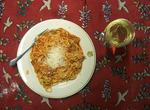
Eat at Sugo All'Amatriciana
Sugo all'amatriciana or alla matriciana is a traditional Italian pasta sauce based on guanciale (dried pork cheek), pecorino cheese, and tomato. Originating from the town of Amatrice (in the mountainous Province of Rieti of Lazio...
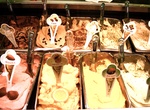
Eat Gelato
Gelato is the Italian word for ice cream, derived from the Latin word "congelato" (meaning frozen). Gelato is made with milk, cream, various sugars, and flavoring such as fresh fruit and nut purees.
Gelato is defined in English as a...
See Nostra Signora del Sacro Cuore, Rome, Italy
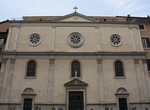
Nostra Signora del Sacro Cuore ("Our Lady of the Sacred Heart", also known as San Giacomo degli Spagnoli and in Spanish, Santiago de los Españoles) is a Catholic church dedicated to the Virgin Mary located in Rome's Piazza...
Visit Piazza del Popolo, Rome, Italy
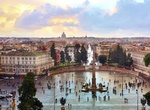
Piazza del Popolo is a large urban square in Rome. The name in modern Italian literally means "People's Square", but historically it derives from the poplars (populusin Latin,pioppoin Italian) after which the church of Santa Maria del...
See Basilica of Santa Maria del Popolo, Rome, Italy
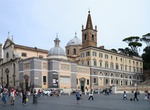
The Basilica of Santa Maria del Popolo is an Augustinian church in Rome, Italy. It stands on the north side of Piazza del Popolo, one of the most famous squares in the city. The church is hemmed in between Porta del Popolo (the...
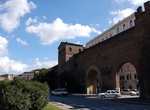
See Aurelian Walls, Rome, Italy
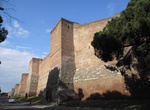
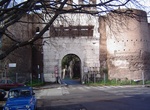
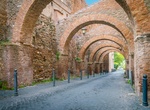
The Aurelian Walls are a line of city walls built between 271 AD and 275 AD in Rome, Italy, during the reign of the Roman Emperors Aurelian and Probus.
The walls enclosed all the seven hills of Rome plus the Campus Martius and, on the...
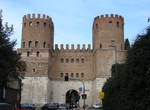
Visit Porta San Sebastiano (Museum of the Walls), Rome, Italy
The Porta San Sebastiano is the largest and one of the best-preserved gates passing through the Aurelian Walls in Rome (Italy).
Originally known as thePorta Appia, the gate sat astride the Appian Way, theregina viarum, which originated...
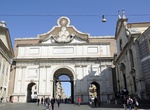
See Porta del Popolo, Rome, Italy
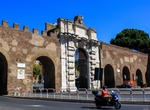
Porta del Popolo is a gate of the Aurelian Walls in Rome (Italy). The current Porta del Popolo was built by Pope Sixtus IV for the Jubilee Year 1475 on the site of an ancient Roman gate which, at that time, was partially buried.
Close...
See Porta Pinciana, Rome, Italy
Porta Pinciana is a gate of the Aurelian Walls in Rome.
The name derives from thegensPincia, who owned the eponymous hill (Pincian Hill). In ancient times it was also calledPorta Turata("Plugged Gate", for it was partially closed)...
See Porta Pia, Rome, Italy
Porta Pia is a gate in the Aurelian Walls of Rome, Italy. One of Pope Pius IV's civic improvements to the city, it is named after him. Situated at the end of a new street, the Via Pia, it was designed by Michelangelo in replacement for...
See Porta Maggiore, Rome, Italy
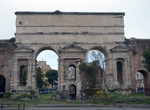
The Porta Maggiore ("Larger Gate"), or Porta Prenestina, is one of the eastern gates in the ancient but well-preserved 3rd-century Aurelian Walls of Rome.
Through the gate ran two ancient roads: the Via Praenestina and the Via...
See Porta San Giovanni (Rome), Italy
Porta San Giovanni is a gate in the Aurelian Wall of Rome, Italy, named after the nearby Basilica di San Giovanni in Laterano.
It is made up of a single grand arch built for pope Gregory XIII in "opera forse" by Giacomo della Porta or...
See Porta Asinaria, Rome, Italy
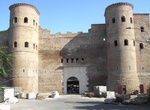
The Porta Asinaria is a gate in the Aurelian Walls of Rome. Dominated by two protruding tower blocks and associated guard rooms, it was built between 270 and 273, at the same time as the Wall itself. It is through this gate that East...
See Porta Latina, Rome, Italy
The Porta Latina (Latin -Latin Gate) is a single-arched gate in the Aurelian Walls of ancient Rome. It marked the Rome end of the Via Latina and gives its name to the church of San Giovanni a Porta Latina. Most of the present structure...
Visit Porta San Paolo (Museo della Via Ostiense), Rome, Italy
The Porta San Paolo (San Paolo Gate) is one of the southern gates in the 3rd-century Aurelian Walls of Rome, Italy. The Via Ostiense Museum (museo della Via Ostiense) is housed within the gatehouse. It is in the Ostiense quarter; just...
See Porta Settimiana, Rome, Italy
Porta Settimiana is one of the gates of the Aurelian walls in Rome (Italy). It rises at the northern vertex of the rough triangle traced by the town walls - built by Emperor Aurelian in the 3rd century - in the area of Trastevere an up...
Visit Villa Borghese Gardens, Rome, Italy
Villa Borghese is a landscape garden in the naturalistic English manner in Rome, containing a number of buildings, museums (Galleria Borghese) and attractions. It is the third largest public park in Rome (80 hectares or 148 acres)...
Visit Galleria Borghese, Rome, Italy
The Galleria Borghese (Borghese Gallery) is an art gallery in Rome, Italy, housed in the former Villa Borghese Pinciana. It is a building that was from the first integral with its gardens, nowadays considered quite separately by...
Visit Villa Doria Pamphili, Rome, Italy
The Villa Doria Pamphili is a seventeenth-century villa with what is today the largest landscaped public park in Rome, Italy. It is located in the quarter of Monteverde, on theGianicolo(or the Roman Janiculum), just outside the Porta...
Visit Museo Nazionale Etrusco (Villa Giulia), Rome, Italy
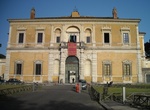
The Villa Giulia is a villa in Rome, Italy. It was built by Pope Julius III in 1551-1553 on what was then the edge of the city. Today it is publicly owned, and houses the Museo Nazionale Etrusco, an impressive collection of Etruscan...
Visit Villa Medici, Rome, Italy
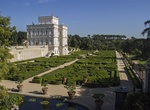
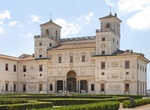
The Villa Medici is a mannerist villa and an architectural complex with a garden contiguous with the larger Borghese gardens, on the Pincian Hill next to Trinità dei Monti in Rome, Italy. The Villa Medici, founded by Ferdinando...
Visit Galleria Nazionale d'Arte Moderna, Rome, Italy
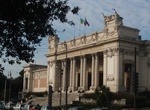
The Galleria Nazionale d'Arte Moderna (GNAM), or National Gallery of Modern Art, is an art gallery in Rome, Italy, founded in 1883 and dedicated to modern and contemporary art; the full name is Galleria nazionale d'arte moderna e...
Explore Villa Ada, Rome, Italy
Villa Ada is a park in Rome, Italy, with a surface of 450 acres (1.8 km2) it is the second largest in the city after Villa Doria Pamphili. It is located in the northeastern part of the city. Its highest prominence is Monte Antenne with...
Visit San Luigi dei Francesi, Rome, Italy
The Church of St. Louis of the French (San Luigi dei Francesi) is a Roman Catholic church in Rome, not far from Piazza Navona. The church is dedicated to the Virgin Mary, to St. Denis the Areopagite and St. Louis IX, king of France...
Visit San Giovanni dei Fiorentini, Rome, Italy
San Giovanni dei Fiorentini is a minor basilica and a titular church in the Ponterioneof Rome.
Dedicated to St. John the Baptist, the protector of Florence, the new church for the Florentine community in Rome was started in the 16th...
Stroll down Via dei Banchi Vecchi, Rome, Italy
Via dei Banchi Vecchi is a street in the center of Rome , which from Corso Vittorio Emanuele II reaches Lane Malpasso, passing through the districts Ponte , Parione and Regola.
Via dei Banchi Vecchi is named after the bankers who used...
See Santa Lucia del Gonfalone, Rome, Italy
Santa Lucia del Gonfalone is a church in the diocese of Rome, Italy. It is located on Via dei Banchi Vecchi just one block south of Corso Vittorio Emanuele.
The Archconfraternity of the Gonfalone was a group of white penitents (due to...
Visit Santo Spirito in Sassia, Rome, Italy
Santo Spirito in Sassia (Church of the Holy Spirit in the Saxon district) is a 12th-century titular church in Rome. It is inBorgo Santo Spirito, a street which got its name from the church, placed in the southern part of Rione Borgo...
Wine Taste at Il Goccetto, Rome, Italy
Il Goccetto is one of the first wine shops in Rome. Housed in an ancient Roman building called “palazzetto del Vescovo di Cervia”, built from Antonio Sangallo in 1527, they sell 800 Wine Brands, mostly Italian and...
Dine at Osteria 140, Rome, Italy
Osteria 140 is a great italian restaurant located along Via dei Banchi Vecchi in Rome.
Stay at Residenza Paolo VI, Roma, Italy
Set across the street from St. Peter's Square and sharing a building with an Augustinian monastery, this upscale hotel is an 8-minute walk from Risorgimento-San Pietro tram stop and a 9-minute walk from the Sistine Chapel.The decor of...
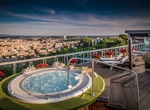
Dine at La Terrasse Cuisine & Lounge, Roma, Italy
This rooftop bar/restaurant serves high-end Mediterranean cuisine
Dine at Ristorante Roof Garden, Rome, Italy
The Roof Garden Restaurant Forum is one of the Rome's premier restaurants. The panoramic views of the Imperial Roman Forum is breathtaking and the atmosphere in the restaurant is relaxing and warm. Internationally acclaimed offering a...
Dine at Ristorante Aroma at Palazzo Manfredi, Roma, Italy
Aroma Restaurant in Rome center is a terrace restaurant with an amazing Colosseum view.
Stay at Rome River Inn, Roma, Italy
Set along the banks of the Tiber River, this modern bed and breakfast, with High-Renaissance style facade, is 1.6 km from the Sistine Chapel, and 2.7 km from the Colosseum. The bright, modern rooms and suites, with hardwood floors...
Stay at Hotel Raphael, Roma, Italy
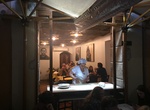
A 2-minute walk from the 1st-century Piazza Navona and the bus station, this sophisticated, ivy-covered hotel is 14 minutes' walk from the famous Trevi Fountain. The warmly decorated, upscale rooms offer free Wi-Fi, flat-screen TVs and...
Stay at Lifestyle Suites Rome, Italy
Each room at this hotel is air conditioned and features a flat-screen TV with satellite channels. Some accommodations include a sitting area for your convenience. A terrace or balcony are featured in certain rooms. Each room includes...
Dine at Osteria dell'Antiquario, Roma, Italy
Polished, old-world eatery with a palazzo terrace, serving local seafood dishes by candlelight.
Stay at Hotel Campo Dè Fiori, Roma, Italy
Hotel Campo De Fiori is in a corner of one of the city's most popular squares, and features a roof garden with views of the historic center. This boutique hotel designed by Dario DeBlasi has rooms and self-catering apartments with free...
Dine at I Sofà Bar Restaurant & Roof Terrace, Roma, Italy
Boutique hotel's sleek rooftop Italian restaurant & bar, with sweeping city views.
See Santa Maria in Traspontina, Rome, Italy
Santa Maria in Traspontina (or Transpontina) is a Carmelite church in Rome, Italy. The shrine lies on the Via della Conciliazione, the main road of the Rione Borgo.
The church was established as a cardinalatialtitulusby Pope Sixtus V...
Cross Ponte Sant'Angelo, Rome, Italy
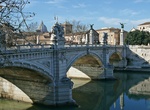
Ponte Sant'Angelo, once the Aelian Bridge or Pons Aelius, meaning theBridge of Hadrian, is a Roman bridge in Rome, Italy, completed in 134 AD by Roman Emperor Hadrian, to span the Tiber, from the city center to his newly constructed...
Cross Ponte Umberto I, Rome, Italy
Ponte Umberto I, also known as Ponte Umberto, is a bridge that links Piazza di Ponte Umberto I to Piazza dei Tribunali in Rome (Italy), in the rioni Ponte and Prati.
The bridge was designed by architect Angelo Vescovali and built...
See Palace of Justice, Rome, Italy
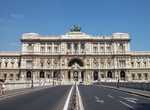
The Palace of Justice, Rome (Palazzo di Giustizia), the seat of the Supreme Court of Cassation and the Judicial Public Library, is located in the Prati district of Rome. It fronts onto thePiazza dei Tribunali, theVia Triboniano...
Visit The Circus Maximus, Rome, Italy
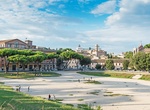
The Circus Maximus is an ancient Roman chariot racing stadium and mass entertainment venue located in Rome, Italy. Situated in the valley between the Aventine and Palatine hills, it was the first and largest stadium in ancient Rome and...
Sip Coffee at Residenza Canova Tadolini, Roma, Italy
Elegant & ornate museum cafe/bar serving Roman pasta dishes & drinks amid classical sculptures.
Visit Museum of the Ara Pacis, Rome, Italy
The Museum of the Ara Pacis belongs to the Sistema dei Musei in Comune of Rome (Italy); it houses theAra Pacisof Augustus, an ancient monument that was initially inaugurated on January 30, 9 B.C.
Designed by the American architect...
Stroll Aventine Hill, Rome, Italy
The Aventine Hill is one of the Seven Hills on which ancient Rome was built. It belongs to Ripa, the twelfth rione, or ward, of Rome.
The Aventine Hill is the southernmost of Rome's seven hills. It has two distinct heights, one greater...
Stroll Trastevere, Rome, Italy
Trastevere is the 13th rione of Rome, on the west bank of the Tiber, south of Vatican City, and within Municipio I. Its name comes from the Latintrans Tiberim, meaning literally "beyond the Tiber". Its logo is a golden head of a lion...
Visit Basilica di Santa Maria Maggiore (St. Mary Major), Rome, Italy
The Basilica di Santa Maria Maggiore is a Papal major basilica and the largest Catholic Marian church in Rome, Italy, from which size it receives the appellation "major". The Basilica is located at 34 Piazza dell'Esquilino, some five...
Visit Basilica of Saint Lawrence outside the Walls, Rome, Italy
The Papal Basilica of Saint Lawrence outside the Walls is a Roman Catholic Papal minor basilica and parish church, located in Rome, Italy. The Basilica is one of the Seven Pilgrim Churches of Rome and one of the five former...
Visit Santa Croce in Gerusalemme, Rome, Italy
The Basilica of the Holy Cross in Jerusalem or Basilica di Santa Croce in Gerusalemme, is a Roman Catholic minor basilica and titular church in rione Esquilino, Rome, Italy. It is one of the Seven Pilgrim Churches of Rome.
According to...
Visit San Sebastiano fuori le mura, Rome
San Sebastiano fuori le mura is a basilica in Rome, central Italy. Up to the Great Jubilee of 2000, San Sebastiano was one of the Seven Pilgrim Churches of Rome, and many pilgrims still favor the traditional list.
Built originally in...
Have Drinks at Jerry Thomas Project, Rome
This classic drinking spot is a great, a prohibition era speakeasy. All of their drinks are amazing and many, if not all, are their own recipes based on the classics from the time period! You need a reservation and can't get in without...
Stay at Hotel De Russie, Roma
This sophisticated hotel is a minute's walk from Piazza del Popolo, and a 7-minute walk from the 18th-century Spanish Steps. The plush rooms offer free Wi-Fi, smart TVs and mosaic/marble bathrooms. Upgraded quarters have sitting areas...
Visit Monte Testaccio, Rome, Italy
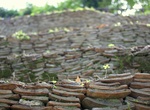
Monte Testaccio (alternatively spelled Monte Testaceo; also known as Monte dei cocci) is an artificial mound in Rome composed almost entirely of testae (Italian: cocci), fragments of broken amphorae dating from the time of the Roman...
Eat at Pierluigi, Rome, Italy
Local & tourist go-to for fresh Italian seafood on pretty piazza terrace or in traditional interior.
Eat at Armando al Pantheon, Rome, Italy
A long-standing restaurant serving hearty, traditional Roman fare in a wood-paneled dining room.
Eat at Per Me, Rome, Italy
This intimate and minimalist-style restaurant situated in a narrow street crossing Via Giulia was opened in late 2015 by chef Terrinoni. He has created an imaginative menu that is balanced and full of flavour. Renowned for his...
Eat at Il Pagliaccio, Rome
High-end restaurant serving creative Mediterranean dishes in a chic, bare-brick dining room.
Eat at Felice a Testaccio, Rome, Italy
Venerable & celebrated trattoria with a simple, bare-brick interior, dedicated to Roman cooking.
Dine at La Gatta Mangiona, Rome, Italy
Simple, cat-themed restaurant serving creative pizzas & numerous international micro-beers.
Dine at Antico Arco, Rome, Italy
Chic restaurant with silver brick walls & dark wood floors, for Italian cuisine with gourmet twists.
Dine at La Pergola, Rome, Italy
Renowned luxury hotel restaurant with city panoramas from the roof, serving gourmet Italian cuisine.
The restaurant has been awarded Michelin 3-stars. Three stars mean "exceptional cuisine that is worth a special journey".
Visit Centrale Montemartini, Rome, Italy
Ancient sculpture museum, in a former power plant, with Greek & Roman statues, busts & friezes.
Visit Piazza di Spagna, Rome, Italy
Piazza di Spagna, at the bottom of the Spanish Steps, is one of the most famous squares in Rome (Italy). It owes its name to the Palazzo di Spagna, seat of the Embassy of Spain among the Holy See. Nearby is the famed Column of the...
Visit Palazzo delle Esposizioni, Rome, Italy
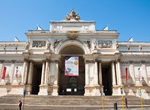
The Palazzo delle Esposizioni is a neoclassical exhibition hall, cultural center and museum on Via Nazionale in Rome, Italy.
Designed by Pio Piacentini, it opened in 1883. It has housed several exhibitions (e.g. Mostra della...
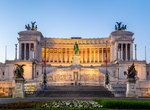
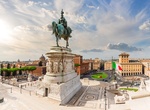
See Altare della Patria, Rome, Italy
The Altare della Patria is a monument built in honor of Victor Emmanuel, the first king of a unified Italy, located in Rome, Italy. It occupies a site between the Piazza Venezia and the Capitoline Hill.
The eclectic structure was...
Visit Keats–Shelley Memorial House, Rome, Italy
The Keats–Shelley Memorial House is a writer's house museum in Rome, Italy, commemorating the Romantic poets John Keats and Percy Bysshe Shelley. The museum houses one of the world's most extensive collections of memorabilia...
Visit Museum of Roman Civilization, Rome, Italy
The Museum of the Roman Civilization is a museum in Rome (Esposizione Universale Roma district), devoted to aspects of the Ancient Roman civilization.
It was designed by the architects Pietro Ascheri, D. Bernardini and Cesare...
Have Breakfast at L’Emporio alla Pace, Rome, Italy
Perfect choice for a drink and a nice chat. Unlike other places in the area, the Emporio alla Pace manages to keep a quiet and relaxing atmosphere all to its self. Breakfast in the morning, snacks at lunchtime, munchies in the evening.
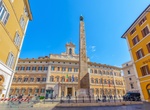
See Obelisk of Montecitorio, Rome, Italy
The Obelisk of Montecitorio, also known as Solare, is an ancient Egyptian, red granite obelisk of Psammetichus II (595-589 BC) from Heliopolis. Brought to Rome with the Flaminio Obelisk in 10 BC by the Roman Emperor Augustus to be used...
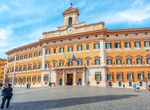
Stroll Piazza di Monte Citorio, Rome, Italy
Piazza di Monte Citorio or Piazza Montecitorio is a piazza in Rome. It is named after the Monte Citorio, one of the minor hills of Rome.
The piazza contains the Obelisk of Montecitorio and the Palazzo Montecitorio. The base of the...
Stroll Palazzo Wedekind, Rome, Italy
Palazzo Wedekind is a palazzo in Piazza Colonna in Rome, Italy, located next to the church of Santi Bartolomeo ed Alessandro dei Bergamaschi. It is notable as the historic offices of the daily paperIl Tempo.
On a site occupied in...
See Santa Maria in Trivio, Rome, Italy
Santa Maria in Trivio is a church in Rome. It is dedicated to Mary, mother of Jesus, and is located on Piazza dei Crociferi in rione Trevi. It is near the Fountain of Trevi.
In Mariano Vasi's 19th-century guidebook, the church is...
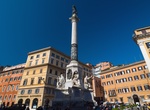
See Column of the Immaculate Conception, Rome
The Column of the Immaculate Conception is a nineteenth-century monument in central Rome depicting the Blessed Virgin Mary, located in what is called Piazza Mignanelli, towards the south east extension of Piazza di Spagna. It was...
Visit Trinità dei Monti, Rome, Italy
The church of the Santissima Trinità dei Monti, often called merely the Trinità dei Monti is a Roman Catholic late Renaissance titular church in Rome, central Italy. It is best known for its commanding position above the...
Dine at Babette, Rome, Italy
Creative French/Italian cuisine served in a rustic-chic dining room or a tranquil courtyard.
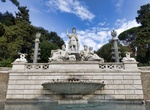
Have Gelato in Rome, Italy
Rome is one of the best places in the country to try Gelato. Avoid places featuring unnaturally, brightly colored flavors, avoid huge, overflowing mounds of gelato and look for seasonal flavours.
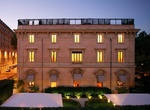
Stay at Villa Spalletti Trivelli, Rome, Italy
This upscale hotel, set in an early 20th-century villa overlooking the Quirinale public gardens, is a 7-minute walk from the metro stop and Trevi Fountain, and a 13-minute walk from the Pantheon.The warm, elegant accommodations offer...
Stay at The Fifteen Keys, Rome, Italy
In the bohemian Monti neighborhood, this fashionable hotel is a 3-minute walk from Cavour metro station, a kilometer from the Baroque Trevi Fountain and 2 km from the iconic Colosseum. Featuring understated, contemporary decor, the...
Stay at Palazzo Naiadi, The Dedica Anthology, Autograph Collection, Rome, I...
Set opposite Piazza della Repubblica, this grand hotel is a 7-minute walk from Roma Termini Station, and 2 km from both the Colosseum and the Pantheon. Refined rooms provide free Wi-Fi, flat-screens and minifridges, as well as tea and...
Stay at Hassler Roma, Rome, Italy
Sitting adjacent to the Spanish Steps, this downtown, luxe hotel is an 8-minute walk from the Trevi Fountain and 2 km from the Colosseum. Accommodations range from refined rooms with Wi-Fi, flat-screen TVs, and marble bathrooms with...
Stay at The St. Regis Rome, Italy
Between the Fountain of Moses and the Piazza Della Repubblica, this lavish hotel occupies a belle epoque palace, a 3-minute walk from Repubblica metro station, and 14 minutes from Trevi Fountain.Plush, antiques-filled rooms have marble...
Stay at Portrait Roma, Rome, Italy
A 6-minute walk from a metro station, this bright, plush hotel is a 13 minutes' walk from the shops and cafes at Piazza Navona. The sophisticated suites offer free Wi-Fi, flat-screen TVs, minibars and Bluetooth speakers. They also have...
Stay at The RomeHello, Italy
In an elegant building, this laid-back hostel features funky decor and striking murals. It's 3 minutes' walk from a metro station and 2 km from the Colosseum. Down-to-earth mixed-gender and female-only dorms with colorful accents...
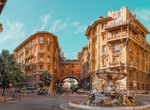
Stroll Quartiere Coppedè, Rome, Italy
Secret neighbourhood of Rome. Tucked behind the main streets of Quartiere Trieste between piazza Buenos Aires and via Tagliamento, is the bizarre and elaborate district of Coppedè.
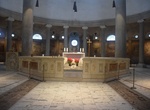
Visit Santo Stefano al Monte Celio, Rome, Italy
The Basilica of St. Stephen in the Round on the Celian Hill is an ancient basilica and titular church in Rome, Italy. Commonly named Santo Stefano Rotondo, the church is Hungary's "national church" in Rome, dedicated to both Saint...
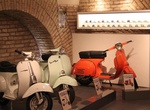
Visit Spazio Museo Vespa, Rome, Italy
Are you passionate about Vespas? Then come and visit the theVespa MuseumSpace inRome!Near the Imperial Fora, there is a permanent exhibition on the legendary scooters.
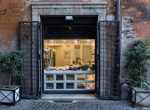
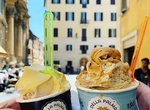
Eat Gelato at Gelateria Della Palma, Rome, Italy
Grand ice cream parlor with a sweeping counter & a sidewalk terrace, offering 150 gelato flavors.
Visit San Silvestro in Capite, Rome
The Basilica of Saint Sylvester the First, also known as, is a Roman Catholic minor basilica and titular church in Rome dedicated to Pope Sylvester I. It is located on the Piazza San Silvestro, at the corner of Via del Gambero and the...
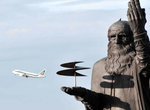
See Leonardo da Vinci Statue, Leonardo da Vinci–Fiumicino Airport, Italy
Loacted at the Leonardo da Vinci–Fiumicino Airport, the giant statue of Leonardo da Vinci has greeted visitors since it was unveiled on August 19, 1960. Millions of people have passed it over the decades, but it was not until...
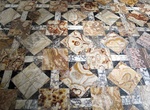
Visit Nymphaeum Museum of Piazza Vittorio, Rome, Italy
By the time of his assassination in 41 A.D., the Roman emperor Caligula was infamous for his violent streak and extravagant amusements, including a huge compound featuring a bathhouse adorned with precious colored marble and space for...
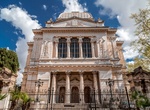
Visit Great Synagogue of Rome, Italy
The Great Synagogue of Rome (Italian:Tempio Maggiore di Roma) is the largest synagogue in Rome.
The Jewish community of Rome goes back to the 2nd century B.C when the Roman Republic had an alliance of sorts with Judea under the...
Visit Church of the Gesù, Rome, Italy
The Church of the Gesù (Italian:Chiesa del Gesù, pronounced [ˈkjɛːza del dʒeˈzu]) is the mother church of the Society of Jesus (Jesuits), a Catholic religious order. Officially namedChiesa del Santissimo Nome di...
Visit Palazzo Colonna, Rome, Italy
The Palazzo Colonna is a palatial block of buildings in central Rome, Italy, at the base of the Quirinal Hill, and adjacent to the church of Santi Apostoli. It is built in part over the ruins of an old Roman serapeum, and it has...
Eat Coda Alla Vaccinara
Coda alla vaccinara [ˈkoːda alla vattʃiˈnaːra] is an oxtail stew in modern Roman cuisine including various vegetables, notably celery. The tail is considered offal, nicknamed in Rome thequinto quarto'the fifth fourth'.
The oxtail is...
Visit National Etruscan Museum, Rome, Italy
The National Etruscan Museum (Italian:Museo Nazionale Etrusco) is a museum of the Etruscan civilization, housed in the Villa Giulia in Rome, Italy.
The villa was built for Pope Julius III, for whom it was named. It remained in papal...
Explore Baths of Caracalla, Rome Italy
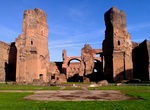
The Baths of Caracalla (Italian:Terme di Caracalla) in Rome, Italy, were the city's second largest Roman public baths, orthermae. The baths were likely built between AD 212 (or 211) and 216/217, during the reigns of emperors Septimius...
Explore Baths of Trajan, Rome, Italy
The Baths of Trajan (Italian:Terme di Traiano) were a massivethermae, a bathing and leisure complex, built in ancient Rome starting from 104 AD and dedicated during thekalendaeof July in 109. Commissioned by Emperor Trajan, the complex...
Stroll Via Merulana, Rome, Italy
Via Merulana is a street in the Rione Monti of Rome, Italy. It is south of the main train station (Stazioni Termini) of Rome, near the Oppian Hill. The street connects two major papal basilicas: the Santa Maria Maggiore to the St John...
See Lateran Obelisk, Rome, Italy
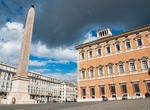
The Lateran Obelisk is the largest standing ancient Egyptian obelisk in the world, and it is also the tallest obelisk in Italy. It originally weighed 413 tonnes (455 short tons), but after collapsing and being re-erected 4 metres...
Visit Sant'Antonio da Padova in Via Merulana, Rome, Italy
The Basilica of Saint Anthony of Padua al Laterano (Italian: Sant'Antonio da Padova all'Esquilino, Latin: S. Antonii Patavini de Urbe) is a Roman Catholic titular church in Rome on Via Merulana, one block from the Obelisk of St. John...
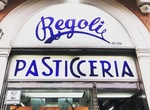
Visit Pasticceria Regoli, Rome, Italy
Pasticceria Regoli is one of the best bakeries in Rome. Since 1916 the Regoli family has been whipping up cream puffs and pastries.
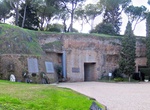
Visit Ardeatine Caves Site (Fosse Ardeatine), Rome, Italy
The Ardeatine massacre, or Fosse Ardeatine massacre, was a mass killing of 335 civilians and political prisoners carried out in Rome on 24 March 1944 by German occupation troops during the Second World War as a reprisal for the Via...
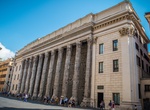
See Temple of Hadrian, Rome, Italy
The Temple of Hadrian (Templum Divus Hadrianus, also Hadrianeum) is an ancient Roman structure on the Campus Martius in Rome, Italy, dedicated to the deified emperor Hadrian by his adoptive son and successor Antoninus Pius in 145 CE...
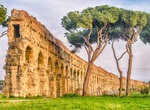
Hike Appian Way (Via Appia), Italy (UNESCO site)
The Appian Way (Latin and Italian: Via Appia) is one of the earliest and strategically most important Roman roads of the ancient republic. It connected Rome to Brindisi, in southeast Italy. Its importance is indicated by its common...
Visit Tomb of Priscilla, Rome, Italy
The Tomb of Priscilla is a monumental tomb erected in the first century in Rome on the Appian Way (Via Appia Antica), situated opposite the Church of Domine Quo Vadis.
The Tomb belonged to Priscilla, wife of Titus Flavius Abascanto, a...
Visit Circus of Maxentius, Rome, Italy
The Circus of Maxentius (known until the 19th century as the Circus of Caracalla) is an ancient structure in Rome, Italy, part of a complex of buildings erected by emperor Maxentius on the Via Appia between AD 306 and 312. It is...
Visit Tomb of Caecilia Metella, Via Appia, Rome, Italy
The Tomb of Caecilia Metella (Italian: Mausoleo di Cecilia Metella) is a mausoleum located just outside Rome at the three mile marker of the Via Appia. It was built during the 1st century BC to honor Caecilia Metella, who was the...
Visit Catacomb of Callixtus, Rome, Italy
The Catacomb(s) of Callixtus (also known as the Cemetery of Callixtus) is one of the Catacombs of Rome on the Appian Way, most notable for containing the Crypt of the Popes (Italian:Cappella dei Papi), which once contained the tombs of...
Visit Catacombs of San Sebastiano, Rome, Italy
The Catacombs of San Sebastiano are a hypogeum cemetery in Rome, Italy, rising along Via Appia Antica, in the Ardeatino Quarter. It is one of the very few Christian burial places that has always been accessible. The first of the former...
Visit Vigna Randanini, Rome, Italy
The Vigna Randanini are Jewish Catacombs between the second and third miles of the Appian Way close to the Christian catacombs of Saint Sebastian, with which they were originally confused. The catacombs date between the 2nd and...
Visit Roman baths of Capo di Bove, Rome, Italy
Capo di Bove is an archaeological site on the Appian Way on the outskirts of Rome, Italy. It contains the thermal baths of a vast property owned in the 2nd century AD by Herodes Atticus and his wife Annia Regilla.
Formerly privately...
See Tomb of Hilarus Fuscus, Rome, Italy
The Tomb of Hilarus Fuscus(Latin: Hilarus Fuscus or Hilarius Fuscus) is a funerary monument located near the fourth mile of the Appian Way or Via Appia Antica, to the southeast of Rome.
The tomb was restored by Luigi Canina in the...
Visit Villa of the Quintilii, Rome, Italy
The Villa of the Quintilii (Italian: Villa dei Quintili) is an ancient Roman villa beyond the fifth milestone along the Via Appia Antica just outside the traditional boundaries of Rome, Italy. It was built by the rich and cultured...
Explore Appian Way Regional Park, Rome, Italy
The Appian Way Regional Park is the second-largest urban park of Europe, after Losiny Ostrov National Park in Moscow. It is a protected area of around 4580 hectares, established by the Italian region of Latium. It falls primarily...
Visit Santa Maria sopra Minerva, Rome, Italy
Santa Maria sopra Minerva is one of the major churches of the Order of Preachers (also known as the Dominicans) in Rome, Italy. The church's name derives from the fact that the first Christian church structure on the site was built...
Visit Park of the Aqueducts, Rome Italy
Protected parkland with a Roman aqueduct & ancient archaeological sites. It has six of the 11 aqueducts that once supplied the Eternal City with an astonishing volume of water
It's about 20 minutes by metro from...
See Aqua Marcia, Rome, Italy
The Aqua Marcia (Italian:Acqua Marcia) is one of the longest of the eleven aqueducts that supplied the city of Rome. The aqueduct was built between 144–140 BC, during the Roman Republic. The still-functioning Acqua Felice from...
Walk Clivus Scauri, Rome, Italy
The Clivus Scauri was an ancient Roman road that originally branched off from the road that connected the Circus Maximus to the Colosseum along the depression between the Palatine and Caelian hills of Rome. It followed the east side of...
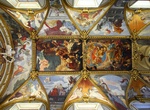
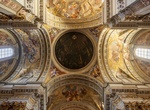
See Frescoes in Church of St. Ignatius of Loyola, Rome, Rome
The Church of St. Ignatius of Loyola at Campus Martius (Chiesa di Sant'Ignazio di Loyola in Campo Marzio) is a Latin Catholic titular church, of deaconry rank, dedicated to Ignatius of Loyola, the founder of the Society of Jesus...
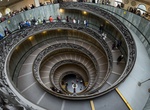
See Bramante Staircase, Vatican Museums, Vatican City
Bramante Staircase is the name given to two staircases in the Vatican Museums in the Vatican City State: the original stair, built in 1505, and a modern equivalent from 1932.
The original Bramante staircase, in the Pio-Clementine...
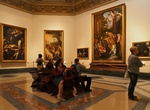
Visit Pinacoteca dei Musei Vaticani, Vatican Museums, Vatican City
The art gallery was housed in the Borgia Apartment until Pius XI ordered construction of a dedicated building. The new building, designed by Luca Beltrami, was inaugurated on 27 October 1932. The museum's...
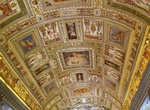
Visit Vatican Gallery of Maps, Vatican City
The Gallery of Maps (Italian: Galleria delle carte geografiche) is a gallery located on the west side of the Belvedere Courtyard in the Vatican containing a series of painted topographical maps of Italy based on drawings by friar and...
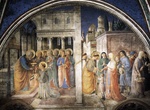
Visit Niccoline Chapel, Vatican City
The Niccoline Chapel (Italian: Cappella Niccolina) is a chapel in the Apostolic Palace in Vatican City. It is especially notable for its fresco paintings by Fra Angelico (1447–1451) and his assistants, who may have executed much...
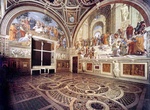
Visit Raphael Rooms, Vatican City
The four Raphael Rooms (Italian: Stanze di Raffaello) form a suite of reception rooms in the Apostolic Palace, now part of the Vatican Museums, in Vatican City. They are famous for their frescoes, painted by Raphael and his workshop...
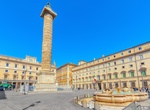
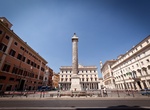
Visit Piazza Colonna, Rome, Italy
Piazza Colonna is a piazza at the center of the Rione of Colonna in the historic heart of Rome, Italy. It is named for the marble Column of Marcus Aurelius, which has stood there since AD 193. The bronze statue of Saint Paul that...
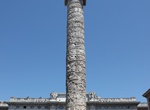
Visit Column of Marcus Aurelius, Piazza Colonna, Rome, Italy
The Column of Marcus is a Roman victory column located in Piazza Colonna, Rome, Italy. A Doric column adorned with a detailed spiral relief, it was built in honor of Roman emperor Marcus Aurelius and modeled after Trajan's Column...
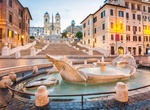
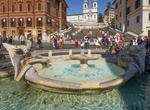
Visit Fontana della Barcaccia, Rome, Italy
The Fontana della Barcaccia (Fountain of the Boat) is a Baroque-style fountain found at the foot of the Spanish Steps in Rome's Piazza di Spagna (Spanish Square). Pope Urban VIII commissioned Pietro Bernini in 1623 to build the...
Visit Piazza Venezia, Rome, Italy
Piazza Venezia (Venice Square) is a central hub of Rome, Italy, in which several thoroughfares intersect, including the Via dei Fori Imperiali and the Via del Corso. It takes its name from the Palazzo Venezia, built by the Venetian...
Tour 5th Level (The Attic) of The Colosseum, Rome Italy
For the first time in decades, the highest level of Rome’s iconic Colosseum has opened temporarily for specialist guided tours.
The highest level of the Colosseum accessible for tours is the fifth level, also known as the attic...
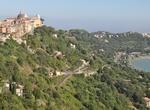
Visit Castel Gandolfo, Italy
Castel Gandolfo is a small town located approximately 15 miles southeast of Rome, Lazio, Italy. Occupying a height on the Alban Hills overlooking Lake Albano, Castel Gandolfo is perhaps best known as the summer residence and occasional...
Stay at Rome Cavalieri, Waldorf Astoria, Rome, Italy
Surrounded by Mediterranean gardens, Rome Cavalieri offers panoramic views of Rome from its hilltop position in Montemario. It features spacious and luxurious rooms, and a 2500 m² wellness centre.The elegant rooms include a...
Stay at Hotel Palazzo Manfredi, Rome, Italy
The Hotel Gladiatori Palazzo Manfredi enjoys an exceptional location in the heart of ancient Rome, with rooms and a rooftop terrace directly overlooking the Coliseum.A small, exclusive, and elegant hotel situated just a few minutes...
Visit Santa Maria della Concezione dei Cappuccini (Capuchin Crypt), Rome, I...
Santa Maria della Concezione dei Cappuccini, or Our Lady of the Conception of the Capuchins, is a church in Rome, Italy, commissioned in 1626 by Pope Urban VIII, whose brother, Antonio Barberini, was a Capuchin friar. It is located at...
Shop at New Testaccio Food Market, Rome, Italy
The Testaccio market has an excellent selection of top-quality food. Besides a choice of fruit, vegetable, meat and fish stalls, there are stands selling last season's shoes at knock-down prices, exquisite cakes
Most shops inside the...
Ride A Vespa In Rome, Italy
Vespa is an Italian brand of scooter manufactured by Piaggio. The name means wasp in Italian.
The Vespa has evolved from a single model motor scooter manufactured in 1946 by Piaggio & Co. S.p.A. of Pontedera, Italy—to a full...
Eat Supplì
Supplì (Italianisation of the French word surprise) are Italian snacks consisting of a ball of rice (generally risotto) with tomato sauce and raw egg, typical of the Roman Cuisine. Originally, they were filled with chicken...
See Quirinal Palace & Gardens, Rome, Italy
The Quirinal Palace (known in Italian as the Palazzo del Quirinale or simply Quirinale) is a historic building in Rome, Italy, the current official residence of the President of the Italian Republic. It is located on the Quirinal Hill...
Visit Vatican Necropolis, Vatican City
The Vatican Necropolis lies under the Vatican City, at depths varying between 5–12 meters below Saint Peter's Basilica. The Vatican sponsored archeological excavations under Saint Peter's in the years 1940–1949 which...
Visit Piazza Navona, Rome, Italy
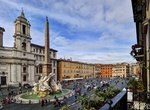
Piazza Navona is a piazza in Rome, Italy. It is built on the site of the Stadium of Domitian, built in 1st century AD, and follows the form of the open space of the stadium. The ancient Romans went there to watch...
Eat & Drink on Via del Pellegrino, Rome, Italy
Via del Pellegrino is one of the streets off Campo de Fiori in Rome, Italy. Eat here instead of the more touristy places on Campo de Fiori.
Visit Campo de' Fiori, Rome, Italy
Campo de' Fiori is a rectangular square south of Piazza Navona in Rome, Italy, at the border between rione Parione and rione Regola. It is just diagonally southeast of the Palazzo della Cancelleria and one block northeast of the...
Shop at Campo de' Fiori Market, Rome, Italy
Campo de' Fiori is a rectangular square south of Piazza Navona in Rome, Italy, at the border between rione Parione and rione Regola. It is just diagonally southeast of the Palazzo della Cancelleria and one block northeast of the...
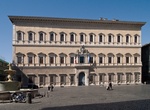
See Palazzo Farnese, Rome, Italy
Palazzo Farnese is one of the most important High Renaissance palaces in Rome. Owned by the Italian Republic, it was given to the French government in 1936 for a period of 99 years, and currently serves as the French embassy in...
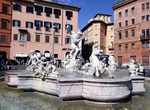
See Fountain of Neptune (Rome), Italy
The Fontana del Nettuno (Fountain of Neptune) is a fountain in Rome, Italy, located at the north end of the Piazza Navona. It was once called "Fontana dei Calderari" because it was located close to a small alley with blacksmith's...
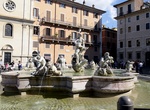
See Fontana del Moro, Rome, Italy
Fontana del Moro(Moor Fountain) is a fountain located at the southern end of the Piazza Navona in Rome, Italy. It represents a Moor, or African (perhaps originally meant to be Neptune), standing in a conch shell, wrestling with a...
See Palazzo Braschi (Museo di Roma), Rome, Italy
The Museo di Roma is a museum in Rome, Italy, part of the network of Roman civic museums. The museum was founded in the Fascist era with the aim of documenting the local history and traditions of the "old Rome" that was rapidly...
See Archbasilica of St. John Lateran, Rome, Italy
The Papal Archbasilica of St. John in Lateran (Italian:Arcibasilica Papale di San Giovanni in Laterano), commonly known as St. John Lateran Archbasilica, St. John Lateran Basilica, St. John Lateran, or simply the Lateran Basilica, is...
See Sant'Agnese in Agone, Rome, Italy
Sant'Agnese in Agone (also called Sant'Agnese in Piazza Navona) is a 17th-century Baroque church in Rome, Italy. It faces onto the Piazza Navona, one of the main urban spaces in the historic centre of the city and the site where the...
Walking Tour of Rome
The old adage claims that "Mille viae ducunt homines per saecula Romam" : All roads lead to Rome...
3000 years of History are mixed in this City, which can be considered the most magnificent open air museum in the whole world:
Roman giant monuments with their terrific past, Baroque and Renaissance-style...
Walking Tour: Rome - third day
The walk starts in the "Terme de Caracalla", one of the world most impressive Roman ruins. Before going back in the historic centre, enjoy a romantic garden of Roses that offers a nice view on the Palatine hill. Successively you'll discover the so popular "Mouth of the Truth", the romantic island on the...
Walking Tour: Rome
The old adage claims that "Mille viae ducunt homines per saecula Romam" : All roads lead to Rome...
3000 years of History are mixed in this City, which can be considered the most magnificent open air museum in the whole world:
Roman giant monuments with their terrific past, Baroque and Renaissance-style...
Bocca della Verità (Mouth of Truth)
La Bocca della Verità (in English, "the Mouth of Truth") is an image, carved from Pavonazzetto marble, of a man-like face, located in the portico of the church of Santa Maria in Cosmedin in Rome, Italy. The sculpture is thought to be part of a 1st century ancient Roman fountain, or perhaps a manhole...


Related Categories
Cities & Neighborhoods
Historical Cities
Main UNESCO Sites
Romantic Destinations
Top 100 Cities in the World
Price: $499.72