Give us feedback!
2 days in Transylvania at Dracula's Castle, Peleș Castle, Brașov and Sighișoara
Package Details
Destination:
Bucharest, Romania, Romania
Duration: 2 days
Price:
$295.22
Details & Booking at viator.com
Like & Rate this package!
Offered by: Viator
This is a private two days trip from Bucharest to Transylvania.
In the first day we will pick-up you from Bucharest Hotel and drive to:
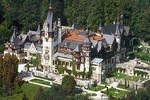
- Peleș Castle - The most beautiful caste in Romania.
- Dracula's Castle - no longer needs any presentation :)
- Brașov city - The historical city center.
- Sighișoara - The only medieval city in Romania, still inhabited.
We will sleep at a hotel in Sighisoara and in the morning we will visit the fortress.
Here you will follow in the footsteps of Vlad the Impaler, you will see the place where he was born and raised.
On the way back we will visit:
- Rupea Fortress - The oldest and largest fortification in Transylvania.
- The Fortified Church from Harman - An Evangelical church protected by a wall of defense, with the role of shelter in case of invasions.
In the evening we will return to Bucharest.
For choosing the hotel in Sighisoara we can advise you.
In the first day we will pick-up you from Bucharest Hotel and drive to:
- Peleș Castle - The most beautiful caste in Romania.
- Dracula's Castle - no longer needs any presentation :)
- Brașov city - The historical city center.
- Sighișoara - The only medieval city in Romania, still inhabited.
We will sleep at a hotel in Sighisoara and in the morning we will visit the fortress.
Here you will follow in the footsteps of Vlad the Impaler, you will see the place where he was born and raised.
On the way back we will visit:
- Rupea Fortress - The oldest and largest fortification in Transylvania.
- The Fortified Church from Harman - An Evangelical church protected by a wall of defense, with the role of shelter in case of invasions.
In the evening we will return to Bucharest.
For choosing the hotel in Sighisoara we can advise you.
Itinerary
Day 1: From Bucharest to Sighișoara
Stop At: Peles Castle, Str. Pelesului 2, Sinaia 106100 Romania
Nestled at the foot of the Bucegi Mountains in the picturesque town of Sinaia, Peles Castle is a masterpiece of German new-Renaissance architecture, considered by many one of the most stunning castles in Europe.
Commissioned by King Carol I in 1873 and completed in 1883, the castle served as the summer residence of the royal family until 1947. Its 160 rooms are adorned with the finest examples of European art, Murano crystal chandeliers, German stained-glass windows and Cordoba leather-covered walls.
King Carol spared no expense.
Peles Castle was the first European castle to have electricity, it even has its own power plant.
The Castle has hot and cold running water, central heat and central vacuum system.
Duration: 2 hours
Stop At: Bran Castle (Dracula's Castle), Str. General Traian Mosoiu nr. 24, Bran 507025 Romania
Commonly known outside Romania as Dracula's Castle it is often referred to as the home of the title character in Bram Stoker's Dracula. There is no evidence that Stoker knew anything about this castle, which has only tangential associations with Vlad the Impaler, voivode of Wallachia, the putative inspiration for Dracula. Stoker's description of Dracula's crumbling fictional castle also bears no resemblance to Bran Castle.
Duration: 2 hours
Stop At: Brasov Historical Center, Piazza Sfatului, Brasov Romania
Brasov is one of the most visited cities in Romania, offerings its tourists a rich mix of history, architecture, culture, urban fun, and impressive natural surroundings. A top tourist attraction in Romania, the city was for centuries a key commercial center and a strong industrial hub during the long decades of communism when its name changed for 10 years to Stalin City.
Duration: 2 hours
Stop At: Black Church (Biserica Neagra), Curte Honterus Johannes nr. 2, Brasov 500025 Romania
Over 600 years old, the Black Church from Brasov is the most iconic historical monument from this old Transylvanian town. The largest hall-church east of Vienna and one of the biggest medieval churches from this part of Europe, this impressive Gothic construction is impossible to miss if you’re wandering through the center of Brasov.
Duration: 15 minutes
Stop At: Rope Street - Strada Sforii, Strada Sforii, Brasov 500015 Romania
One of the most famous streets in Brasov is Strada Sforii also known as “Rope” and “Skinny” Street as it is the narrowest street in Eastern Europe. Dating back to the 13th century, Strada Sforii is approximately four feet wide and it links Cerbului Street with Poarta Schei Street. The street was originally used as an access route by firefighters but today is one of the most interesting and fun tourist attractions in Brasov as visitors and locals alike wander its narrow, winding path.
Duration: 10 minutes
No meals included on this day.
No accommodation included on this day.
Day 2: From Sighișoara to Bucharest
Stop At: Centrul Istoric Sighisoara, Piata Cetatii Nr.1 Center of Sighisoara, Sighisoara 545400 Romania
Sighișoara (Sighișoara Citadel) it was built in the 12th century by Saxon settlers. It is an inhabited medieval citadel that, in 1999, was designated a UNESCO World Heritage Site for its 850-year-old testament to the history and culture of the Transylvanian Saxons.
Birthplace of Vlad III the Impaler (Dracula), Sighișoara hosts, every year, a medieval festival where arts and crafts blend with rock music and stage plays. The city marks the upper boundary of the Land of Sachsen. Like its bigger brothers, Sibiu (Hermannstadt) and Braşov (Kronstadt), Sighișoara exhibits Medieval German architectural and cultural heritage that was preserved even during the Communist period.
Duration: 3 hours
Stop At: Cetatea Rupea, Strada Cetatii, Rupea 505500 Romania
Rupea Citadel is one of the oldest archaeological sites in Romania, the first signs of human settlements dating from the Paleolithic and early Neolithic.
The first documentary attestation dates from 1324 when the Saxons revolted against King Charles I of Hungary and took refuge inside the citadel. According to archaeologists, the current citadel was built on the ruins of a former Dacian defense fort conquered by the Romans.
The name of the citadel comes from Latin rupes meaning "stone". From the 10th century, the citadel experienced a systematic expansion, so that in the 14th century it had a key strategic role, being the main linking point between Transylvania, Moldavia and Wallachia.
Duration: 1 hour
Stop At: Fortified Church of Harman, Str. Pietii 2, Harman 507085 Romania
The fortified church from Harman is one of Transylvania’s must-see medieval monuments and one of the best-preserved fortifications used centuries ago when enemy attacks were a constant threat. The church is located only 10 kilometers from Brasov, in the village of Hărman.
Duration: 1 hour
No meals included on this day.
No accommodation included on this day.