Give us feedback!
Discovering Lake Maggiore: the best panoramic private cruise
Package Details
Destination:
Stresa, Piemonte, Italy
Duration: 7 hours
Price:
$560.00
Details & Booking at viator.com
Like & Rate this package!
Offered by: Viator
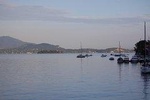
Lake Maggiore is a land of enchantment, whose coastlines are dotted by small, charming villages, art treasures, majestic castles and gorgeous gardens. In the middle of it lay the Borromean Islands, who has been chosen through the centuries by wealthy families, especially the Borromeo, for their leisure residences.
This private cruise will take you to Isola Bella, seat of a fairy palace and a terraced botanical garden, then to Isola dei Pescatori, the only permanently inhabited one, where you may enjoy a good seafood lunch. Then, reaching the cliffs and woods of the lake eastern coast, you will find as a hidden jewel the Hermitage of Santa Caterina, a monastery built sheer on the waters, overlooking the lake with an astonishing view.
This private cruise will take you to Isola Bella, seat of a fairy palace and a terraced botanical garden, then to Isola dei Pescatori, the only permanently inhabited one, where you may enjoy a good seafood lunch. Then, reaching the cliffs and woods of the lake eastern coast, you will find as a hidden jewel the Hermitage of Santa Caterina, a monastery built sheer on the waters, overlooking the lake with an astonishing view.
Itinerary
This is a typical itinerary for this product
Pass By: Stresa, Stresa, Lake Maggiore, Piedmont
This small town, standing on the Western coast of Lake Maggiore in the so-called Borromea Gulf, is one of the most visited touristic sites of entire Piemonte. Its territory includes three of the four Borromean Islands: Isola Bella, Isola Madre and Isola Superiora, also named Isola dei Pescatori. The first recorded file about the town is dated 998, but even in the Roman age, the way leading from Milan to the Sempione pass ran by this site.
Stop At: Isola Bella Italy
This small island, formerly inhabited by a few fishermen, was deeply transformed by the Borromeo family, since 1632; in this year, Carlo III Borromeo started the construction of a gorgeous palace, dedicated to his wife Isabella, which was later completed, in 1671, by an amazing Baroque garden. Palazzo Borromeo also hosted Napoleon I with his wife and, later in 1935, the Conference of Stresa, held between the representatives of Italian, British and French government.
Duration: 1 hour 30 minutes
Stop At: Island of the Fishermen (Isola dei Pescatori), Italy
The only one, among the Borromean Islands, to be permanently inhabited, is also called "Isola Superiore" (Upper) due to its position, North of its "twin" Isola Bella. Its iconic skyline is dominated by the bell tower of the Church of San Vittore, mainly built in the 16th and 17th century but based on an 11th century chapel. The 35 inhabitants live on tourism and fishing.
Duration: 2 hours
Stop At: Eremo di S. Caterina del Sasso, Via Santa Caterina, 21038, Leggiuno Italy
According to the tradition, this amazing monastery was founded as a simple chapel in the 12th century by a merchant, survived to a storm and then retired here in prayer and contemplation. The two churches of San Nicolao and Santa Maria Nova, in the 14th century, originated the actual monastery. A religious community survived until 1770, when the monastery was suppressed. after a massive restoring in the 1970s, it reopened in the Eighties. The hermitage has been a National monument since 1914.
Duration: 2 hours