Give us feedback!
 4.908257 from partner site
Full-Day Eastern Serbia Monasteries and Resava Cave Tour from Belgrade
Package Details
Destination:
Belgrade, Serbia, Serbia
Duration: 8 to 9 hours
Price:
$72.88
Details & Booking at viator.com
Like & Rate this package!
4.908257 from partner site
Offered by: Viator
A whole day, complete Eastern Serbia experience. Get to know everything about the area on this 9-hours tour.
With live, professional guiding, in a small group and in an air-conditioned vehicle, you will visit famous Ravanica and Manasija orthodox monasteries, an 80 million years old Resava Cave, and you will learn about proud history of Serbia during XIV and XV century.
You will have the chance to fell the unique atmosphere of Eastern Serbia, and to taste traditional products of the area.
With live, professional guiding, in a small group and in an air-conditioned vehicle, you will visit famous Ravanica and Manasija orthodox monasteries, an 80 million years old Resava Cave, and you will learn about proud history of Serbia during XIV and XV century.
You will have the chance to fell the unique atmosphere of Eastern Serbia, and to taste traditional products of the area.
Your tour starts from Studentski Trg. Then head towards Pomoravlje District, known as the center of the last Serbian Medieval Kingdom, where monasteries steel keep enormous cultural and historical legacy and wealth.
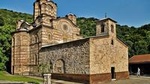
Your first stop is Ravanica monastery. It was the endowment of Prince Lazar built during the period between 1375 and 1377, with its frescoes painted in the years preceding the Battle of Kosovo. Due to its architectural and artistic features, the Ravanica church can be called the birthplace of the new artistic movement called the Morava school. The church is original in its architectural style, which is a blend of the Mount Athos tradition of the trefoil base and the cross-in-square five-domed model which became standard in the time of King Milutin.
Continue your ride to Manasija monastery. Manasija monastery is one of the last monuments to Serbian medieval culture, raised by Despot Stefan Lazarević, son of Prince Lazar. The construction of the church, an extravagant fortification and large refectory took from 1406 to 1418. The impressive walls with 11 towers, surrounded by a trench, would at that time have been a modern system for the defense of the monastery. The most dominant and most imposing tower – the keep – is known as Despotova Kula (Despot’s Tower).
The Church of the Holy Trinity is considered a prime example of Morava architecture.
The frescoes in Manasija, together with those in Kalenić, are the most beautiful of the Morava properties and are considered among the best in old Serbian art in general. Besides the monumental depictions of warriors in the choir transept, especially beautiful are the prophets pictured in the dome, as well as the idealized depiction of Despot Stefan Lazarević presenting a model of the church to the Holy Trinity. Besides monastery churches and fortifications, Manasija partially preserves the remains of the old refectory and library. The library housed a scriptorium in which numerous books were copied for church use. The so-called 'Resava orthography' was greatly valued and was to influence later scribes for some time to come.
After this extraordinary experience, you will visit the Resava cave, one of the oldest in Serbia, some 80 million years old, with some of the older formations dating back around 45 million years. The interior of the cave abounds in numerous and varied halls, channels, galleries, columns, stalactites, stalagmites, draperies and flowstone waterfalls.
Further on, you will enjoy a traditional Serbian lunch in a unique atmosphere, in a restaurant directly bellow the waterfall.
After an unforgettable day, you will head back to Belgrade