Give us feedback!

Explore the Historical Caves of the Khandagiri and Udayagiri Hills from Bhubaneswar with Private Transfer
Package Details
Destination:
Bhubaneswar, Odisha, India
Duration: 2 to 3 hours
Price:
$118.00
Details & Booking at viator.com
Like & Rate this package!
Offered by: Viator
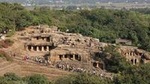
Located about six miles from Bhubaneswar are the caves of Udayagiri and Khandagiri. These multi-tiered rock-cut caves symbolise Jainism’s cameo role in Orissa’s historical drama. Commissioned by the great Jain king Kharavela, these caves were meant as dwellings for Jain monks. Each cell was lived in by several monks and provided dry shelter for meditation and prayer. They had very few amenities and were austerely plain. However, their facades are richly encrusted with sculptures depicting auspicious objects worshipped by Jains, court scenes, royal processions, hunting expeditions and scenes of daily life. Our guide will explain their significance as you explore these fascinating caves.
Highlights
• The Stupas
• The Monasteries
• Jain Temple
Highlights
• The Stupas
• The Monasteries
• Jain Temple
You will be picked up and driven to the caves. The caves belong to the earliest groups of Jain rock-cut shelters in Udayagiri (Hill of Sunrise) and Khandagiri (Broken Hill). They command a unique position in rock-cut architecture, art and religion. The two hills rise abruptly from the coastal plain, about six miles west of Bhubaneswar. You will visit this multi-storied ancient apartment residence for Jain monks. They were the work of the first known Orissan ruler, King Kharavela, and probably begun in the first century BC. Kharavela was a king of the Mahameghavahana dynasty, who is known for expansion of the Kalinga Empire and his installation of public improvements, such as canal systems. His queen was quite a patron of the arts, and probably was the driving force behind the impressive sculptural decoration of the caves.
Udayagiri has 18 caves on its hill. The largest, Cave 1, is known as Rani Gumpha or Queen's Cave. It has fine wall friezes, recently restored pillars, and beautiful sculptures. On the lower story, you can see carved dwara palas (sentries) and side pillars crowned by animals. Above them are toranas (arches) with religious and royal couples standing with folded hands. Also see a female dancer with accompanying female musicians. In the main central wing, are themes indicating a victory march of a king. In the preserved Upper Story are six cells with two doorways each, flanked by two pilasters.
Cave 2, Chota Hathi Gumpha, or Small Elephant Cave, has a carving of six elephants flanking its entrance. Cave 4, Alakapuri Gumpha, contain sculptures of a lion holding a prey, in its mouth, and pillars topped by pairs of winged animals, some human and some bird headed. Several additional caves will be shown on your tour.
There are 15 caves on the Khandagiri hill. Cave 1 and 2, are known as Tatowa Gumpha or Parrot Caves, because of the figures of parrots carved on the arches of their doorways. Cave 3 is called the Ananta Gumpha or Snake Cave after the figures of twin serpents on the door arches. It is one of the most important caves on the Khandagiri hill on account of its unique motifs: figures of boys chasing animals including lions and bulls. On the back wall of the cell is carved a nandipada on a stepped pedestal flanked on either side by a set of three symbols, a triangular headed symbol, a srivatsa and a swastika, auspicious to the Jains. You will have the oppotunity to visit additional caves on this hill.
The 18th century, Jain Temple, at the top of the hill dedicated to Rishabnath, was most probably built on the site of an earlier shrine. The temple enshrines some old tirthankars and affords a panoramic view across the plains.
You will be driven back to your hotel at the end of the tour.