Give us feedback!
Half-Day Tour to Beit El Din and Sidon
Package Details
Destination:
Beirut, Lebanon, Lebanon
Duration: 5 hours
Price:
$75.00
Details & Booking at viator.com
Like & Rate this package!
Offered by: Viator
Skip the hassle of driving and public transportation on this half-day tour from Beirut, and recognize the Italian-designed palace at Beiteddine in the countryside region of Chouf. Then head south to Sidon city, and explore the main attractions including the crusader sea castle, museums, palaces, khans and a small walk in the old souk.
Itinerary
This is a typical itinerary for this product
Stop At: Beiteddine Palace, MHWJ+45H, Beit ed-Dine, Lebanon
Beiteddine Palace or ‘House of Faith’ is a 19th-century palace in Beiteddine, Lebanon. It hosts the annual Beiteddine Festival and the Beiteddine Palace Museum.
Emir Bashir Chehab II, who later became the ruler of the Mount Lebanon Emirate, built the palace between 1788 and 1818. After 1840, the palace was used by the Ottomans as a government building. During the French Mandate it served as a local administrative office.
In 1943, the palace was declared the president's official summer residence. During the Lebanese Civil War it was heavily damaged. Parts of the palace are today open to the public while the rest is still the president's summer residence.
Duration: 1 hour 30 minutes
Stop At: Sidon, Sidon, South Governorate
Sidon, one of the oldest Phoenician cities, was founded in the 3rd millennium BC and became prosperous in the 2nd. Sidon was famous for its purple dyes and glassware and Jesus visited it. During the Crusades, Sidon changed hands several times and was destroyed and rebuilt.
Duration: 2 hours
Stop At: Crusaders Sea Castle, Sidon Sea Boulevard, Sidon Lebanon
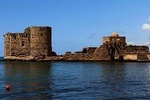
The Sidon Sea Castle was built by the crusaders in the thirteenth century on a small island, connected to the mainland by a causeway, as a fortress of the holy land. It is one of the most prominent historical sites in the port city of Sidon, Lebanon. The castle was largely destroyed by the Mamluks in 1291 and was later restored by Fakhr el-Dine Maan II in the early 17th century.
Old prints of the fortress show it to be one of great beauty, but little remains of the embellishments that once decorated its ramparts.
Duration: 30 minutes
Stop At: Khan al-Franj, Sidon Lebanon
Khan al-Franj is one of Sidon’s main attractions. It was built in the beginning of the 17th century by Emir Fakhreddine II to be a hotel for ambassadors and a center for commercial exchange between Lebanon and France.
The hotel soon became a center for literature, religion, history, industry and diplomacy. It became a home for culture and civilization.
This is a typical khan with a large rectangular courtyard and a central fountain surrounded by covered galleries.
Duration: 15 minutes
Stop At: Soap Museum - Saida, Al Moutran Str., Haret Audi, Old Town Saida, صيدا، Lebanon
The Soap Museum is a museum in Sidon specialized in Levantine soaps
The soap workshop was originally built in Sidon by the Hammoud family in the 17th century.
The Soap Museum traces the history of soap making in the region, its development and manufacturing techniques. Visitors can see a demonstration of how traditional olive oil soaps are made and learn about the history of the "hammam" (bath) traditions.
A historical section of the museum introduces artifacts which were found during onsite excavation and which include remains of clay pipe heads dating from the 17th to 19th century as well as pottery fragments. The Museum building is an old soap factory built in the 17th century, although containing parts thought to date back to the 13th century.
Duration: 15 minutes
Stop At: Debbane Palace, Old Souks, Sidon Lebanon
The Debbane Palace was Built in the Old City of Sidon in the 18th century and It is now the last house of the Ottoman period remaining in a city that has since given way to traffic and glass storefronts. Approached from a narrow stairwell in the crowded Souq, the palace is built literally on top of the markets below. Inside it contains an entire world of reception rooms, stained-glass windows, rare mosaic tiles and centuries-old stables.
the Debbane Palace marks the only example of an Ottoman palace within the city walls of urban Lebanon
Duration: 15 minutes
Stop At: Sidon Souks, Old City, Sidon Lebanon
The souk of Sidon is the center of all the commercial activities of retail, as well as craft industry.
The souk is a maze of narrow alleyways with small kiosks, shops and cafes, street merchant, butchers, grocers, shoe-makers, tailors and jewelers.
Duration: 15 minutes