Give us feedback!
Argolida Tour 8seat 10hours
Package Details
Destination:
Athens, Greece, Greece
Duration: 10 hours
Price:
$495.97
Details & Booking at viator.com
Like & Rate this package!
Offered by: Viator
This tour is an ideal choice for anyone who wants to visit ancient and historical sites of Greek civilization and experience Greek countryside. We begin our tour from Athens in the morning. Our first stop is the Corinth Canal which connects the Gulf of Corinth with the Saronic Gulf in the Aegean Sea. Then we head to the ancient city of Mycenae, one of the major centers of Ancient Greek civilization. In Mycenae, we will visit the palace, the Cyclopean Walls and the tomb of King Agamemnon. Then we continue our journey to Ancient Epidaurus, which is famous for its Ancient Theater of the 4th Century BC with its advanced design and astonishing acoustics, symmetry and beauty. Our last stop is the beautiful and historical city of Nafplio. In Nafplio, we will visit the Palamidi, a Venetian fortress with its 999 steps and then we will take a walk in the picturesque alleys of the old city. After walking in this idyllic place, we will make a stop for lunch.
Itinerary
This is a typical itinerary for this product
Stop At: Corinth Canal, Isthmia, Loutraki 201 00 Greece
The Corinth Canal connects the Gulf of Corinth with the Saronic Gulf in the Aegean Sea and it cuts through the Isthmus of Corinth, separating the Peloponnese from the Greek mainland. It is 6.4 kilomotres in length and 21.4 meters wide, making the access impossible for modern ships. Currently, it is used mostly as a tourist attraction. The initial idea for constructing the Corinth Canal was tyrant Periander’s in the 7th century BC, who eventually abandoned that project and constructed Diolkos instead, an overland portage road where ships would be able to move overland across the Isthmus of Corinth. The first Governor of Greece, Ioannis Kapodistrias, revived the idea of the construction of the modern Canal after the formal independence of the country in 1830. The construction begaun in 1880, however, due to financial reasons, the construction was completed in 1893.
Duration: 30 minutes
Stop At: Archaeological Site Mycenae, Mycenae 21200 Greece
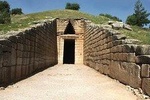
Mycenae is an archeological site near the modern village of Mycenae in Argolis, north-eastern Peloponnese in Greece. A kingdom of the mythical King Agamemnon, it is the most important and the richest center of Greece’s Late Bronze Age, being synonymous with one of the greatest civilizations in Greek history. Mycenae, an acropolis site, was built on a hill 270 meters above sea level, 19 kilometers inland from the Gulf of Argolis. It was ideally positioned and became powerful due to the farmland and adequate water supply. It used to be a dominant power from the early Neolithic Age until the Middle Helladic Period, yet there are few traces from the Neolithic settlement. In the Middle Helladic Period, evidence shows that Mycenae had a great Cretan influence. It was first excavated in 1876, by the famous Archeologist Heinrich Schliemann, who discovered the shaft graves known as Graves Circle A to distinguish them from the Graves Circle B which were found later. In the late Helladic Period, the fortifications of Mycenae were rebuilt in a style known as Cyclopean because the blocks of stone used were so enormous that it was thought in later ages that it was the work of the one-eyed giants known as Cyclopes. Myths associated with the history of Mycenae penetrated all centuries within the Homeric epics and the classic ancient tragedies while they inspired and continue to inspire intellectual creativity and art all over the world.
Duration: 2 hours
Stop At: The Great Theatre of Epidaurus, Ethniki Odos Isthmou Archaias Epidavrou, Epidavros 210 52 Greece
Epidaurus is a historic city located in the Argolida prefecture. Epidaurus experienced rapid unprecedented growth due to its strategic location and the Asclepeion. Its inhabitants were mostly occupied in shipping professions and the first settlement belonged to the prehistoric era. Epidaurus is known mostly for its sanctuary situated about 8 km from the town, as well as its theater, which is still used today. The Asclepeion at Epidaurus was the most famous healing center in the Classical Ages, the place where ill people went to be cured. The sick people spent a night in the Enkoimeteria or Avaton, a big sleeping hall where the god Asclepius would come in to their dreams and would give them the right cure to become healthy again. Asclepius, the most important healer, god of antiquity, brought prosperity to the sanctuary which enabled Epidaurus to construct civic monuments, including the theater with its admirable symmetry and beauty, which is still used today for dramatic performances. The ancient theater of Epidaurus was designed in the 4th century BC by Polykleitos, the Younger. The theater is widely known for its great acoustics that permit almost perfect comprehensibility of unamplified spoken words from the proscenium or skēnē to all 14,000 spectators.
Duration: 1 hour 30 minutes
Stop At: Nauplion Promenade, Nafplio Greece
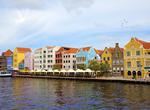
Nafplio or Anapli is a city in the Peloponnese peninsula, capital of Argolida County and the most important port of east Peloponnese. Nafplio is one of the most beautiful and historical cities in Greece. The city has been the first capital of the Hellenic Republic during the period 1828-1833 and is also the location of the murder of the first Governor of Greece, Ioannis Kapodistrias, at the church of Saint Spyridon. Nafplio is famous for Acronauplia, also known as Iç Kale in Ottoman times, Bourtzi, a Venetian castle built on a small islet within the harbor, and Palamidi, a Venetian fortress with 999 steps from the town to the top of the castle. Nafplio has many traditional-style colorful buildings and houses, influenced by the Venetians, due to their domination between 1338 and 1540. Modern-era neoclassical buildings are also preserved and the building of the National Bank of Greece is an example of Mycenaean Revival architecture.
Duration: 2 hours