Give us feedback!
Port shore Excursion Tour - Busan to Gyeongju (8hours)
Package Details
Destination:
Busan, South Korea, South Korea
Duration: 7 to 8 hours
Price:
$275.90
Details & Booking at viator.com
Like & Rate this package!
Offered by: Viator
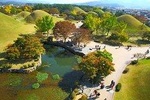
Take a journey through the picturesque countryside of Korea to temple-rich Gyeongju, the ancient capital of the Silla dynasty and one of the ten historical cities in the world. Gyeongju, the ancient capital of the Silla dynasty (BC57-AD935), often dubbed as a Museum without Walls.
Make your way leisurely to Gyeongju, where you will see Korea's fertile farmland, glistening brooks, sheltered ginseng farms, apple plantations and lovely rice paddies that together form the patchwork of colors and ever-changing textures of the rural Korean life.
Make your way leisurely to Gyeongju, where you will see Korea's fertile farmland, glistening brooks, sheltered ginseng farms, apple plantations and lovely rice paddies that together form the patchwork of colors and ever-changing textures of the rural Korean life.
Itinerary
This is a typical itinerary for this product
Stop At: Seokguram, 999 Jinhyeon-dong, Gyeongju, Gyeongsangbuk-do 780-400 South Korea
Seokguram, located on Tohamsan Mountain, is a representative Korean stone temple. The official name of Seokguram, National Treasure No. 24, is Seokguram Seokgul. Designated a World Cultural Heritage Site by UNESCO in 1995, it is a stone temple constructed of granite. The construction was started by Kim Dae-Seong (700-774) in 751 and finished twenty-four years later, in 774.
Seokguram is known to have been built along with the Bulguksa Temple, according to the history book, Samgukyusa, from the Goryeo Dynasty. Kim Dae-Seong had built Bulguksa for the parents who were alive, and Seokguram for the parents from his former life.
Duration: 1 hour
Stop At: Bulguksa Temple, Bulguksa 385 Bulguk-ro, Gyeongju, Gyeongsangbuk-do 38127 South Korea
Bulguksa Temple is the representative relic of Gyeongju and was designated a World Cultural Asset by UNESCO in 1995. The beauty of the temple itself and the artistic touch of the stone relics are known throughout the world. Bulguksa Temple was built in 528 during the Silla Kingdom was built by Kim Dae-Seong (700-774), who started building the temple in 751 and completed it in 774.
Bulguksa Temple is home to many important cultural relics such as Dabo-tap (National Treasure No. 20), Seokga-tap (National Treasure No. 21) Yeonhwa-gyo* Chilbo-gyo (National Treasure No. 22), Cheongun-gyo,* Baegun-gyo (National Treasure No. 23), the Golden Seated Vairocana Buddhist Figure (National Treasure No. 26), the Golden Seated Amita Figure (National Treasure No. 27), and Sari-tap (Treasure No. 61).
Duration: 1 hour
Stop At: Daereungwon Tomb Complex, 9 Gaerim-ro, Gyeongju, Gyeongsangbuk-do 38165 South Korea
Opened in 1964, Namdaemun Market is the largest traditional market in Korea with shops selling various goods. All products are sold at affordable prices and the stores in this area also function as wholesale markets.
Duration: 50 minutes