Give us feedback!

Private Day Trip to Huangyaguan Great Wall and Eastern Qing Tombs from Beijing
Package Details
Destination:
Beijing, China, China
Duration: 10 hours
Price:
$260.00
Details & Booking at viator.com
Like & Rate this package!
Offered by: Viator
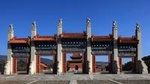
If you want to see the exquisitely built tombs of the Qing emperors and a less visited section of the Great Wall, this private day tour from Beijing might be the best choice. The Eastern Qing Tombs is located in the Zunhua County of Hebei Province, about 125 kilometers away from Beijing. It is the largest, most complete and best preserved imperial tomb existing in China. Five Qing emperors, 15 empresses, 136 imperial concubines, 3 princes and 2 princesses were buried there. Also, you will have the opportunity to enjoy the beautiful countryside of Beijing en route. The section of the Great Wall you will see is Huangyaguan Pass; it was first built during the Northern Qi Dynasty (550-557) and repaired extensively during the Ming Dynasty (1368-1644) under the supervision of the most famous Ming General Qi Jiguang.
Meet your guide at 8am in the lobby of your hotel and drive around 2.5 hours to the Eastern Qing Tombs. With a history of more than 300 years, the 161 emperors, empresses, concubines, princes and princesses of the Qing Dynasty were buried in these 15 mausoleums, which cover an area of 80 square kilometers. A golf cart will shuttle you around the vast complex, stopping at three of the most impressive sites:
Yuling Tomb: The tomb of Emperor Qianlong, the most competent Qing Emperor (1711-1799) and the most famous emperor in Chinese history. Most parts of the Forbidden City that are still standing were rebuilt during his reign. Yuling is one of the most splendid of all royal tombs in China. It has the finest tomb chamber, with a series of nine vaults separated by four solid marble doors located at a depth of 54 meters. From the first marble gate, all walls, vaulted ceilings, and gates are covered with exquisitely carved Buddhist imagery like the Four Heavenly Kings, the Eight Bodhisattvas, and the Eight Treasures, as well as ritual instruments and more than 30,000 words of Tibetan scripture and Sanskrit.
Dongling Tomb: The tomb of the notorious Empress Dowager Cixi (1835-1908) who ruled China for 48 years. Her tomb is famous for its luxurious decoration. The Longen Hall along with its eastern and western side halls are made from precious rose wood timbers. All three halls are decorated with gold-glazed colored painting, gilded dragons, and carved stone rails.
Sacred Way of Xiaoling: The 6km-long road starts from the widest stone archway in China, with beautifully carved figures of lions, Kylin and clouds. There are also 18 pairs of exquisitely sculptured giant statues (6 pairs of human figures and 12 animals), which served as guardians of the emperor’s afterlife.
Afterwards, continue to see the Huangyaguan Great Wall, around 40 minutes drive from the tomb. Because the cliff rocks to the east of the pass are mostly yellow, it is called Huangya (Yellow Cliff) Gaun (Pass). It is a section of the Wall located in the Ji County, Tianjin City. It was originally built over 1,400 years ago in the Northern Qi Dynasty and reinforced with brick walls in the Ming Dynasty. It is an ideal place for people who want to enjoy some peace and quiet, and to see a section of the Wall with fewer tourists.
At the end of the day, relax on the drive back to your hotel.