Give us feedback!
Private tour, 1Day Busan city tour by KTX from Seoul
Package Details
Destination:
Busan, South Korea, South Korea
Duration: 9 to 12 hours
Price:
$400.00
Details & Booking at viator.com
Like & Rate this package!
Offered by: Viator
Make your way to Busan, the second-largest metropolis in Korea, via a KTX express train that travels at the speed of 300km/h. Two and a half hours ride will bring you to Busan station. The beautiful port city of Busan, the second largest metropolitan area in Korea, is heavily visited by national and international tourists alike. No matter how extreme the temperature gets throughout the seasons, the city always bustles with people heading for the many attractions to see and explore! Absolutely wonderful beaches, glamorous night scenes, and traditional markets are scattered around the city.
Itinerary
This is a typical itinerary for this product
Stop At: Jagalchi Market, Nampo-dong, Jung-gu, Busan South Korea
It is Korea's largest seafood market. After the Korean War, the market solidified itself as a fish market. This market represents Busan and is famous throughout the country. If you visit you can eat fresh raw fish right at the market.
Duration: 1 hour
Stop At: Gamcheon Culture Village, 203, Gamnae 2-ro, Saha-gu, Busan 49368 South Korea
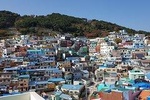
Gamcheon was a refuge to many people fleeing to Busan during the Korean War. The creative urban regeneration project started in 2010 and the success of the project attracts 1,400,000 Korean and foreign tourists to the village annually. It's earning this village the nickname of "Machu Picchu of Busan."
Duration: 1 hour
Stop At: Haeundae Beach, Haeundae-gu, Busan South Korea
It is the most famous beach in Busan. The white sand beach is roughly 1.5km long, over a 30~50m wide area, creating a beautiful coastline before a shallow bay, making Haeundae Beach perfect for swimming.
Duration: 1 hour
Stop At: Haedong Yonggung Temple, 416-3, Sirang-ri, Gijangeup, Gijang-gun, Busan 619-902 South Korea
It is situated on the coast of the north-eastern portion of Busan. This superb attraction offers visitors the rare find of a temple along the shore line; most temples in Korea are located in the mountains.
Duration: 1 hour
Stop At: Gukje Market, 25 Gukjesijang 2-gil, Gwangbok-dong, Jung-gu, Busan, South Korea
Among one of the traditional markets in Korea, Gukje market was first formed when refugees who fled to Busan sat up stalls in order to make a living after the Korean War. There is a wide variety of goods, so you can walk around and also check some food stalls.
Duration: 1 hour
Stop At: Dongbaekseom Island, U-dong, Haeundae-gu, Busan South Korea
It is translated into Camellia which is growing in islands of southern provinces and southern coastal area of Korea blossoming around March., of which the leaves are thick and glossy maintaining dark green colour through 4 seasons. There is Nurimaru APEC house, around three-story building exclusively built for the final summit meeting for the Asia-Pacific Economic Cooperation conference in the island.
Duration: 1 hour
Stop At: Busan Museum of Art, 58 APEC-ro, Haeundae-gu, Busan 48060 South Korea
This is just a landmark, not really the location.
Choi Min-Shik Gallery
Choi Min-Sik is the first-generation documentary photographer who photographed ordinary people with tough lives emanating from war and poverty. He aroused sympathy from the world by photographing ordinary people's tough lives and underprivileged people during the modernization of Busan with a theme 'Human'.
His black/white photos capture the moments of people in a very vivid way. Every single one of his photographs is portraits that are Koreans in Busan streets.
Duration: 20 minutes
Stop At: Amidong Tombstone Culture Village, 49 Ami-ro, Ami-dong, Seo-gu, Busan, South Korea
The stairs and the walls in this village are different from what you normally see. They are all tombstones. That's why the village is called Tombstone culture village. People began living here in tents since 1951. When it became more settled, the tents became too small, so people began building on top of Japanese graves. People think of the ocean what it comes to Busan, but Busan is also a city of mountains. From Ami-dong, the entire city of Busan can be seen.
Duration: 40 minutes