Give us feedback!
Private Tour: Jeita Grotto, Baalback And Ksara, Day Trip From Beirut
Package Details
Destination:
Beirut, Lebanon, Lebanon
Duration: 9 hours
Price:
$150.00
Details & Booking at viator.com
Like & Rate this package!
Offered by: Viator
Discover Jeita Grotto, one of the world most beautiful cavern which was nominated for the seven world wonder. Visit the city of Baalbek who is famous for its preserved ancient sites such as Heliopolis and Its temples Jupiter, Bacchus and Venus. The temples were constructed between the first and the third centuries A. D. It makes up the largest and best-preserved corpus of Roman architecture left around also visit the cave and winery of Ksara and taste the best Lebanese wine.
Itinerary
This is a typical itinerary for this product
Stop At: Jeita Grotto, Valley of the Dog River, Jitta Lebanon
Jeita Grotto is a natural to wonder formed over thousands of years. It is made up of two interconnected caves with karstic limestone walls that spread over an area of nine kilometres.
The grotto is split into two parts; the upper with a breathtaking view of extraordinary stone that forms curtains, columns, draperies and mushrooms at a distance of some 750m explored for 2200m, and the latter of 400m explored for almost 7800m, where you can marvel at the majestic forms of otherworldly concretions. A boat ride is offered at the lower grotto.
Duration: 1 hour 30 minutes
Stop At: Baalbek Roman Ruins, Baalbeck Lebanon
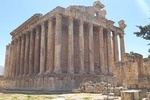
As early as 9000 BC, Baalbek was a place for worship and became a cornerstone of ancient civilizations. Located in modern-day Lebanon, the ruins stand tall as an archaeological wonder with towering monuments and impressive columns.
Duration: 1 hour 30 minutes
Stop At: Temples of Baalbek, Baalbeck Lebanon
Baalbek is an ancient Phoenician city located in what is now modern-day Lebanon, north of Beirut, in the Beqaa Valley. Inhabited as early as 9000 BCE, Baalbek grew into an important pilgrimage site in the ancient world for the worship of the Phoenician sky-god Baal and his consort Astarte, the Queen of Heaven (the name `Baalbek' means Lord Baal of the Beqaa Valley). The centre of the city was a grand temple dedicated to Astarte and Baal and the ruins of this early temple remain today beneath the later Roman Temple of Jupiter Baal. Baalbek is listed by UNESCO as a World Heritage Site.
Duration: 1 hour 30 minutes
Stop At: Chateau Ksara, Ksara, Zahle Lebanon
Château Ksara is Lebanon's oldest and most visited winery, attracting some 100,000 visitors per year.
Located in the Bekaa Valley and founded in 1857 by Jesuit Priests, Château Ksara developed the first dry wine in Lebanon. The winery produces approximately 3 million bottles annually. Due to a large Lebanese diaspora all over the world, it can be found and purchased in many different countries. Its wines are exported to over 42 countries. Main export markets include Europe, USA, Canada, Japan, Hong Kong, Singapore, Brazil, Africa, Australia and Arab Countries.
Between 2005 and 2015, Château Ksara saw the introduction of new grape varieties in the Bekaa valley. It has also seen developments in technique such as vines cultivation on wires and the attentive application of advanced science by French oenologists, who watch over the vinification, fermentation and decanting processes.
Today, the wines of Château Ksara have a specific character, described as a "rare balance of dry fruitiness, of delicacy and coarseness, and of freshness and vigour.
Duration: 1 hour