Give us feedback!
Tour to Ramesseum Temple & Medenit Habu Tour
Package Details
Destination:
Luxor, Nile River Valley, Egypt
Duration: 8 hours
Price:
$24.00
Details & Booking at viator.com
Like & Rate this package!
Offered by: Viator
Ancient Egypt Tours representative will pick you up you from your hotel in Luxor to start your tour to The Medenit Habu, on the Nile weast of Luxor, is one of the more recent Egyptian The Mortuary Temple of Ramesses III at Medinet Habu is an important New Kingdom period structure in the West Bank of Luxor in Egypt. Aside from its size and architectural and artistic importance, the temple is probably best known as the source of inscribed reliefs depicting the advent and defeat of the Sea Peoples during the reign of Ramesses III, Proceed to the Ramesseum Temple funerary temple of Ramses II, erected on the west bank of the Nile River at Thebes in Upper Egypt. The temple, famous for its 57-foot (17-metre) seated statue of Ramses II , was dedicated to the god Amon and the deceased king. The walls of the Ramesseum, which is only about half preserved, are decorated with reliefs, including scenes depicting theBattle of Kadesh, the Syrian wars, and the Festival of Min. ”
Itinerary
This is a typical itinerary for this product
Stop At: Ramesseum (Mortuary Temple of Ramses II), West Bank, Luxor Egypt
Ancient Egypt Tours representative will pick you up from your hotel/cruise in Luxor by air-conditioned modern vehicle to visit with your Egyptologist tour guide: Medinet Habu is the Arabic name for the Mortuary Temple of Ramses III, a huge complex second only to Karnak in size and better preserved. Medinet Habu is among the least visited of the major sights at Luxor, but it deserves more attention than it gets. The Mortuary Temple of Ramses III itself is made of sandstone and provides a good idea of what the Ramesseum, its model, looked like before it collapsed. The First Pylon is about the same size as that of Luxor Temple, but has lost its cornice and one corner. The reliefs on the pylon show Ramses defeating the Nubians (left side) and Syrians (right side), though in reality he fought neither.
Duration: 2 hours
Stop At: Ramesseum (Mortuary Temple of Ramses II), West Bank, Luxor Egypt
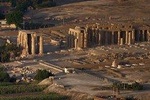
And then Move to visit Ramesseum Temple The ancient Egyptians called the temple the “million year's temple” due to its huge surface area, an incredible fifty thousand meters, and perhaps due to the gigantic size of the statues of Ramses II that were built there. The huge complex, dedicated to the god Amun, took 20 years and tens of thousands of workers to build. This temple was constructed to serve two purposes. The temple was publicly constructed to enable the ancient Egyptians to practice their religious rituals, including prayer and ritual offerings to the gods. It was also, and perhaps more so, built to demonstrate the greatness of the Pharaoh, and his political and military achievements. The Ramesseum Temple was made up by two huge walls. A huge inner wall surrounded the temple itself while an outer wall surrounded the storage rooms and smaller buildings of the temple. A corridor connected these two walls, decorated with of sphinxes,
Duration: 2 hours