Give us feedback!
 4.7719297 from partner site
Small Group Tours - Jeita Grotto, Harissa & Byblos - Day Trip from Beirut
Package Details
Destination:
Beirut, Lebanon, Lebanon
Duration: 8 hours
Price:
$95.00
Details & Booking at viator.com
Like & Rate this package!
4.7719297 from partner site
Offered by: Viator
Discover some of Lebanon's main attractions on this small group tour to Jeita the jewel of Lebanon, explore the magical caves, its natural rock limestone formations and mysterious nooks make it a beautiful site to walk through. Enjoy Byblos with a local guide, also listed as a UNESCO World Heritage Site, discover the sea castle wander onto the old souks and explore Harissa, the towering of Our lady of Lebanon, walk up the spiral stairs and enjoy a special view of Jounieh bay.
Itinerary
This is a typical itinerary for this product
Stop At: Jeita Grotto, 20 km North of Beirut, Jitta Lebanon
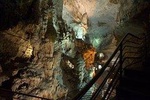
Jeita Grotto is a natural to wonder formed over thousands of years. It is made up of two interconnected caves with karstic limestone walls that spread over an area of nine kilometres.
The grotto is split into two parts; the upper with a breathtaking view of extraordinary stone that forms curtains, columns, draperies and mushrooms at a distance of some 750m explored for 2200m, and the latter of 400m explored for almost 7800m, where you can marvel at the majestic forms of otherworldly concretions. A boat ride is offered at the lower grotto.
Duration: 1 hour 30 minutes
Stop At: The Shrine of Our Lady of Lebanon, Keserwan, Harissa Lebanon
Harissa is a mountain village in Lebanon. The village, which is located 650 meters above sea level, is home to an important Lebanese pilgrimage site, Our Lady of Lebanon. The village is located 20 km north of Beirut, and accessible from the coastal city of Jounieh either by road or by a nine-minute journey by a gondola lift, known as the "Téléférique". It attracts both pilgrims and tourists who want to enjoy views of the bay of Jounieh.
The pilgrimage site is a huge 15-ton bronze (and painted white) statue of Virgin Mary, known as Our Lady of Lebanon, with her arms outstretched. The statue was made at the end of the 19th century and inaugurated in 1908. Inside the statue's base, there is a small chapel. A huge modernistic Maronite cathedral built of concrete and glass stands right beside the statue.
Duration: 45 minutes
Stop At: Telefrique Harisa, Kesrouane, Lebanon
One of Lebanon’s oldest and most visited tourist attractions, the gondolas of the Teleferique aerial cableway are a trip down memory lane, from a pioneering venture in 1965 to a beautifully preserved modern-day attraction offering breathtaking views of the bay of Jounieh and the surrounding city, the Teleferique is an impressive testimony to time gone by, one meter at a time.
Duration: 20 minutes
Stop At: Byblos Castle, Byblos Lebanon
Byblos was the ancient Phoenician port city of Gebal (called Byblos by the Greeks) on the coast of the Mediterranean sea in what is, today, Lebanon. According to the historian Durant, “Byblos thought itself the oldest of all cities; the god El had founded it at the beginning of time, and to the end of its history it remained the religious capital of Phoenicia." Because papyrus was one of the principal articles in its trade, the Greeks took the name of the city as their word for the book - biblos – and from their word for books named our Bible which means 'the books’. Byblos is among the cities listed as candidates for the distinction of `oldest city in the world’ as it has been continuously inhabited for over 7,000 years. Byblos is listed by UNESCO as a World Heritage Site.
Duration: 1 hour
Stop At: Old Souk, Byblos Lebanon
Full of picturesque cafes, small local shops and an amazing atmosphere, the city’s old souks are an essential part of the Byblos experience. The cobblestone streets and old structures are reminiscent of the city’s past inhabitants, from the Egyptians to the Phoenicians. Take a stroll through time surrounded by nature and well-maintained arches.
Duration: 30 minutes
Stop At: Byblos Port, Byblos Lebanon
Walking by the Byblos Harbour is a serene experience. What was once a hub for Phoenician trade and cultural exchange is now a quiet centre for local fishermen and tourists looking for a taste of Lebanon’s side of the Mediterranean.
Duration: 30 minutes