Give us feedback!
 4.9521737 from partner site
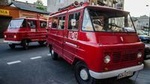
Warsaw Behind the Scenes Tour by retro minibus
Package Details
Destination:
Warsaw, Central Poland, Poland
Duration: 4 hours
Price:
$48.22
Details & Booking at viator.com
Like & Rate this package!
4.9521737 from partner site
Offered by: Viator
Experience a fascinating history of Warsaw, Polish culture and nowadays life on this 4 hours off the beaten tourist path tour. With the help of our communist retro minibus, our guide will take you through less known and, in the opinion of our clients, much more interesting and eye-opening sites than typical tours cover. This small-group tour features places related to World War II, Jewish Ghetto, communism era, Praga district, and other interesting stories and anecdotes. Local Polish snacks (it’s a daily choice) are included in the tour price. Get to know the “real” Warsaw!
The minibus is a “history on wheels” and we are pretty sure that you will love it! Please feel free to have discussions with our guide, we love to keep our tours interactive and we want to treat you not just as a tourist, but as our foreign friends who visit our hometown.
The minibus is a “history on wheels” and we are pretty sure that you will love it! Please feel free to have discussions with our guide, we love to keep our tours interactive and we want to treat you not just as a tourist, but as our foreign friends who visit our hometown.
Itinerary
This is a typical itinerary for this product
Stop At: Warsaw, Warsaw, Mazovia Province, Central Poland
Tour will start with remains of the pre-WWII city centre of Warsaw. Lovely facades but.. small and dark courtyards. Compared to communist made blocks of flats, which do you think is better? Feel free to discuss it with your guide.
Duration: 20 minutes
Stop At: Warsaw Ghetto, Warsaw Poland
Next, the group will explore less known parts of former Jewish Ghetto, created by Nazi in the year 1940. This is an important part of our history since 30% of Warsaw citizens in the year 1939 were Jewish and their influence can still be found in Polish culture.
Duration: 40 minutes
Stop At: Fragment of Ghetto Wall, ul. Zlota 60, Warsaw 00-821 Poland
Few fragments of the walls running between the properties have been preserved, as well as the walls of the pre-war buildings that marked the border of the ghetto. The three best-known parts of the Warsaw Ghetto wall are located in the former small ghetto, in the courtyards of the tenement houses.
Duration: 10 minutes
Stop At: Chlodna Street, ul. Chlodna, Warsaw 00-000 Poland
The wooden bridge was set up near Chłodna 23 and Chłodna 26. It reached the third floor of the buildings, which allowed the “Aryan” trams, German military transports and cars to pass beneath it, as we can see in many photographs, which also depict pedestrians.
Duration: 10 minutes
Stop At: Muranów, 00-001 Warsaw, Poland
The Muranów district was build just after the war on the rubble of a densely built-up and vibrant Jewish district of Warsaw. Muranów is today a souvenir of the architecture and ideology of socialist realism. The Venetian origin of the Muranów name is a bitter irony of history, because the word "ghetto" was used for the first time in Venice in 1516.
During World War II, the St. Augustine's Church ended up in the Warsaw ghetto which effectively closed it. Despite the closure of the church, the home parish priest, Father Franciszek Garncarek and vicar Leon Więckowicz continued to live there. Father Garncarek was shot on the doorstep of his vicarage on 20 December 1943 and the vicar Leon Więckowicz was arrested on 3 December 1942 for helping Jews and died on 4 August 1944 in the Gross-Rosen concentration camp.
With the liquidation of the ghetto, the church was used as a warehouse in which property stolen from Jews was stored, then the church was converted into a stable. During the Warsaw Uprising the church tower was a vantage point and German machine gun nest. On 5 August 1944 the tower was damaged during the assault on the nearby Gesiowka prison by soldiers of Battalion Zośka. After the uprising, Germans set fire to the roof of the church and a considerable amount of the church was burned. The fire also took the rectory and parish house. The Germans had a plan to blow up the church, but it was not realized.
Duration: 15 minutes
Stop At: Bazylika katedralna Sw. Michala Archaniola i Sw. Floriana Meczennika, ul. Florianska 3, Warsaw 00-001 Poland
The Cathedral of St. Michael the Archangel and St. Florian the Martyr is a Catholic church and historic landmark in eastern Warsaw. During and after the Siege of Warsaw, the church was used as a hiding place for Jews, soldiers and as a general refuge for civilians.
Duration: 15 minutes
Stop At: Praga Polnoc, ul.Zabkowska, Warsaw Poland
Praga is one of the oldest districts in Warsaw. Through the centuries, Warsaw's right-bank was an independent town. In 1648 it was granted municipal rights by the king Władysław IV Vasa. It was joined to Warsaw at the end of 18th century.
It’s the only district which was not destroyed during WWII.
Duration: 30 minutes
Stop At: Palm Tree, Plac de Gaulle, Warsaw 00-001 Poland
A rumour circulates around Warsaw that the Palm Tree is a gift from the city of Jerusalem for Aleje Jerozolimskie in Warsaw, that in this way Israeli Jews wanted to show Christians Polish how a real Christmas tree looks like.
As the Polish expression ‘hit by a palm tree’ refers to something unthinkable, a behaviour that verges on being silly, even idiotic, the project thus embodies substantial humour and irony, which saves it from linear reading and suggests something that escapes palpable understanding.
Duration: 10 minutes
Stop At: Krucza, 00-001 Warszawa, Poland
Two city uprisings during WWII ended up in the almost complete destruction of our city (85% of it was gone) and a communist regime, which settled up in the year 1945, had a serious task to cope with - reconstruction of Poland’s capital city. What’s more, since it seemed to be the only chance ever, architects decided to remodel the city and make it a much more comfortable place to live and work. On the other hand, the communist party wanted to convert Warsaw into a model Soviet-style city, with monumental buildings filled with the happy proletariat. Did they succeded? Let’s check it on our tour.
Duration: 20 minutes