Give us feedback!
South Valley Tour (Half Day)
Package Details
Destination:
Cusco, Cusco Region, Peru
Duration: 5 hours
Price:
$16.00
Details & Booking at viator.com
Like & Rate this package!
Offered by: Viator
Sacred Valley Of Incas is a renowned attraction in Cusco. Most travellers visit it on a day trip and some choose to combine it with their trip to Machu Picchu. Chincheros, Maras & Moray, Urubamba, Ollantaytambo and Pisac are some of the renowned sites of the Sacred Valley and Sacred Valley VIP tour programme covers them all in a day trip from Cusco.
If you are inquisitive to know much more about the history and culture of Peru and Cusco in specific, South Valley Tour would be a great addition to the Sacred Valley Tour. South Valley Tour offers trip to a lesser known attraction off the city of Cusco. Dotted with lakes and Inkan archaeological ruins, the sites of Pikillaqta, Tipon and Andahuaylillas are worth the half day trip from Cusco.
If you are inquisitive to know much more about the history and culture of Peru and Cusco in specific, South Valley Tour would be a great addition to the Sacred Valley Tour. South Valley Tour offers trip to a lesser known attraction off the city of Cusco. Dotted with lakes and Inkan archaeological ruins, the sites of Pikillaqta, Tipon and Andahuaylillas are worth the half day trip from Cusco.
Itinerary
This is a typical itinerary for this product
Stop At: Tipon, Cusco Peru
The tour would start at the Incan archaeological complex of Tipon a site known for water channels and agricultural terraces. The water channels of Tipon are believed to be used as a ceremonial centre by Incas to worship water. The street below the site is popular among Cusqueñans. During weekends, locals often gather to savour the local delicacy guinea pig which is a popular tradition here.
Duration: 1 hour
Stop At: Pikillaqta, 20 km East of Cusco, Cusco 08003 Peru
The next stop on the trip will be in Pikillaqta. On the way to Pikillaqta, we will be passing through a dusky town known as Oropesa. Oropesa is referred to as the “bread capital of Peru”. It houses over a fifty different bakeries in a small town.
Pikillaqta is the only site that exists from Pre Inka time. Pikillaqta is a complex entirely built in adobe during the Wari regime. Waris once dominated the coastal and central parts of Peru.
Pikillaqta is a hilly region with small lakes in the vicinity. During the Wari rule and even during the Incas, maize was majorly produced in Pikillaqta. Maize was so important for the Waris that they painted it in their potteries along with supernaturals and deities. Back then, Pikillacta was believed to have controlled the whole region through agriculture.
Duration: 1 hour
Stop At: Andahuaylillas, Andahuaylillas, Cusco Region
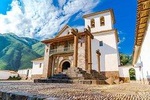
Our next stop will be in Andahuaylillas. Andahuaylillas is home to The Sistine Chapel of the Americas. Although from outside it may not seem so eye catching to most, the interiors of this chapel is an eye popping kaleidoscope. It has a dazzling display of colourful murals, an ornate gold leaf altar and ceilings painted in coffered.
The “San Pedro de Andahuaylillas” as known by the locals, was built at the end of the 16th century given the fact that one of its murals, signed by Luis de Riaño, has a date written in it that states it is from the year 1626.
We will then return to Cusco.
Duration: 1 hour