Give us feedback!
The secrets of Slovenian coast.
Package Details
Destination:
Ljubljana, Upper Carniola Region, Slovenia
Duration: 8 to 10 hours
Price:
$335.34
Details & Booking at viator.com
Like & Rate this package!
Offered by: Viator
The secrets of Slovenian coast.
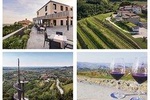
Goriška Brda is the most exclusive region in Slovenia. With its charming villages high on the hills surrounded by vineyards and cherry orchards, it has come to be known as the “Slovenian Tuscany”. This wine-gourmet experience
is an entire day dedicated to falling in love with the culinary delights of Goriška Brda, nobody leaves unimpressed.
Wine fountain, old castles, Gonjače Viewing Tower, kind-hearted locals. Wine degustation and delicious box with seasonable fruits by SnackTrip.
Goriška Brda is the most exclusive region in Slovenia. With its charming villages high on the hills surrounded by vineyards and cherry orchards, it has come to be known as the “Slovenian Tuscany”. This wine-gourmet experience
is an entire day dedicated to falling in love with the culinary delights of Goriška Brda, nobody leaves unimpressed.
Wine fountain, old castles, Gonjače Viewing Tower, kind-hearted locals. Wine degustation and delicious box with seasonable fruits by SnackTrip.
Itinerary
This is a typical itinerary for this product
Stop At: Gonjace Lookout Tower, Gonjace, Kojsko 5211 Slovenia
When the sky is clear, you can enjoy the breathtaking view of all four points of the compass: the Julian and Carnian Alps, as well as the Dolomites to the North, the Friulian plain to the West, the Trieste Gulf and the Karst to the South, and the Trnovo forest and the Vipava Valley to the east.
Duration: 30 minutes
Stop At: Vinska Fontana Marezige, Marezige 24, Marezige 6273 Slovenia
At the sightseeing point in Marezige, from where a wonderful view of the Istrian hinterland and coast opens, stands the first wine fountain in Slovenia.
Duration: 1 hour
Stop At: The Socerb Castle, Socerb 7, Crni Kal 6275 Slovenia
Breathtaking view and lunch with a wine..
Duration: 45 minutes
Stop At: Solkan, Solkan, Nova Gorica, Styria Region
Solkan Bridge with the longest stone arch in the world, crossing the emerald green Soča River
Duration: 30 minutes
Stop At: Sveta Gora (Holy Mountain), Skalnishka cesta 17, Solkan, Nova Gorica 5250 Slovenia
Sveta Gora (Holy Moutain, Monte Santo) is an important sacred place with a rich pilgrimage tradition. It is situated at the junction of the Vipava and Soča Valley at the transition of the Gorica Plain into the Friuli Plain. With its height of 682m above the sea level it offers a magnificent view of the Julian Alps, the Trnovo Forest, the Karst up to the sea, and to Brda and the Friuli Plain, the Carnic Alps and the Dolomites to the west.
Duration: 1 hour
Stop At: Shmartno 1 Smartno 1, Kojsko 5211 Slovenia
Šmartno is situated in the geographical centre of Brda. Gradnik, the local poet, compares the village with the eagle´s nest resting on a place, where the view stretches from the Nanos hill in the east to the Carnija Alps in the northwest, and from the Furlanija to the Adriatic Sea. The village on the top of the hill, surrounded by defence walls with watchtowers is first mentioned in 1317. There are no special historical records of the origin of the defence walls, but it is believed that the walls were most probably erected on the remains of a Roman bastion in the period of the wars between the Habsburgs and the Venetians during 1507-1519. The Counts of Gorica used to own the land here. After the death of the last Count of Gorica, the Gorica region was inherited by the Hapsburg Emperor Maximilian who fought for the right to own the land in the long-lasting battles with the Venetians. The latter were defeated in both wars. In those times, Šmartno, which served well as a fortified hamlet built around the church during the times of the Turkish raids in the 15th and 16th century, became a strategically important point on the border between Venice and Austria. It was then that the walls and the towers were built. Šmartno was actually a part of the system of fortifications, which also included other villages: Števerjan, Kojsko and Vipolže. Šmartno was used as a fortification on the frontier for the whole of the 16th and 17th century until the middle of the 18th century when danger of military attacks from the Venitians ceased.
Duration: 1 hour