Give us feedback!
Climb the Seven Summits (Messner List)
›Go to Dream PageDream out of
Stats for this Dream
On Your list: -
Your Check-offs: -
Friends with Dream: 0
Total Check-offs: -
Advertisement
-
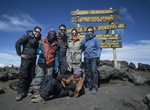
Summit Mount Kilimanjaro, Tanzania
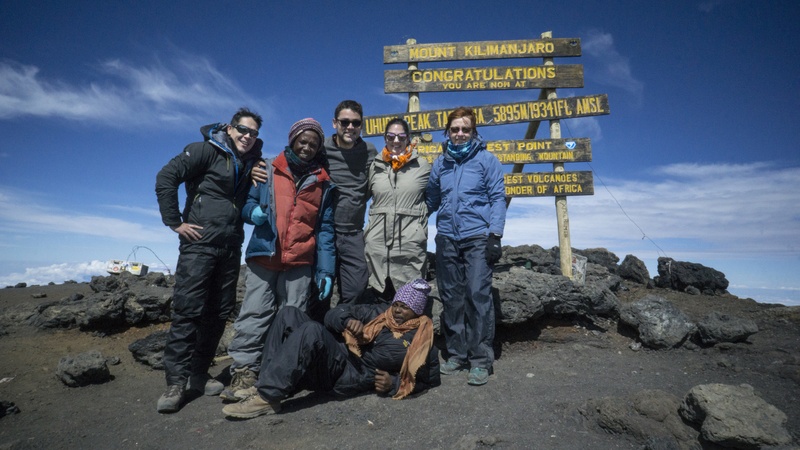 A quick word about the place...Flag as inappropriate ›Tanzania’s Mount Kilimanjaro, at 5,895 meters above sea level, boasts the highest elevation on the African continent. Considered the world’s tallest walkable mountain, trekkers that dare challenge the monolithic land mass will move through 5 different climactic zones. From steamy tropical heat and rainforests to the arctic chill at snow-capped Uhuru Peak, every season can be experienced during the days spent on the mountain. Mount Kilimanjaro is the tallest free-standing mountain in the world and summiting this African icon is a worthy pursuit of travelers in search of adventure. Magnificent views from the trail stretch for hundreds of miles across the Tanzanian savannah and into neighboring Kenya. Multiple routes with varying degrees of difficulty provide an opportunity for adventurers with diverse backgrounds to attempt the ascent of “Kili” as the mountain is affectionately known. At least 7 different...SHOW MORE
 -
Summit Mount Elbrus, Russia
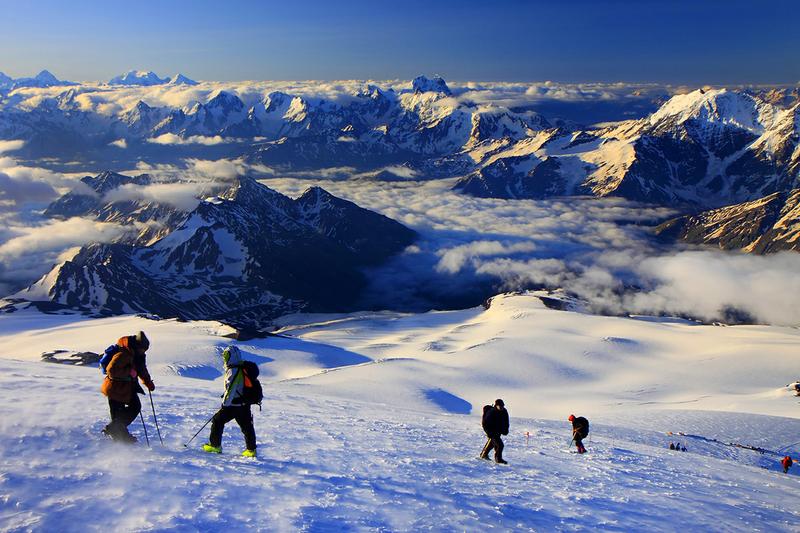 A quick word about the place...Flag as inappropriate ›Mount Elbrus is an inactive volcano located in the western Caucasus mountain range, in Kabardino-Balkaria and Karachay-Cherkessia, Russia, near the border of Georgia. Mt. Elbrus's highest peak is the highest mountain in the Caucasus, in Russia. While there are differing authorities on how the Caucasus are distributed between Europe and Asia, many sources agree that Elbrus is also the highest mountain in all of Europe. Mt. Elbrus (west summit) stands at 5,642 metres (18,510 ft); the east summit is slightly lower at 5,621 metres (18,442 ft). The Normal Route is the easiest, safest and fastest on account of the cable car and chairlift system which operates from about 9am till 3pm. Starting for the summit at about 2am from the Diesel Hut should allow just enough time to get back down to the chairlift if movement is efficient. A longer ascent Kiukurtliu Route starts from below the cable-way Mir station and heads west over glacier...SHOW MORE
 -
Summit Mount Everest, Nepal & Tibet
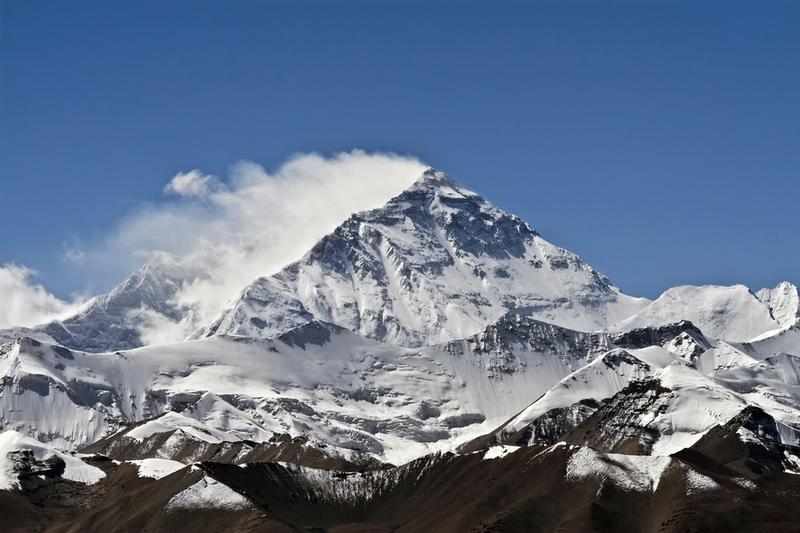 A quick word about the place...Flag as inappropriate ›Mount Everest, or Mount Chomolungma, is the world's highest mountain above the mean sea level at 8,848 metres (29,029 ft). It is located in the Himalayas on the Nepal (Sagarmatha Zone)-China (Tibet) border. In 1856, the Great Trigonometric Survey of British India established the first published height of Everest, then known as Peak XV, at 29,002 ft (8,840 m). In 1865, Everest was given its official English name by the Royal Geographical Society upon recommendation of Andrew Waugh, the British Surveyor General of India at the time, who named it after his predecessor in the post, and former chief, Sir George Everest. Chomolungma had been in common use by Tibetans for centuries, but Waugh was unable to propose an established local name because Nepal and Tibet were closed to foreigners. The highest mountain in the world attracts many well-experienced mountaineers as well as novice climbers who are willing to pay substantial sums...SHOW MORE
 -
Summit Denali (McKinley), Alaska
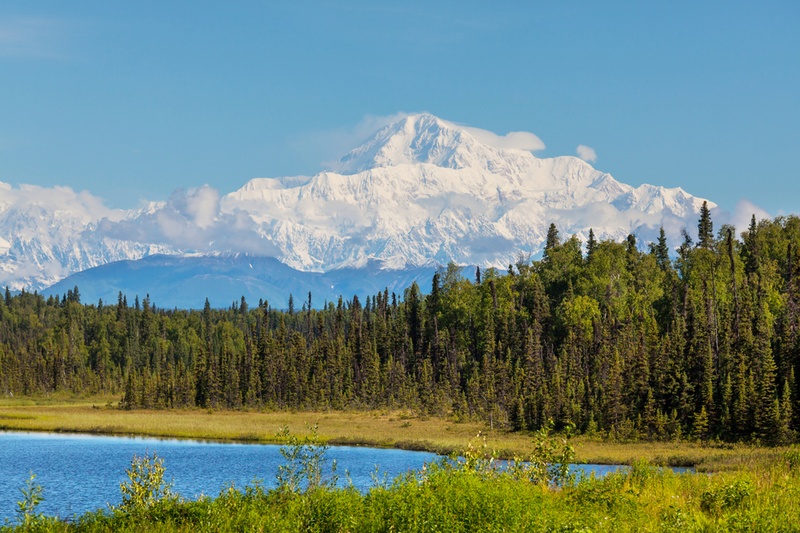 A quick word about the place...Flag as inappropriate ›Denali, formerly named Mount McKinley from 1917 to 2015, is the highest mountain peak in North America, with a summit elevation of 20,237 feet (6,168 m) above sea level. At some 18,000 ft (5,500 m), the base-to-peak rise is considered the largest of any mountain situated entirely above sea level. Measured by topographic prominence, it is the third most prominent peak after Mount Everest and Aconcagua. Located in the Alaska Range in the interior of the U.S. state of Alaska, Denali is the centerpiece of Denali National Park and Preserve. The first European to document sighting the mountain was George Vancouver in 1794. In 1903, James Wickersham recorded the first attempt at climbing Denali, which was unsuccessful. In 1906, Frederick Cook claimed the first ascent, which was later proven to be false. The first verifiable ascent to Denali's summit was achieved on June 7, 1913 by climbers Hudson Stuck, Harry Karstens, Walter Harper...SHOW MORE
 -
Summit Aconcagua, Argentina
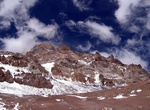
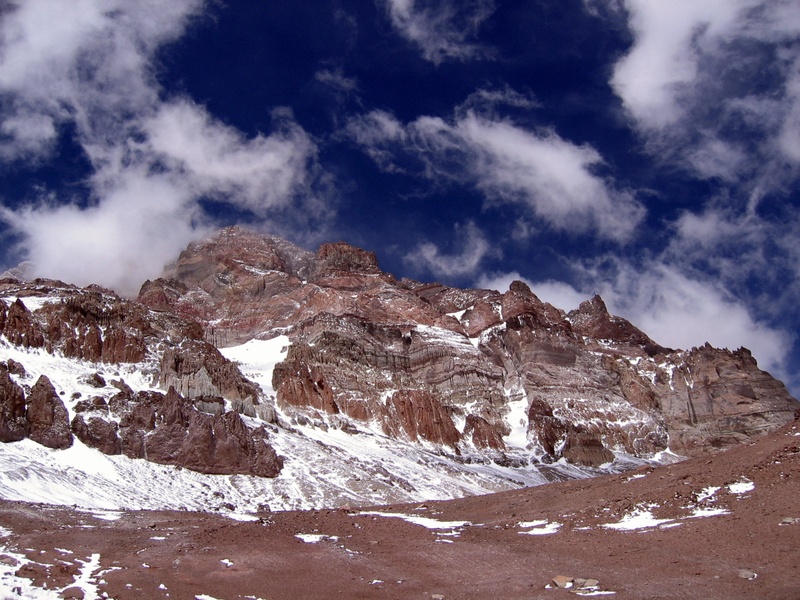 A quick word about the place...Flag as inappropriate ›Aconcagua is the highest mountain in the Americas at 6,962 m (22,841 ft). It is located in the Andes mountain range, in the Argentine province of Mendoza and it lies 112 kilometres (70 mi) west by north of its capital, the city of Mendoza. The summit is also located about 5 kilometres from San Juan Province and 15 kilometres from the international border with Chile. Aconcagua is the highest peak in both the Western and Southern Hemispheres. It is one of the Seven Summits. Aconcagua is bounded by the Valle de las Vacas to the north and east and the Valle de los Horcones Inferior to the West and South. The mountain and its surroundings are part of the Aconcagua Provincial Park. The mountain has a number of glaciers. The largest glacier is the Ventisquero Horcones Inferior at about 10 km long which descends from the south face to about 3600m altitude near the Confluencia camp. Two other large glacier systems are the Ventisquero...SHOW MORE
 -
Summit Vinson Massif, Antarctica
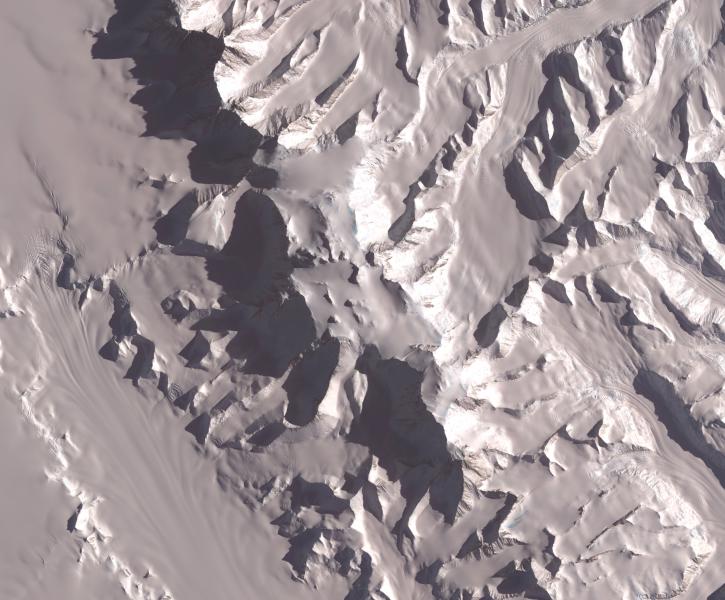 A quick word about the place...Flag as inappropriate ›Vinson Massif is the highest mountain of Antarctica, lying in the Sentinel Range of the Ellsworth Mountains, which stand above the Ronne Ice Shelf near the base of the Antarctic Peninsula. The massif is located about 1,200 kilometres (750 mi) from the South Pole and is about 21 km (13 mi) long and 13 km (8 mi) wide. At 4,892 metres (16,050 ft) the highest point is Mount Vinson, which was named in 2006. Vinson Massif was first seen in 1958 and first climbed in 1966. An expedition in 2001 was the first to climb via the Eastern route, and also took GPS measurements of the height of the peak. As of February 2010, 700 climbers have attempted to reach the top of Mount Vinson. The climb of Vinson offers little technical difficulty beyond the usual hazards of travel in Antarctica, and as one of the Seven Summits, it has received much attention from well-funded climbers in recent years. As of 2010, nearly 2000 people have summited...SHOW MORE
 -
Summit Puncak Jaya (Carstensz Pyramid), Indonesia
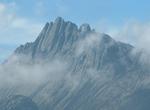
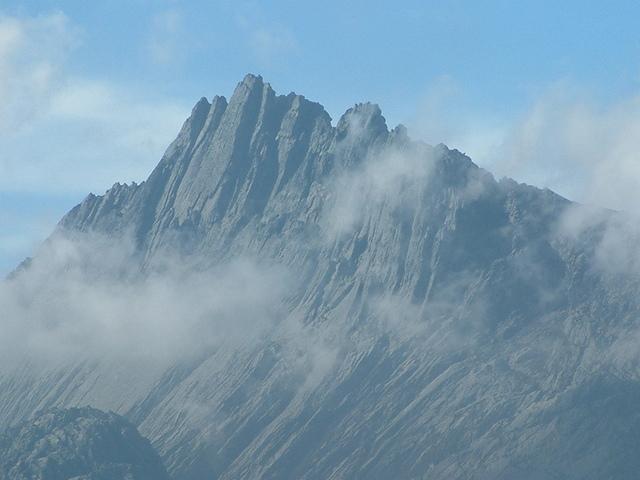 A quick word about the place...Flag as inappropriate ›Puncak Jaya, sometimes called Mount Carstensz or the Carstensz Pyramid, is a mountain in the Sudirman Range, the western central highlands of Papua province, Indonesia (within Puncak Jaya Regency). Other names include Nemangkawi in the Amungkal language, Ngga Pulu, Carstensz Toppen and Gunung Sukarno. At 4,884 metres (16,024 ft) above sea level, Puncak Jaya is the highest mountain in Indonesia, the highest on the island of New Guinea (which comprises the Indonesian Papua provinces plus Papua New Guinea), the highest of Oceania (Australia), and the 5th highest mountain in political Southeast Asia. It is also the highest point between the Himalayas and the Andes, and the highest island peak in the world. Some sources claim Mount Wilhelm, 4,509 m (14,793 ft), as the highest mountain peak in Oceania, on account of Indonesia being part of Asia (Southeast Asia). Puncak Jaya is one of the more demanding climbs in one version of the...SHOW MORE
Check out other Dreams from this list