Give us feedback!
See Top 10 Roman Amphitheaters in the World
›Go to Dream PageDream out of
Stats for this Dream
On Your list: -
Your Check-offs: -
Friends with Dream: 0
Total Check-offs: -
Advertisement
-
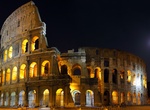
Visit The Colosseum, Rome, Italy (UNESCO site)
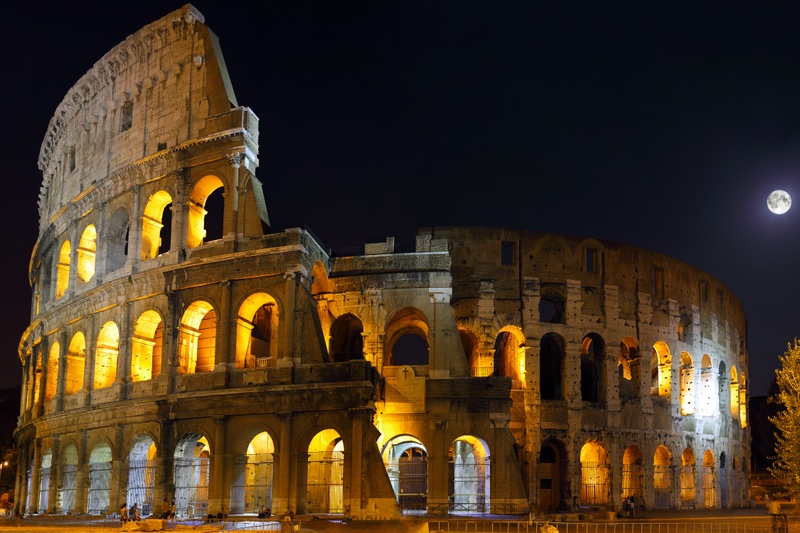 A quick word about the place...Flag as inappropriate ›The city of Rome, Italy is loaded with ancient monuments as the designation of the city center as a UNESCO World Heritage site attests. Among the Roman Baths, forums, historic markets and the Roman Forum is found the iconic Colosseum. Ancient Rome's magnificent amphitheater, capable of holding more than 50,000 people (the largest ever built in the Roman Empire), was constructed by Emperor Vespasian 80 years after the birth of Jesus Christ. The Colosseum was the scene of deadly gladiator contests, wild animal fights and other public displays. Tours of the Colosseum and the underground tunnels are popular with visitors to Rome. A museum dedicated to the Greek god Eros and his Roman counterpart, Cupid, is located on the grounds and is also a popular place for visitors to spend time. The Colosseum still plays a pivotal role in Roman Catholic ceremonies, including an important replication of the Stations of the Cross on Good Friday...SHOW MORE
 -
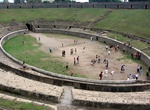
See Amphitheatre of Pompeii, Italy
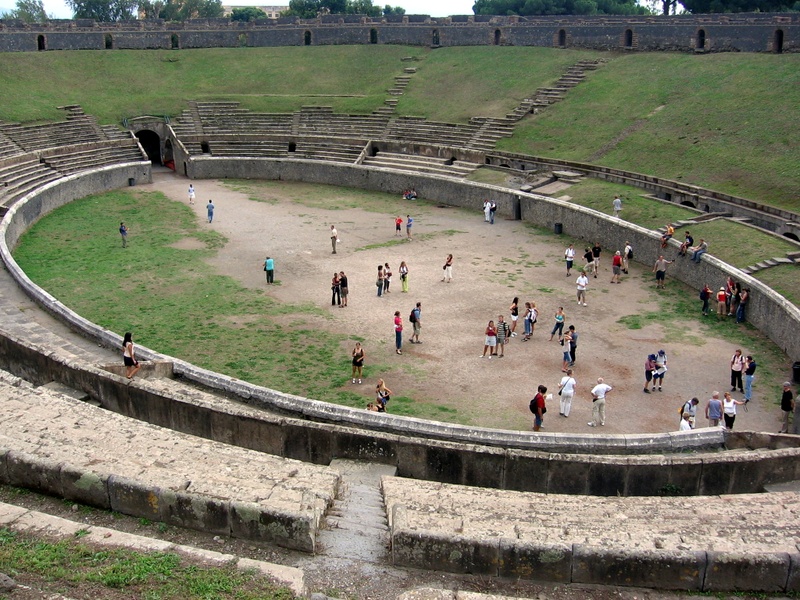 A quick word about the place...Flag as inappropriate ›The Amphitheatre of Pompeii is the oldest surviving Roman amphitheatre. It is located in the ancient Roman city of Pompeii, and was buried by the eruption of Vesuvius in 79 CE, that also buried Pompeii itself, and neighbouring Herculaneum. Built around 70 BCE, the current amphitheatre was the first Roman amphitheatre to be built out of stone, previously, they had been built out of wood. The next Roman amphitheatre to be built from stone would be the Colosseum in Rome, which postdates it by over a century. It was called a spectacula and not an amphitheatrum, since the latter term was not yet in use. It was built with the private funds of Quinctius Valgus and Marcius Porcius. Around AD 59 CE, a deadly brawl occurred between Pompeians and Nuceria residents in the amphitheatre during games, which resulted in banning the events for 10 years. Amongst other events, it hosted gladiatorial games, which owing to the preservation of...SHOW MORE
 -
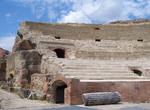
See Pozzuoli Amphitheater, Italy
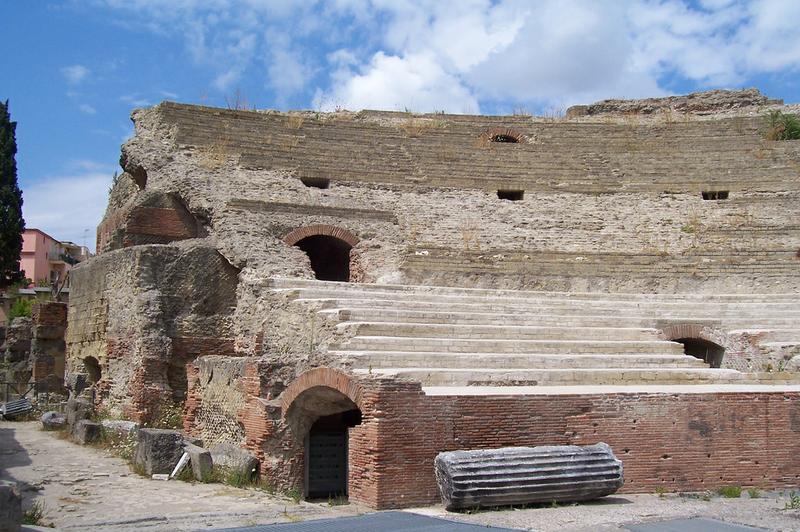 A quick word about the place...Flag as inappropriate ›The Flavian Amphitheater, located in Pozzuoli, is the third largest Roman amphitheater in Italy. Only the Roman Colosseum and the Capuan Amphitheater are larger. It was likely built by the same architects who previously constructed the Roman Colosseum. The name Flavian Amphitheater is primarily associated with the Roman Colosseum. It was begun under the reign of the emperor Vespasian and probably finished under the reign of his son Titus. The arena can hold up to 20,000 spectators. The interior is mostly intact and one can still see parts of gears which were used to lift cages up to the arena floor. In the year 305, the arena was the setting for the persecutions of the patron of Pozzuoli, Saint Proculus, and the patron saint of Naples, Saint Januarius. After surviving being thrown to the wild beasts in the arena, the two were beheaded at the nearbySolfatara. The elliptical structure measures 147 x 117 meters (482 x 384 feet)...SHOW MORE
 -
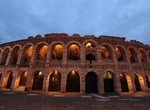
See Verona Arena, Italy (UNESCO site)
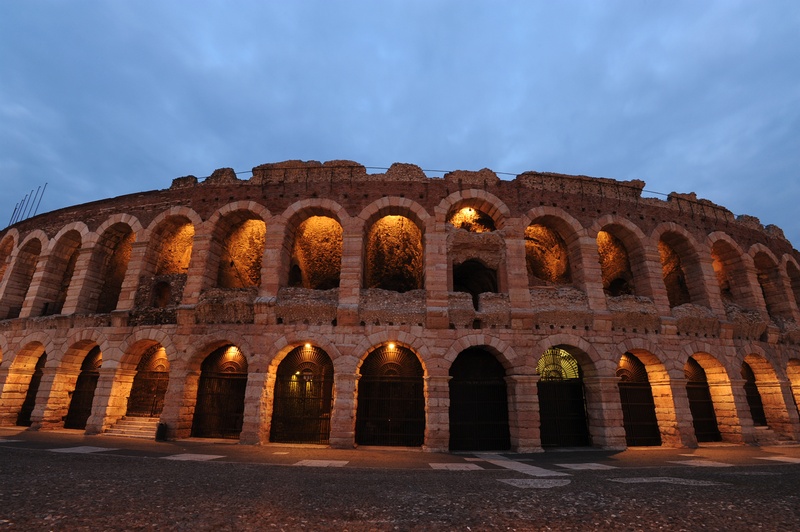 A quick word about the place...Flag as inappropriate ›The Verona Arena (Arena di Verona) is a Roman amphitheatre in Piazza Bra in Verona, Italy, which is internationally famous for the large-scale opera performances given there. It is one of the best preserved ancient structures of its kind. The building itself was built in AD 30 on a site which was then beyond the city walls. The ludi (shows and games) staged there were so famous that spectators came from many other places, often far away, to witness them. The amphitheatre could host more than 30,000 spectators in ancient times. The round façade of the building was originally composed of white and pink limestone from Valpolicella, but after a major earthquake in 1117, which almost completely destroyed the structure's outer ring, except for the so-called "ala", the stone was quarried for re-use in other buildings. Nevertheless it impressed medieval visitors to the city, one of whom considered it to have been a labyrinth...SHOW MORE
 -
See Leptis Magna Amphitheater, Libya
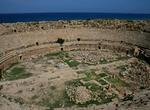
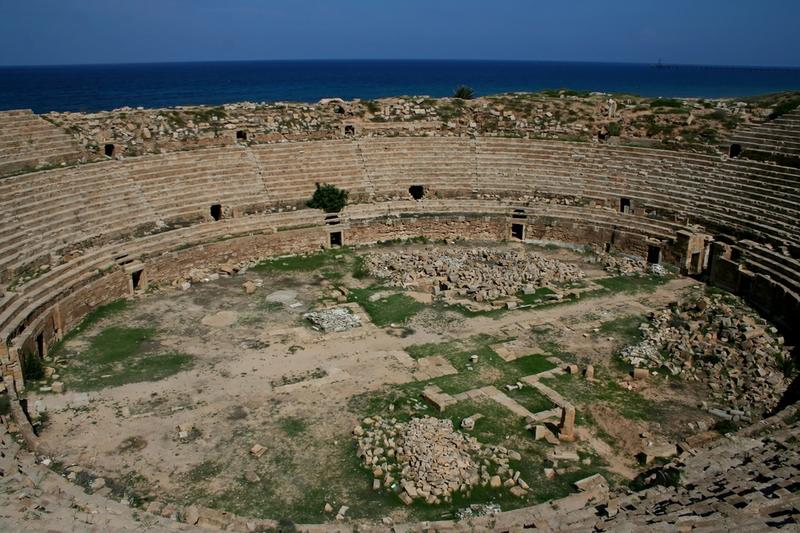 A quick word about the place...Flag as inappropriate ›Leptis Magna was a prominent city of the Roman Empire. Its ruins are located in Khoms, Libya, 130 km (81 mi) east of Tripoli, on the coast where the Wadi Lebda meets the sea. The site is one of the most spectacular and unspoiled Roman ruins in the Mediterranean. The Roman amphitheater dates from 56 AD and lies about a kilometer east of the city center. It was capable of seating 16,000 spectators. Unlike most Roman amphitheatres, it is built below the ground.
 -
See Mérida Amphitheatre, Spain (UNESCO site)
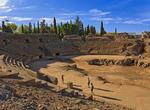
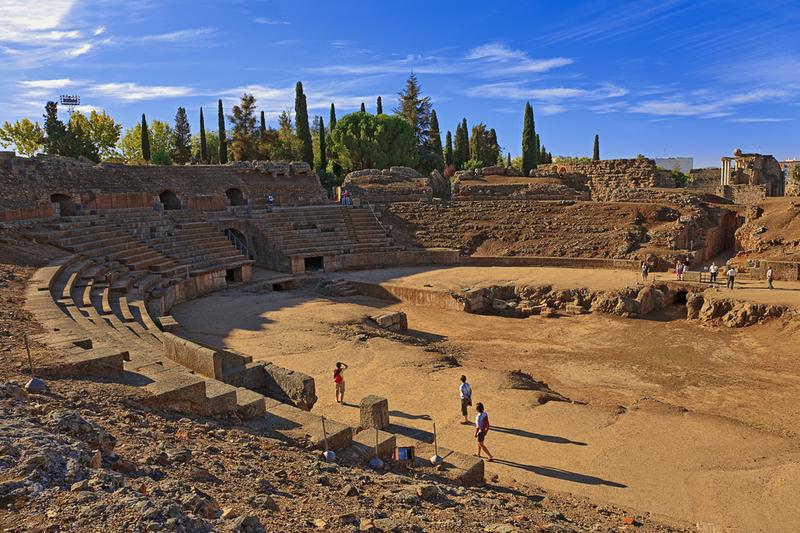 A quick word about the place...Flag as inappropriate ›The Amphitheatre of Mérida is a Roman amphitheatre in the Roman colonia of Emerita Augusta –present-day Mérida, Spain–, capital of the Roman province of Lusitania. It was completed in the year 8 BC, and is currently in ruins. It was used for gladiatorial fights and combats between beasts or men and beasts during ancient Rome. The city itself, Emerita Augusta, was founded in 25 BC by Augustus, to resettle emeritus soldiers discharged from the Roman army from two veteran legions of the Cantabrian Wars (the Legio V Alaudae and Legio X Gemina). The term emeritus refers to the soldiers, all of whom had been honorably discharged from service. The amphitheatre was built as part of an entertainment complex together with the Roman Theatre. Nowadays both are part of the Archaeological Ensemble of Mérida, which is one of the largest and most extensive archaeological sites in Spain and that was declared a World...SHOW MORE
 -
Visit Arles Amphitheatre, France (UNESCO site)
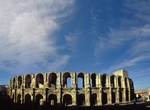
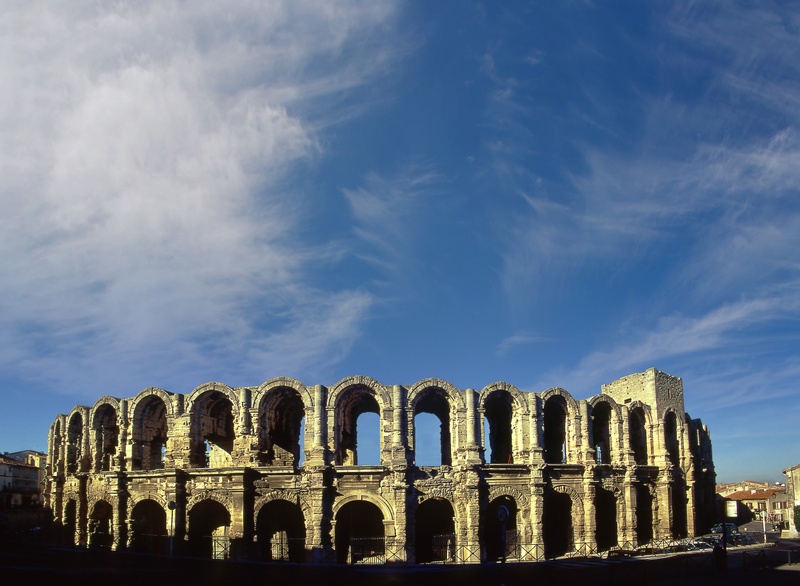 A quick word about the place...Flag as inappropriate ›The Arles Amphitheatre is a Roman amphitheatre in the southern French town of Arles. This two-tiered Roman Amphitheatre is probably the most prominent tourist attraction in the city of Arles, which thrived in Roman times. Measuring 136 m (446 ft) in length and 109 m (358 ft) wide, the 120 arches date back to the 1st century BC. The amphitheatre was capable of seating over 20,000 spectators, and was built to provide entertainment in the form of chariot races and bloody hand-to-hand battles. Today, it draws large crowds for bullfighting as well as plays and concerts in summer.
 -
See Arena of Nîmes, France
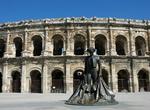
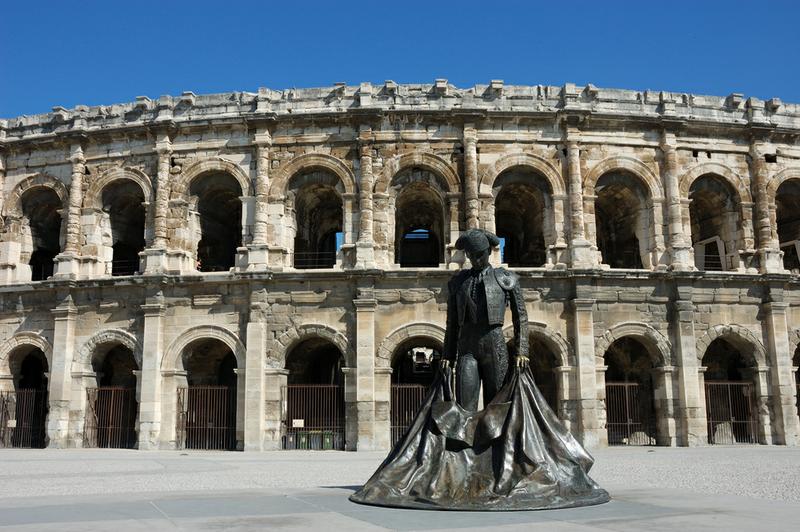 A quick word about the place...Flag as inappropriate ›The Arena of Nîmes is a Roman amphitheater found in the French city of Nîmes. Built around 70 AD, it was remodeled in 1863 to serve as a bullring. The Arenas of Nimes is the site of two annual bullfights, and it is also used for other public events. The building encloses an elliptical central space 133 m long by 101 m wide. It is ringed by 34 rows of seats supported by a vaulted construction. It has a capacity of 16,300 spectators and since 1989 has a movable cover and a heating system. As the Empire fell, the amphitheater was fortified by the Visigoths and surrounded by a wall. During the turbulent years that followed the collapse of Visigoth power in Hispania and Septimania, not to mention the Muslim invasion and subsequent reconquest by the French kings in the early eighteenth century, the viscounts of Nîmes constructed a fortified palace within the amphitheater. Later a small neighborhood developed...SHOW MORE
 -
See El Djem (El Jem) Amphitheatre, Tunisa (UNESCO site)
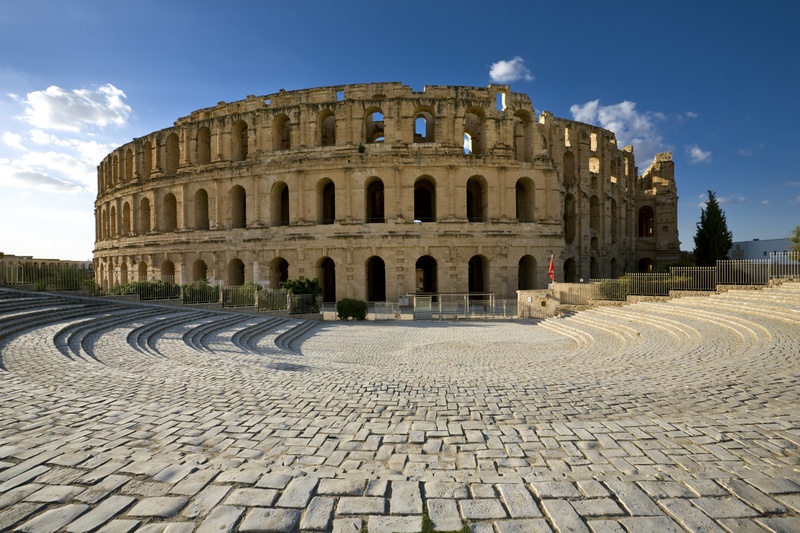 A quick word about the place...Flag as inappropriate ›El Djem (El Jem) is famous for its amphitheatre (often incorrectly called "a coliseum"), capable of seating 35,000 spectators. Only Rome's Colosseum (about 45,000 spectators) and the ruined theatre of Capuaare larger. The amphitheatre at El Djem was built by the Romans under proconsul Gordian, who was acclaimed Emperor at Thysdrus, around 238 and was probably[citation needed] mainly used forgladiator shows and chariot races (like in Ben-Hur). It is also possible that construction of the amphitheatre was never finished. Until the 17th century it remained more or less whole. From then on its stones were used for building the nearby village of El Djem and transported to the Great Mosque in Kairouan, and at a tense moment during struggles with the Ottomans, the Turks used cannons to flush rebels out of the amphitheatre. The ruins of the amphitheatre were declared a World Heritage Site in 1979. The city was built, like almost all...SHOW MORE
 -
See Pula Arena, Pula, Croatia
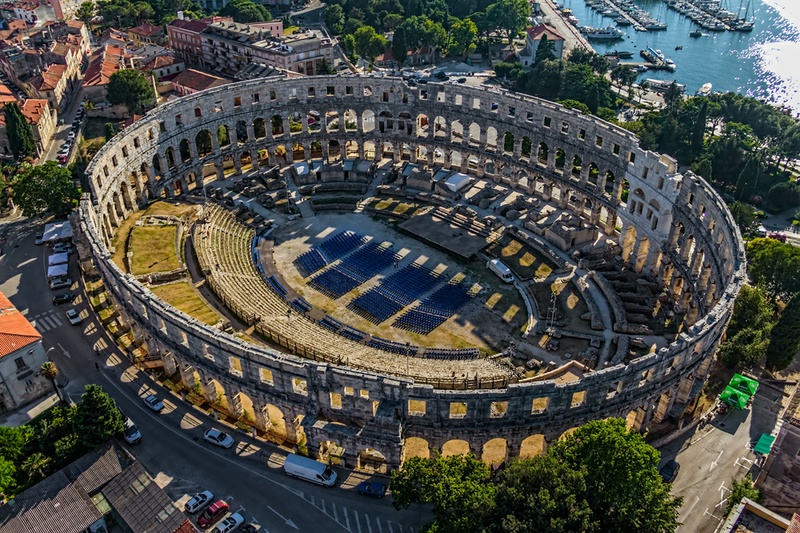 A quick word about the place...Flag as inappropriate ›The Pula Arena is the name of the amphitheatre located in Pula, Croatia. The Arena is the only remaining Roman amphitheatre to have four side towers and with all three Roman architectural orders entirely preserved. It was constructed in 27 BC - 68 AD and is among the six largest surviving Roman arenas in the World. A rare example among the 200 Roman surviving amphitheatres of unique technological solutions. It is also the best preserved ancient monument in Croatia. The amphitheatre was first built in timber during the reign of Augustus (2-14 AD). It was replaced by a small stone amphitheatre during the reign of emperor Claudius. In 79 AD it was enlarged to accommodate gladiator fights by Vespasian and to be completed in 81 AD under emperor Titus. This was confirmed by the discovery of a Vespasian coin in the malting. A Christian martyr called Germanus was martyred in the arena in the fourth century AD. The amphitheatre...SHOW MORE
Check out other Dreams from this list