Give us feedback!
See Top 10 Old World Bridges in the World
›Go to Dream PageDream out of
Stats for this Dream
On Your list: -
Your Check-offs: -
Friends with Dream: 0
Total Check-offs: -
Advertisement
-
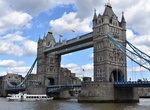
Cross Tower Bridge, London, England
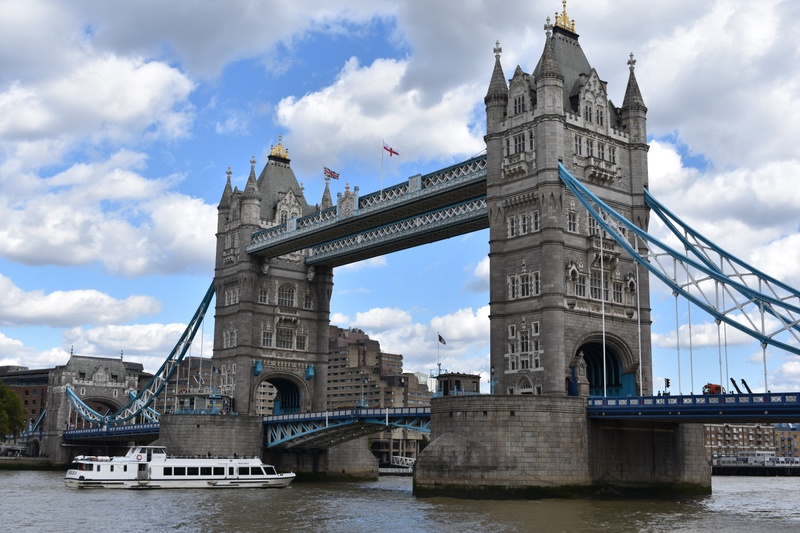 A quick word about the place...Flag as inappropriate ›Tower Bridge is a combined bascule and suspension bridge in London, England, over the River Thames. It is close to the Tower of London, which gives it its name.Name[›] It has become an iconic symbol of London. The bridge consists of two towers which are tied together at the upper level by means of two horizontal walkways which are designed to withstand the horizontal forces exerted by the suspended sections of the bridge on the landward sides of the towers. The vertical component of the forces in the suspended sections and the vertical reactions of the two walkways are carried by the two robust towers. The bascule pivots and operating machinery are housed in the base of each tower. The bridge's present colour dates from 1977 when it was painted red, white and blue for the Queen's Silver Jubilee. Originally it was painted a chocolate brown colour. Tower Bridge is sometimes mistakenly referred to as London Bridge, which...SHOW MORE
 -
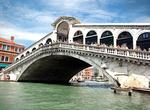
Walk across Rialto Bridge, Venice, Italy
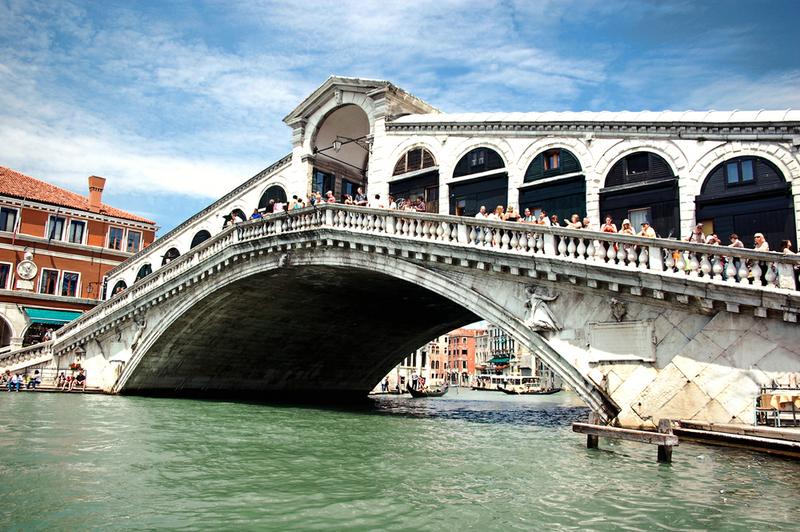 A quick word about the place...Flag as inappropriate ›The Rialto Bridge (Ponte di Rialto) is one of the four bridges spanning the Grand Canal in Venice, Italy. It is the oldest bridge across the canal. The first dry crossing of the Grand Canal was a pontoon bridge built in 1181 by Nicolò Barattieri. It was called the Ponte della Moneta, presumably because of the mint that stood near its eastern entrance. The development and importance of the Rialto market on the eastern bank increased traffic on the floating bridge, so it was replaced in 1255 by a wooden bridge. This structure had two inclined ramps meeting at a movable central section, that could be raised to allow the passage of tall ships. The connection with the market eventually led to a change of name for the bridge. During the first half of the 15th century two rows of shops were built along the sides of the bridge. The rents brought an income to the State Treasury, which helped maintain the bridge. Maintenance was...SHOW MORE
 -
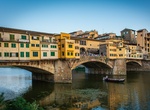
Walk across Ponte Vecchio Bridge, Florence, Italy
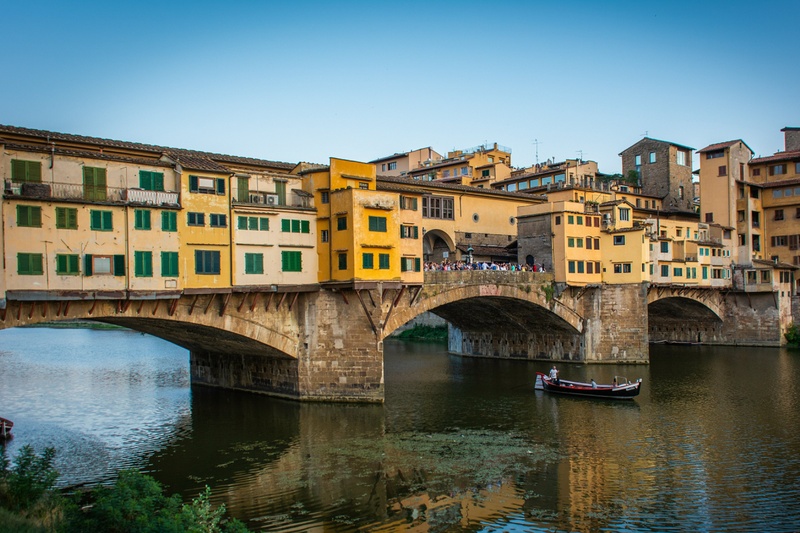 A quick word about the place...Flag as inappropriate ›The Ponte Vecchio ("Old Bridge") is a Medieval bridge over the Arno River, in Florence, Italy, noted for still having shops built along it, as was once common. Butchers initially occupied the shops; the present tenants are jewellers, art dealers and souvenir sellers. It has been described as Europe's oldest wholly stone, closed-spandrel segmental arch bridge, but there are far older segmental arch bridges such as Alconétar Bridge. The Ponte Vecchio's two neighbouring bridges are the Ponte Santa Trinità and the Ponte alle Grazie. The bridge spans the Arno at its narrowest point where it is believed that a bridge was first built in Roman times, when the via Cassia crossed the river at this point. The Roman piers were of stone, the superstructure of wood. The bridge first appears in a document of 996. After being destroyed by a flood in 1117 it was reconstructed in stone but swept away again in 1333 save two of...SHOW MORE
 -
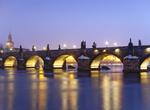
Cross Charles Bridge, Prague, Czechia
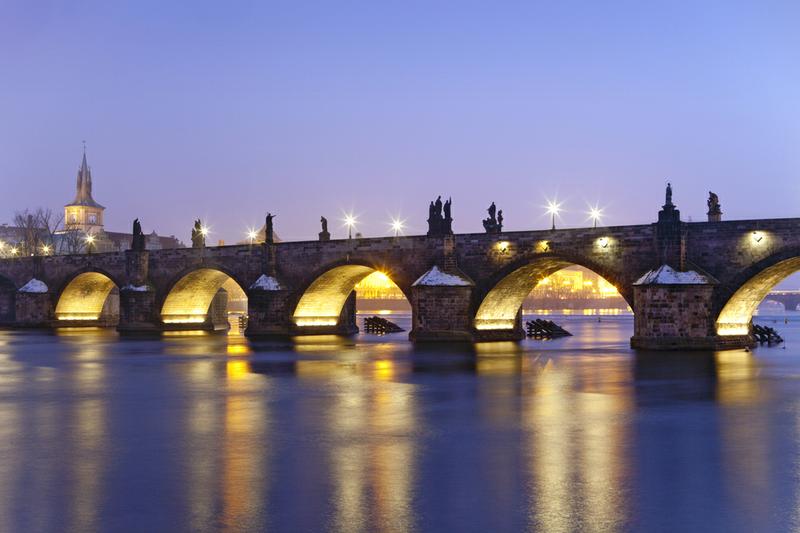 A quick word about the place...Flag as inappropriate ›The Charles Bridge is a famous historic bridge that crosses the Vltava river in Prague, Czech Republic. This cobblestone bridge was built during the reign of Roman Emperor Charles IV in 1357. It spans 1,700 feet and offers some of the best views of the Vltava River. During the day the bridge gets filled with peddlers and tourists, but in the early morning hours the bridge is empty and offers beautiful views of the sunrise. As the only means of crossing the river Vltava (Moldau) until 1841, the Charles Bridge was the most important connection between Prague Castle and the city's Old Town and adjacent areas. This "solid-land" connection made Prague important as a trade route between Eastern and Western Europe. The bridge was originally called the Stone Bridge (Kamenný most) or the Prague Bridge (Pražský most) but has been the "Charles Bridge" since 1870. The bridge is 516 meters long and nearly 10 meters wide...SHOW MORE
 -
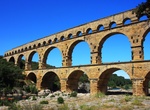
See Pont du Gard, France (UNESCO site)
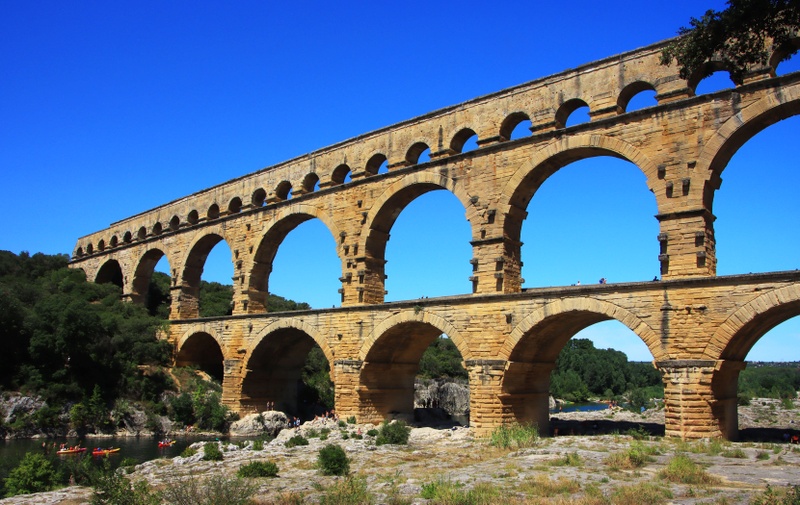 A quick word about the place...Flag as inappropriate ›The Pont du Gard is a notable ancient Roman aqueduct bridge that crosses the Gard River in southern France. It is part of a 50 km (31 mi) long aqueduct that runs between Uzès and Nîmes in the South of France. It is located in Vers-Pont-du-Gard near Remoulins, in the Gard département. The aqueduct was constructed by the Romans in the 1st century AD and was added to UNESCO's list of World Heritage Sites in 1985. It is the highest of all Roman aqueduct bridges and is the best preserved after the Aqueduct of Segovia. The bridge has three rows of arches, standing 48.8 m (160 ft) high, and formerly carried an estimated 200 million liters(44 million gallons) of water a day to the fountains, baths and homes of the citizens of Nîmes. The aqueduct descends in height by only 17 m (56 ft) over its entire length, indicative of the great precision that Roman engineers were able to achieve using only simple...SHOW MORE
 -
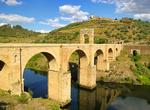
See Alcántara Bridge, Spain
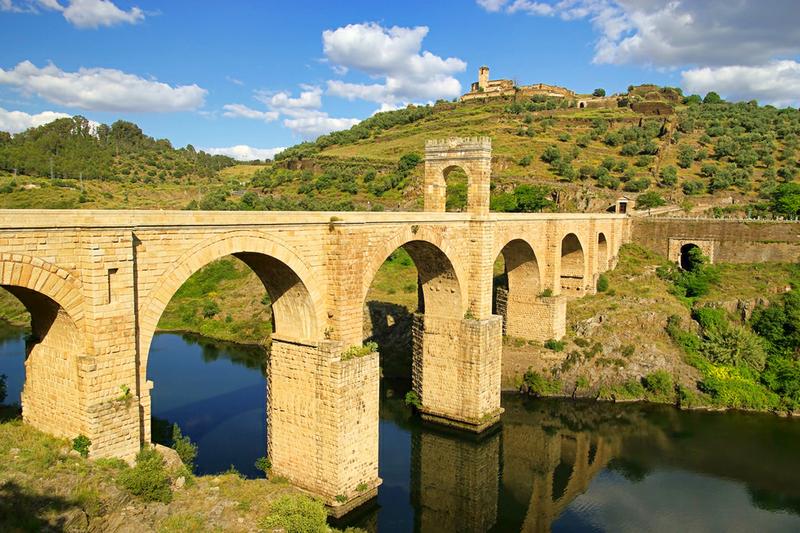 A quick word about the place...Flag as inappropriate ›The Alcántara Bridge (also known as Puente Trajan at Alcantara) is a Roman stone arch bridge built over the Tagus River at Alcántara, Spain between 104 and 106 CE by an order of the Roman Emperor Trajan in 98. It bears the inscription Pontem perpetui mansurum in saecula (I have built a bridge which will last forever) on the archway over the central pier. The Alcántara Bridge has taken more damage from war than from the elements. The Moors destroyed the smallest arch on the left side in 1214. This was rebuilt in 1543 with stone from the original quarries. The second arch on the right side was destroyed by the Spanish to stop the Portuguese, and was repaired in 1762 by Charles III, only to be blown up again in 1809 to stop the French. Temporary repairs made in 1819 were replaced in 1860 with mortared masonry.SHOW MORE
 -
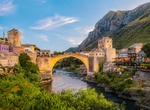
Walk across Stari Most Bridge (Old Stone Bridge), Mostar, Bosnia and H...
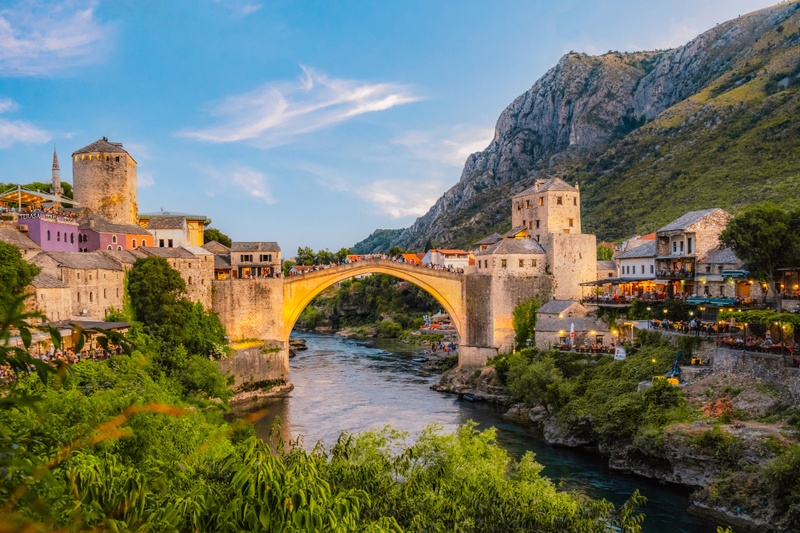 A quick word about the place...Flag as inappropriate ›Stari Most is a 16th century Ottoman bridge in the city of Mostar, Bosnia and Herzegovina that crosses the river Neretva and connects two parts of the city. The Old Bridge stood for 427 years, until it was destroyed on November 9, 1993 during the Croat-Bosniak War. Subsequently, a project was set in motion to reconstruct it, and the rebuilt bridge opened on July 23, 2004. The Stari Most is hump-backed, 4 metres (13 ft 1 in) wide and 30 metres (98 ft 5 in) long, and dominates the river from a height of 24 m (78 ft 9 in). Two fortified towers protect it: the Helebija tower on the northeast and the Tara tower on the southwest, called "the bridge keepers" (natively mostari). The arch of the bridge was made of local stone known as tenelija. The shape of the arch is the result of numerous irregularities produced by the deformation of the intrados (the inner line of the arch). The most accurate description would be that it is a...SHOW MORE
 -
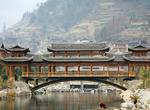
Walk across Chengyang Bridge, China
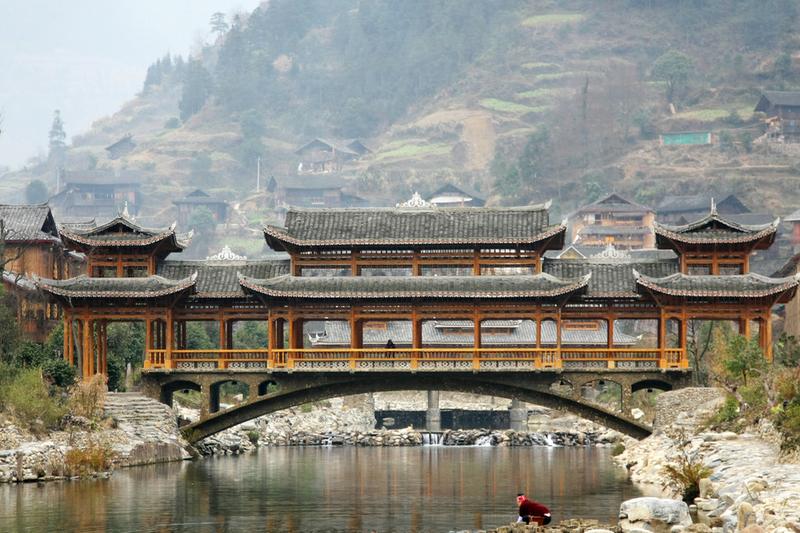 A quick word about the place...Flag as inappropriate ›The Chengyang Bridge or Chengyang Wind-Rain Bridge is a famous bridge in Sanjiang County , Liuzhou, Guangxi Province (very north of Guangzi), People's Republic of China. It's in Dong Minority Region. It's a special covered bridge and one of Fengyu Bridges (a special bridge type in local Dong Minority Region). It was completed in 1916. The bridge is a perfect combination of painting, bridge, corridor, veranda and Chinese pavilion. It has two platforms (at the two ends of the bridge), 3 piers, and 4 spans, 5 pavilions, 19 verandas, and three floors. The piers are made of stone, the upper structures are mainly wooden, and the roofs are covered with tiles. The bridge has wooden handrails on both sides. The bridge has a total length of 64.4 meters, and its corridor has a width of 3.4 meters. The net height above the river is about 10 meters. The bridge is located in Chengyang, and links between two big villages. Every day, the...SHOW MORE
 -
Walk across Kapellbrücke (Chapel Bridge), Switzerland
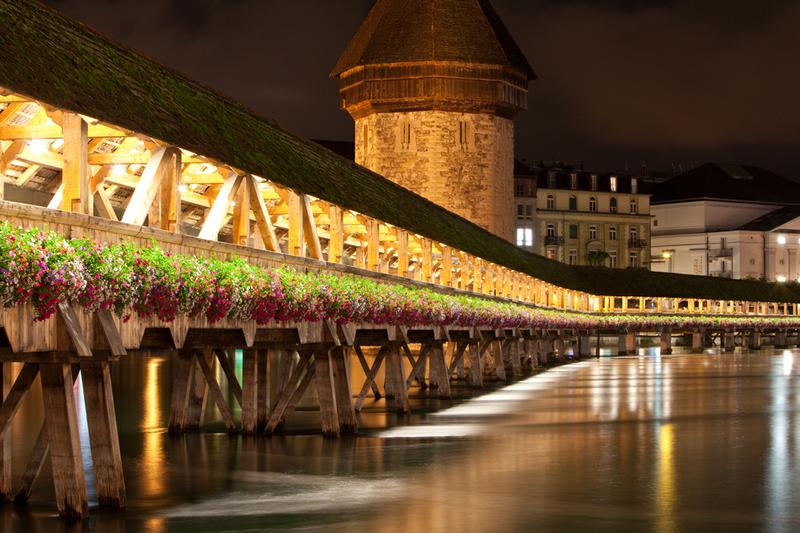 A quick word about the place...Flag as inappropriate ›The Chapel Bridge ("Kapellbrücke" in German) is a 204 m (670 ft) long bridge crossing the Reuss River in the city of Lucerne in Switzerland. It is the oldest wooden covered bridge in Europe, and one of Switzerland's main tourist attractions. The covered bridge, constructed in 1333, was designed to help protect the city of Lucerne from attacks. Inside the bridge are a series of paintings from the 17th century, depicting events from Luzerne's history. Much of the bridge, and the majority of these paintings, were destroyed in a 1993 fire, though it was quickly rebuilt. Some of the blackened structure of the bridge still remains today, evident from the newly rebuilt parts of the bridge. Adjoining the bridge is the 140 feet (43 m) tall Wasserturm (Water Tower), an octagonal tower made from brick, which has served as a prison, torture chamber, watchtower and treasury. Today the tower, which is part of the city wall, is used as...SHOW MORE
 -
Walk across Bridges of Isfahan (Si-o-se Pol & Khaju), Iran
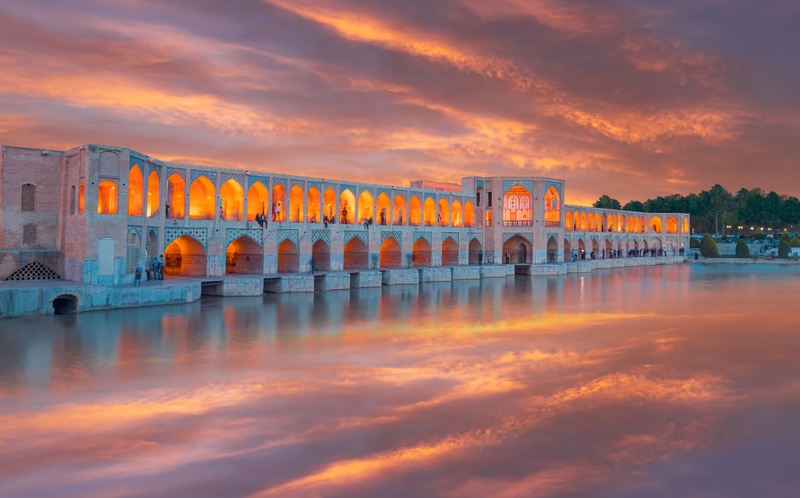 A quick word about the place...Flag as inappropriate ›The Zayande River starts in the Zagros Mountains, flows from west to east through the heart of Esfahan, and dries up in the Kavir desert. The bridges over the river include some of the nicest architecture in Esfahan. The oldest bridge is the "Pol-e Shahrestan," which was probably built in the 12th century during the Seljuk period. Further upstream is the "Pol-e Khaju," which was built by Shah Abbas II in 1650. It is 123 metres long with 24 arches, and it also serves as a sluice gate. The next bridge is the "Pol-e Jubi." It was originally built as an aqueduct to supply the palace gardens on the north bank of the river. Further upstream again is the Si-o-Seh Pol or bridge of 33 arches. Built during the rule of Shah Abbas the Great, it linked Esfahan with the Armenian suburb of Jolfa. It is by far the longest bridge in Esfahan at 295 m (967.85 ft). Si-o-se Pol, which means 33 Bridge or the Bridge of 33 Arches), also called the...SHOW MORE
Check out other Dreams from this list