Give us feedback!


 See all

Our philosophy is simple. We want to encourage you to dream. BIG! Then we help you plan your trip, get the most out of it while you're traveling and help you share your experience with friends.
Join Now It's FREE
Dream Packages
Duration: 2 days
Price: $242.00
Price: $242.00
Duration: 14 hours
Price: $450.00
Price: $450.00
Duration: 8 hours
Price: $141.03
Price: $141.03
Duration: 14 hours
Price: $180.00
Price: $180.00
Dreams Still To Do
Checked-Off Dreams
Dreams Still To Do
Checked-Off Dreams
Advertisement
Explore Ancient Art
-
Visit Cave of Altamira & Paleolithic Cave Art of Northern Spain, Spain (UNESCO site)
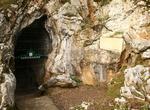
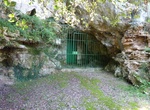
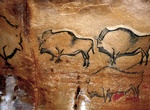
Cave of Altamira and Paleolithic Cave Art of Northern Spain is the name under which are grouped 18 caves located in different regions of northern Spain to represent the apogee of Paleolithic cave art developed in Europe between 35,000 and 11,000 D.C. Chief among these caves is the Cave of Altamira, located within the town of Santillana del Mar in Cantabria. It remains... -
Visit Cave of Altxerri, Gipuzkoa, Spain (UNESCO site)
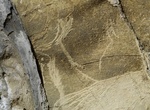
The Cave of Altxerri (in Spanish "Cueva de Altxerri", and in Basque Altxerriko leizea or Altxerriko koba) is located in the municipality of Aya (Gipuzkoa) in the Basque Country (Spain). The original grotto preserves rock paintings and engravings which have been dated from the end of the Upper Magdalenian period, within the Upper Paleolithic; the pictures situated in a... -
Visit Cave of Swimmers, New Valley Governorate, Egypt
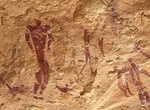
The Cave of Swimmers is a cave with ancient rock art in the mountainous Gilf Kebir plateau of the Libyan Desert section of the Sahara. It is located in the New Valley Governorate of southwest Egypt, near the border with Libya. The cave and rock art was discovered in October 1933 by the Hungarian explorer László Almásy. It contains Neolithic pictog... -
Explore Cavernas do Peruaçu National Park, Minas Gerais, Brazil (UNESCO site)
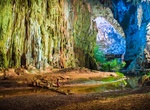
Cavernas do Peruaçu National Park (Portuguese: Parque Nacional Cavernas do Peruaçu) is a national park in the state of Minas Gerais, Brazil. It is noted for its large limestone caves. In 2025, the park was designated as a World Heritage Site by UNESCO. The Cavernas do Peruaçu National Park, with an area of 56,448 hectares (139,490 acres), was crea... -
Visit Caves del Monte Castillo, Spain (UNESCO site)
The Caves of Monte Castillo, located in the Cantabrian town of Puente Viesgo, contain one of the most important Paleolithic sites in the region. The complex of karstic caves is on the slopes of Monte Castillo, a hill south of Puente Viesgo, with an elevation of 354 m. It includes four out of the eighteen caves listed as World Heritage of UNESCO since July 2008 under t... -
See Caves in the Maros-Pangkep Karst, Indonesia
The caves in the Maros-Pangkep karst are situated in South Sulawesi, Indonesia, and contain paintings from the Paleolithic considered to be the earliest figurative art in the world, dated to at least 43,900 years ago. The caves in the Maros-Pangkep karst are a cave complex, where prehistoric finds were made. The whole complex is also called "Prehistoric place Leang-Le... -
Visit Caves of Asturias, Spain (UNESCO sites)
Five caves are located in Asturias, all situated in the Comarca de Oriente: Cave of Tito Bustillo in Ribadesella Cave of Candamo in Candamu Cave of La Covaciella in Cabrales Cave of Llonín in Peñamellera Alta Cave del Pindal in Ribadedeva In 2008 the World Heritage Site included these caves as they have prominent signs of Paleolithic rock art. -
Hike Cave Springs Trail to Cowboy Camp, Canyonlands National Park, Utah
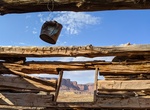
Cave Springs Trail is a short 0.6 miles (1 km) hike in Canyonlands National Park. The hike goes to an old cowboy camp tucked into the rock overhangs and prehistoric petroglyphs. Two ladders must be climbed. One of the park's few year-round water sources. Entering, touching, or climbing on archeological sites is strictly prohibited. View structures from a distance to p... -
Off-road to Cedar Canyon Petroglyphs, Wyoming
The Cedar Canyon Petroglyphs are dated back more than 200 years, with some of the petroglyphs unique to this location, including several panels that include depictions of plants and markings referred to as calendars. Cedar Canyon is south of Fifteenmile Knoll and southwest of Pine Canyon. Cedar Canyon has an elevation of 6,542 feet. The panels are a 250 ft uphill wal... -
Explore Cederberg Wilderness Area, South Africa (UNESCO site)
The Cederberg mountains and nature reserve are located near Clanwilliam, approximately 300 km north of Cape Town, South Africa. The mountain range is named after the endangered Clanwilliam Cedar (Widdringtonia cedarbergensis), which is a tree endemic to the area. The mountains are noted for dramatic rock formations and San rock art. The Cederberg Wilderness Area is ad... -
See Chalfant Valley Petroglyphs, Volcanic Tablelands, Bishop, California
Chalfant Valley Petroglyphs is located in Volcanic Tablelands north of Bishop, California. -
See Chidago Canyon Petroglyphs, California
The Volcanic Tableland offers exceptional bouldering opportunities, because of its unique geologic features formed by the cataclysmic volcanic eruption of the Long Valley Caldera 750,000 y.a. which left a highly dissected landscape of Bishop Tuff. Through time, this once barren tableau has evolved to support a unique and fragile environment that takes a keen eye and t... -
Visit Chief Shakes Tribal House, Wrangell, Alaska
The Tribal House, located on Shakes Island in the middle of the Reliance Harbor is not always opened, but the island is accessible at all times for visitors to walk around. Totems from the island that will be recarved in the coming years are laying down behind the house, removed from their upright positions due to safety issues. One can get very close to the totems wh... -
Hike Chimneys Trail, Big Bend National Park, Texas
A moderate hike (due to distance) to a series of prominent volcanic dike formations. The "chimneys" have always been an important landmark, and Indian rock art marks the base of these high pinnacles. The chimneys are 2.4 miles away and easily seen from the trailhead. The trail beyond the chimneys continues west another 4.6 miles and ends on the Old Maverick Road near... -
Visit Chugai' Pictograph Site, Rota Island, Mariana Islands
The Chugai' Pictograph Site is a prehistoric rock art site on the island of Rota in the Northern Mariana Islands. The rock art is located in a limestone cave on the southeastern side of the island, in the I'Chenchon Bird Sanctuary. It consists of a large panel, 185 feet (56 m) in length, of about 90 painted drawings, believed to be of late pre-contact origin. The...
Price: $116.91