Give us feedback!


 See all
Our philosophy is simple. We want to encourage you to dream. BIG! Then we help you plan your trip, get the most out of it while you're traveling and help you share your experience with friends.
Join Now It's FREE
Dream Packages
Duration: 2 days
Price: $398.24
Price: $398.24
Duration: 2 days
Price: $337.00
Price: $337.00
Duration: 3 days
Price: $618.62
Price: $618.62
Duration: 8 days
Price: $1507.70
Price: $1507.70
Dreams Still To Do
Checked-Off Dreams
Dreams Still To Do
Checked-Off Dreams
Advertisement
Explore Ancient Places & Ruins
-
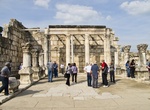
Visit Capernaum (Kfar Naḥūm National Park), Sea of Galilee, Israel
Capernaum was a fishing village established during the time of the Hasmoneans, located on the northern shore of the Sea of Galilee. It had a population of about 1,500. Archaeological excavations have revealed two ancient synagogues built one over the other. A house turned into a church by the Byzantines is said to be the home of Saint Peter. The village was inhabited ... -
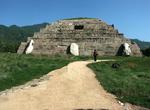
See Capital Cities and Tombs of the Ancient Koguryo (Goguryeo) Kingdom, China (UNESCO sites)
Capital Cities and Tombs of the Ancient Koguryo Kingdom is a World Heritage Site located in the People's Republic of China. The designated area of the site is located in and around Ji'an, Jilin. The site was designated as a cultural World Heritage Site in 2004, qualifying as such under the first five of the six criteria for cultural heritage sites. The site contains t... -
Visit Caprock Ruin, Cedar Mesa, Utah
This granary sits under a huge rock on Cedar Mesa, Utah. Caprock is only one of the many ruins in and around Slickhorn Canyon. The Caprock Ruin is located near Point Lookout at the end of a sandstone ridge that juts out into the upper 6th Fork of Slickhorn Canyon in Cedar Mesa, Utah. The ruins can be reached relatively easily then the more difficult hikes in the inner... -
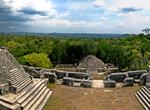
Visit Caracol, Belize
Caracol is the name given to a large ancient Maya archaeological site, located in what is now the Cayo District of Belize. It is situated approximately 40 kilometres south of Xunantunich and the town of San Ignacio Cayo, and 15 kilometers away from the Macal River. It rests on the Vaca Plateau at an elevation of 500 meters above sea-level, in the foothills of the Maya... -
Visit Caral, Peru (UNESCO site)
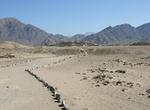
Caral is a large settlement in the Supe Valley, near Supe, Barranca province, Peru, some 200 km north of Lima. Caral is the most ancient city of the Americas, and is a well-studied site of the Caral civilization or Norte Chico civilization. Caral was inhabited between roughly 2600 BC and 2000 BC, enclosing an area of more than 60 hectares. Caral was described by its e... -
See Carnac Stones, France
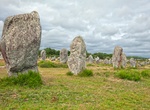
The Carnac stones are an exceptionally dense collection of megalithic sites around the French village of Carnac, in Brittany, consisting of alignments, dolmens, tumuli and single menhirs. The more than 3,000 prehistoric standing stones were hewn from local rock and erected by the pre-Celtic people of Brittany, and are the largest such collection in the world. Local tr... -
Visit Carrickabraghy Castle, Ireland
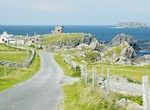
Carrickabraghy (Carraig Brachai) Castle stands on a rocky outcrop at the north-western extremity of The Isle of Doagh, at the head of Pollan Bay, in the parish of Clonmany, in the Barony (Ireland) of Inishowen, County Donegal, Republic of Ireland. Known locally as 'The Castles', it is a place of captivating beauty, steeped in history with tales of bravery and battles,... -
Visit Carrigafoyle Castle, Ireland
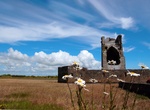
Carrigafoyle Castle - built by Conor Liath O'Connor-Kerry in the 1490s and considered one of the strongest of Irish fortresses - was a large tower house, of the type particularly common across the north of the province of Munster. It stood on a rock in a small bay off the Shannon estuary, and its name is an anglicisation of the Irish, Carraig an Phoill ("rock of the h... -
Visit Carthage, Tunisia (UNESCO site)
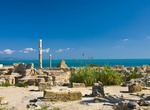
Carthage is a major urban centre that has existed for nearly 3,000 years on the Gulf of Tunis, developing from a Phoenician colony of the 1st millennium BC which has given place to the current suburb outside Tunis, Tunisia, with a population (2004 Census) of 20,715. The first civilization that developed within the city's sphere of influence is referred to as Punic (a ... -
Visit Casa Chiquita, Chaco Culture National Historical Park, New Mexico
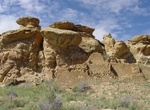
Casa Chiquita ("Small House") is a Chacoan Anasazi great house and archaeological site located in Chaco Canyon, northwestern New Mexico, United States. Located near the old north entrance to the Canyon, its layout features a smaller profile with a square block of rooms surrounding a central elevated round room. It also lacked the open plazas and separate kivas of its ... -
Visit Casa Grande Ruins National Monument, Arizona
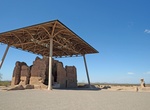
Casa Grande Ruins National Monument, in Coolidge, Arizona, just northeast of the city of Casa Grande, preserves a group of Ancient Pueblo Peoples Hohokam structures of the Pueblo III and Pueblo IV Eras. The national monument consists of the ruins of multiple structures surrounded by a compound wall constructed by the ancient people of theHohokam period, who farmed the... -
See Casa Rinconada, Chaco Culture National Historical Park, New Mexico
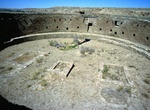
Casa Rinconada is an Ancestral Puebloan archaeological site located atop a ridge adjacent to a small rincon across from Pueblo Bonito in Chaco Culture National Historical Park, northwestern New Mexico, United States. It is an isolated great kiva (out of four in Chaco Canyon) with all the typical elements of great kivas: a masonry firebox, an inner bench, four roof-sup... -
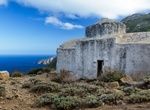
Visit Casa Romana, Isola di Marettimo, Sicily, Italy
Isola di Marettimo was an important observation point during Roman times, hence the Casa Romana, where it was easy to observe passing maritime traffic. The sea routes between Italy and North Africa and Italy and Spain (via Sardinia) would pass Marettimo. -
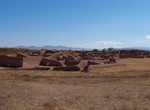
Visit Casas Grandes (Paquimé), Mexico (UNESCO site)
Casas Grandes (Spanish for Great Houses; also known as Paquimé) is the contemporary name given to a pre-Columbian archaeological zone and its central site, located in northwestern Mexico in the modern-day Mexican state of Chihuahua. Regarded as one of the most significant archaeological zones in the northwestern region, Casas Grandes is centered in a wide, fert... -
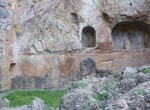
Visit Castalian Spring, Delphi, Greece
The Castalian Spring, in the ravine between the Phaedriades at Delphi, is where all visitors to Delphi — the contestants in the Pythian Games, and especially pilgrims who came to consult the Delphic Oracle — stopped to wash themselves and quench their thirst; it is also here that the Pythia and the priests cleansed themselves before the oracle-giving proce...

Price: $267.70