Give us feedback!


 See all
Our philosophy is simple. We want to encourage you to dream. BIG! Then we help you plan your trip, get the most out of it while you're traveling and help you share your experience with friends.
Join Now It's FREE
Dream Packages
Duration: 3 days
Price: $408.59
Price: $408.59
Duration: 4 days
Price: $663.61
Price: $663.61
Duration: 10 hours
Price: $180.27
Price: $180.27
Duration: 4 days
Price: $1033.34
Price: $1033.34
Dreams Still To Do
Checked-Off Dreams
Dreams Still To Do
Checked-Off Dreams
Advertisement
Explore Ancient Places & Ruins
-
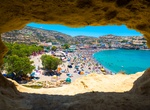
See Matala Caves & Beach, Crete, Greece
Matala is a village located 75 km south-west of Heraklion, Crete. The artificial caves in the cliff of the Matala bay were created in the Neolithic Age. Matala was the port of Phaistos during the Minoan period. In the year 220 BC. Matala was occupied by the Gortynians and during the Roman period Matala became the port of Gortys. In the 1st and 2nd centuries the caves ... -
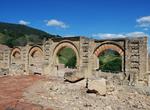
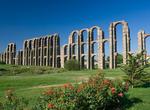
Visit Medina Azahara, Spain (UNESCO Site)
Medina Azahara is the ruins of a vast, fortified Arab Muslim medieval palace-city built by Abd-ar-Rahman III al-Nasir, (912–961) Ummayad Caliph of Córdoba, and located on the western outskirts of Córdoba, Spain. It was an Arab Muslim medieval town and the de facto capital of al-Andalus, or Muslim Spain, as the heart of the administration and govern... -
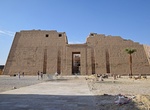
Visit Medinet Habu Temple, Luxor, Egypt
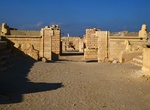
Medinet Habu is the name commonly given to the Mortuary Temple of Ramesses III, an important New Kingdom period structure in the location of the same name on the West Bank of Luxor in Egypt. Aside from its intrinsic size and architectural and artistic importance, the temple is probably best known as the source of inscribed reliefs depicting the advent and defeat of th... -
Visit Medinet Madi, Faiyum, Egypt
Medinet Madi is a site in the southwestern Faiyum region of Egypt with the remains of a Greco-Roman town where a temple of the cobra-goddess Renenutet (a harvest deity) was founded during the reigns of Amenemhat III and Amenemhat IV (1855–1799 BC). It was later expanded and embellished during the Greco-Roman period. In the Middle Kingdom the town was called Dja,... -
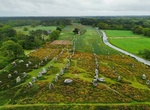
Visit Megaliths of Carnac and of the shores of Morbihan
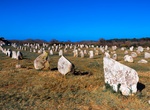
This serial property in Brittany, France, features a dense concentration of megalithic structures built during the Neolithic period (c. 5000–2300 BCE), carefully aligned with the area’s unique geomorphology. These monumental stone constructions—arranged in relation to one another and to natural features like terrain and waterways—reflect a soph... -
See Megalo Livadi Bridge Ruins, Serifos Island, Greece
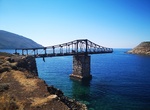
In the 20th century, the mines of Serifos were exploited by the mining company "Société des mines de Seriphos-Spiliazeza," under the direction of German mineralogist A. Grohmann (died 1905). In the summer of 1916, in response to low pay, excessive working hours, poor safety conditions, and the company's refusal to rehire workers who had been drafted into... -
Visit Megiddo National Park, Israel (UNESCO site)
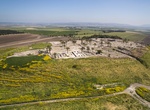
Megiddo is a hill in modern Israel near the Kibbutz of Megiddo, known for its historical, geographical, and theological importance especially under its Greek name Armageddon. In 2005, the remains of Megiddo, Hazor and Beer Sheba were designated a World Heritage Site by UNESCO as part of the Biblical Tels - Megiddo, Hazor, Beer Sheba. -
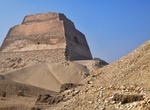
Visit Meidum Pyramid, Egypt
Meidum, Maydum or Maidum is an archaeological site in Lower Egypt. It contains a large pyramid and several mudbrick mastabas. The pyramid was Egypt's first straight-sided one, but it partially collapsed in ancient times. The area is located around 72 kilometres (45 mi) south of modern Cairo. The pyramid at Meidum is thought to be just the second pyramid built aft... -
Visit Melka Kunture and Balchit, Ethiopia (UNESCO Sites)
Located in the Upper Awash Valley in Ethiopia, the serial property is a cluster of prehistoric sites that preserve archaeological and palaeontological records – including footprints – that testify to the area’s occupation by the hominin groups from two million years ago. The sites, situated about 2,000 to 2,200 metres above sea level, yielded Homo er... -
Visit Memphis, Egypt (UNESCO Site)
Memphis was the ancient capital of Aneb-Hetch, the first nome of Lower Egypt. Its ruins are located near the town of Mit Rahina, 20 km (12 mi) south of Cairo. According to legend related by Manetho, the city was founded by the pharaoh Menes. Capital of Egypt during the Old Kingdom, it remained an important city throughout ancient Mediterranean history. It occupied a s... -
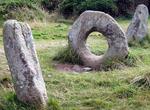
Visit Mên-an-Tol, Cornwall, England
The Mên-an-Tol (also Men an Toll) is a small formation of standing stones near the Madron–Morvah road in Cornwall, United Kingdom. It is about three miles northwest of Madron. It is also known locally as the "Crick Stone". The name Mên-an-Tol in the Cornish Language literally means "the hole stone". It consists of three upright granite stones: a... -
Visit Ménec Alignments (Alignements du Ménec), Carnac, France
Eleven converging rows of menhirs stretching for 1,165 by 100 metres (3,822 by 328 feet). There are what Alexander Thom considered to be the remains of stone circles at either end. According to the tourist office there is a "cromlech containing 71 stone blocks" at the western end and a very ruined cromlech at the eastern end. Th... -
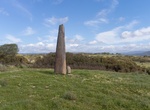
Visit Menhir of Monte Corru Tundu, Villa Sant'Antonio, Oristano, Sardinia, Italy
The Menhir of Monte Corru Tundu is a tall, elongated stone monument near the town of Villa Sant’Antonio on Sardinia. It stands approximately 2.7 meters high. In 2025, the site was designated as a World Heritage Site by UNESCO. -
Visit Mérida, Spain (UNESCO site)
The Archaeological Ensemble of Mérida is one of the largest and most extensive archaeological sites in Spain. Mainly of Emerita Augusta, ancient capital of Lusitania (current city of Mérida). It was declared a World Heritage Site by UNESCO in 1993. The theatre was built from 15 to 16 BC and dedicated by the consul Marcus Vipsanius Agrippa. It was renovat... -
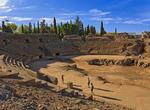
See Mérida Amphitheatre, Spain (UNESCO site)
The Amphitheatre of Mérida is a Roman amphitheatre in the Roman colonia of Emerita Augusta –present-day Mérida, Spain–, capital of the Roman province of Lusitania. It was completed in the year 8 BC, and is currently in ruins. It was used for gladiatorial fights and combats between beasts or men and beasts during ancient Rome. The city itself, Eme...
Price: $520.24