Give us feedback!
Our philosophy is simple. We want to encourage you to dream. BIG! Then we help you plan your trip, get the most out of it while you're traveling and help you share your experience with friends.
Join Now It's FREE
Dreams Still To Do
Checked-Off Dreams
Dreams Still To Do
Checked-Off Dreams
Advertisement
Explore Landmarks (Natural)
-
Explore General Grant Grove, Kings Canyon National Park, California
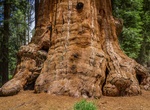
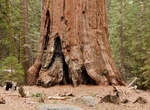
General Grant Grove, a section of the greater Kings Canyon National Park, was established by the US Congress in 1890 and is located in Fresno County, California. The primary attraction of General Grant Grove is the giant sequoia trees that populate the grove. General Grant Grove's most well-known tree is the General Grant Tree, which is 267 feet tall and the third lar... -
Hike General Grant Tree Trail, Kings Canyon National Park, California
The General Grant tree is the largest giant sequoia in the General Grant Grove section of Kings Canyon National Park in California and the second largest tree in the world. Visit the historic Gamlin Cabin and the Fallen Monarch along this 1/3 mile (.5 km) paved trail. North and west of the Kings Canyon Visitor Center 1 mile (1.6 km). The General Grant is now the undis... -
See General Sherman Tree, Sequoia National Park, California
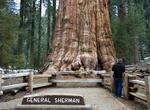
The General Sherman is a giant sequoia tree located in the Giant Forest of Sequoia National Park in California. By volume, it is the largest known living single stem tree on Earth. The General Sherman Tree is neither the tallest known living tree on Earth (that distinction belongs to the Hyperion tree, a Coast redwood), nor is it the widest (both the largest cypress a... -
See Generals' Highway Stone Bridges, Sequoia National Park, California
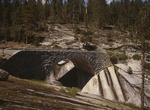
The Generals' Highway Stone Bridges, built in 1930, are part of the Generals' Highway from the General Grant Grove of giant sequoias in Kings Canyon National Park (then called General Grant National Park) through Sequoia National Park. One bridge spans the Marble Fork of the Kaweah River in a wooded setting, while the other, similar bridge spans Clover Creek in a bare... -
Explore Geoda de Pulpí (Pulpí Geode), Pulpí, Spain
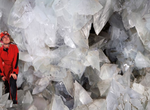
The Pulpí Geode (Spanish: Geoda de Pulpí) is a giant geode found in Spain near the town of Pulpí (Province of Almería) in December 1999, by Javier Garcia-Guinea of the Grupo Mineralogista de Madrid. This geode is one of the largest documented geodes in the world to date. It occupies a space of 10.7 cubic metres (380 cu ft), measur... -
See Geologist's Cabin in Striped Butte Valley, Death Valley National Park, California
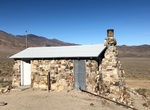
The Geologist Cabin in Striped Butte Valley. -
Visit Geo of Ork, Shapinsay Island, Orkney Islands, Scotland
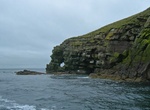
The Geo of Ork is a narrow and deep cleft in the cliff face of the northernmost point on the island of Shapinsay in the Orkney islands. The term geo or gya derives from Old Norse gjá. This landform was created by the wave driven erosion of cliffs along faults or bedding planes in the rock. A well-preserved prehistoric broch lies slightly to the south of Geo of ... -
See Gerakas Beach Rocks, Zakynthos, Greece
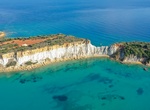
Gerakas Beach Rocks are located off Gerakas Beach on the island of Zakynthos, Greece. -
See Gerðuberg Cliffs, Snæfellsnes, Iceland
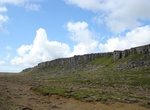
Gerðuberg is a cliff of dolerite, a coarse-grained basalt rock, located on western peninsula Snæfellsnes and on the western edge of the Hnappadalur valley, 46 km in the north of the town of Borgarnes and 115 km to Reykjavík. Gerðuberg was formed from flowing basaltic lava, cooled by the sea, solidified in very evenly running columns. These are bet... -
Explore Getbol, Korean Tidal Flats, South Korea (UNESCO Site)
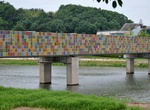
Situated in the eastern Yellow Sea on the southwestern and southern coast of the Republic of Korea, the site comprises four component parts: Seocheon Getbol, Gochang Getbol, Shinan Getbol and Boseong-Suncheon Getbol. The site exhibits a complex combination of geological, oceanographic and climatologic conditions that have led to the development of coastal diverse sedi... -
Visit Geysers del Tatio (El Tatio Geyser), Chile
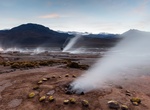
El Tatio is a geyser field located within the Andes Mountains of northern Chile at 4,200 meters above mean sea level. Contrary to some reports, it is not the highest-elevation geyser field in the world. Puchuldiza Geyser Field, Chile, and possibly several other fields are higher in elevation. Tourists often visit the geysers while touring the nearby Atacama Desert and... -
See Geysir (The Great Geysir), Iceland
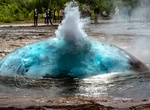
Geysir, sometimes known as The Great Geysir or Strokkur Geyser, is a geyser in southwestern Iceland. It was the first geyser described in a printed source and the first known to modern Europeans. The English word geyser (a spouting hot spring) derives from Geysir. The name Geysir itself is derived from the Icelandic verbgeysa, "to gush", the verb from Old Norse. Geysi... -
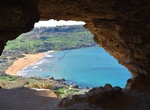
Visit Għar Ħasan Cave (Cave of Darkness), Malta
Għar Dalam ("Cave of Darkness") is a prehistorical cul-de-sac (a cave with only one entrance) located in the outskirts of Birżebbuġa, Malta containing the bone remains of animals that were stranded and subsequently became extinct in Malta at the end of the Last Glacial Maximum. It has lent its name to the Għar Dalam phase in Maltese prehistory. Dwarf elephant, hippopo... -
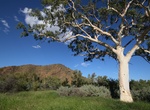
See Ghost Gum Tree, Trephina Gorge, NT, Australia
See the oldest and biggest ghost gum in the Northern Territory. Located just outside of Trephina Gorge park. -
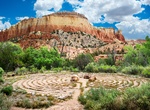
Visit Ghost Ranch, Rio Arriba County, New Mexico
Ghost Ranch is a 21,000-acre (85 km2) retreat and education center located close to the village of Abiquiú in Rio Arriba County in north central New Mexico, United States. It was the home and studio of Georgia O'Keeffe, as well as the subject of many of her paintings. The conference center and lodgings at Ghost Ranch are run by the Presbyterian Church but open ...