Give us feedback!
Our philosophy is simple. We want to encourage you to dream. BIG! Then we help you plan your trip, get the most out of it while you're traveling and help you share your experience with friends.
Join Now It's FREE
Related Categories
Dreams Still To Do
Checked-Off Dreams
Dreams Still To Do
Checked-Off Dreams
Advertisement
Explore Main UNESCO Sites
-
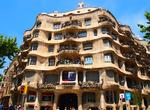
See Casa Milà (La Pedrera), Barcelona, Spain (UNESCO site)
Casa Milà (better known as La Pedrera, meaning the 'The Quarry'), is a building designed by the Catalan architect Antoni Gaudí and built during the years 1905–1910, being considered officially completed in 1912. It is located at 92, Passeig de Gràcia (passeig is Catalan for promenade) in the Eixample district of Barcelona, Catalonia, Spain. ... -
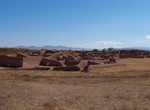
Visit Casas Grandes (Paquimé), Mexico (UNESCO site)
Casas Grandes (Spanish for Great Houses; also known as Paquimé) is the contemporary name given to a pre-Columbian archaeological zone and its central site, located in northwestern Mexico in the modern-day Mexican state of Chihuahua. Regarded as one of the most significant archaeological zones in the northwestern region, Casas Grandes is centered in a wide, fert... -
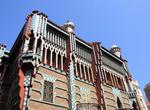
Visit Casa Vicens, Barcelona, Spain (UNESCO site)
Casa Vicens is a family residence in Barcelona (Catalonia, Spain), designed by Antoni Gaudí and built for industrialist Manuel Vicens. It was Gaudí's first important work. It was added to the UNESCO World Heritage Site "Works of Antoni Gaudí" in 2005. It was built in the period 1883-1889 and is located at Carrer de les Carolines 24, in the Gr&agra... -
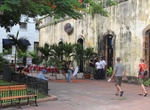
Visit Casco Viejo, Panama (UNESCO site)
Casco Viejo (Spanish for Old Town), also known as Casco Antiguo or San Felipe, is the historic district of Panama City. Completed and settled in 1673, it was built following the near-total destruction of the original Panamá city, Panamá Viejo in 1671, when the latter was attacked by pirates. It was designated a World Heritage Site in 1997. Panama city wa... -
Explore Caspian Hyrcanian Forests, Iran (UNESCO site)
The Caspian Hyrcanian Mixed Forests ecoregion, in the temperate broadleaf and mixed forests biome, is an area of lush lowland and montane forests covering about 55,000 square kilometres (21,000 sq mi) near the southern shores of the Caspian Sea of Iran and Azerbaijan. The forest is named after the ancient region of Hyrcania. On 5 July 2019, the Hyrcanian Forests were ... -
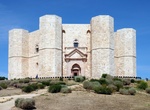
See Castel del Monte, Italy (UNESCO site)
Castel del Monte (Castle of the Mount) is a 13th-century castle situated in Andria in the Apulia region of southeast Italy. It was built by the Holy Roman Emperor Frederick II some time between 1240 and 1250; it has been despoiled of its interior marbles and furnishings in subsequent centuries. It has neither a moat nor a drawbridge and might in fact never have been i... -
See Castelseprio, Italy (UNESCO Site)
Castelseprio was the site of a Roman fort in antiquity, and a significant Lombard town in the early Middle Ages, before being destroyed and abandoned in 1287. It is today preserved as an archaeological park in the modern comune of Castelseprio, near the modern village of the same name. It is in the north of Italy, in the Province of Varese, about 50 km northwest of Mi... -
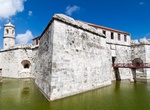
Visit Castillo de la Real Fuerza, Havana, Cuba (UNESCO site)
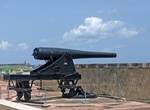
The Castillo de la Real Fuerza (Castle of the Royal Force) is a fortress on the western side of the harbour in Havana, Cuba, set back from the entrance, and bordering the Plaza de Armas. Originally built to defend against attack by pirates, it suffered from a poor strategic position too far inside the bay. The fortress is considered to be the oldest stone fortress in ... -
Visit Castillo del Morro, Havana, Cuba (UNESCO site)
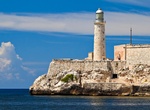
The Castillo de San Pedro de la Roca (also known by the less formal title of Castillo del Morro or as San Pedro de la Roca Castle) is a fortress on the coast of the Cuban city of Santiago de Cuba. About 6 miles (10 km) southwest of the city centre, it overlooks the bay. It was designed in 1637 by Giovanni Battista Antonelli (also known as Juan Battista Antonelli), ... -
Visit Castillo de San Cristóbal, Puerto Rico (UNESCO site)
The Castillo de San Cristóbal is a Spanish fort in San Juan, Puerto Rico. It was built by Spain to protect against land based attacks on the city of San Juan. It is part of San Juan National Historic Site. Castillo de San Cristóbal is the largest fortification built by the Spanish in the New World. When it was finished in 1783, it covered about 27 acres ... -
Visit Castillo San Felipe del Morro, San Juan, Puerto Rico (UNESCO Site)
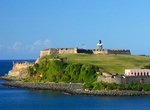
Castillo San Felipe del Morro also known as Fort San Felipe del Morro or Morro Castle, is a 16th-century citadel located in San Juan, Puerto Rico. Lies on the northwestern-most point of the islet of San Juan, Puerto Rico. Named in honor of King Philip II of Spain, the fortification, also referred to as el Morro orpromontory, was designed to guard the entrance to the S... -
Visit Castle of Grinzane Cavour, Piedmont, Italy (UNESCO Site)
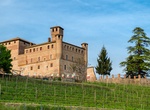
The Castle of Grinzane Cavour is a fortification in the comune of Grinzane Cavour, Piedmont, northern Italy. Mentions of the castle's early history are extremely scarce, and its origins have been variously assigned to the 13th century or to around 1350. The castle includes a large tower, which is thought to be the most ancient part of the construction, while the rest ... -
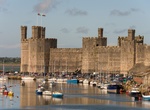
Visit Castles and Town Walls of King Edward in Gwynedd, Wales (UNESCO Site)
The Castles and Town Walls of King Edward in Gwynedd is a UNESCO-designated World Heritage Site located in Gwynedd, Wales. It includes the castles of Beaumaris and Harlech and the castles and town walls of Caernarfon and Conwy. UNESCO considers the sites to be the "finest examples of late 13th century and early 14th century military architecture in Europe". The fortif... -
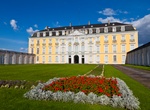
See Castles of Augustusburg and Falkenlust at Brühl, Germany (UNESCO site)
The Augustusburg and Falkenlust palaces in Brühl, North Rhine-Westphalia, Germany have been listed as a UNESCO cultural World Heritage Site since 1984. They are connected by the spacious gardens and trees of the Schlosspark. The palaces were built at the beginning of the 18th century by the Archbishop-Elector of Cologne, Clemens August of Bavaria (1700&ndash... -
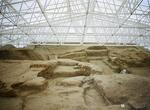
Visit Çatalhöyük, Turkey (UNESCO site)
Çatalhöyük was a very large Neolithic and Chalcolithic settlement in southern Anatolia, which existed from approximately 7500 BCE to 5700 BCE. It is the largest and best-preserved Neolithic site found to date. In July 2012, it was inscribed as a UNESCO World Heritage Site. Çatalhöyük is located overlooking wheat fields in the Konya Pl...