Give us feedback!
Our philosophy is simple. We want to encourage you to dream. BIG! Then we help you plan your trip, get the most out of it while you're traveling and help you share your experience with friends.
Join Now It's FREE
Related Categories
Dreams Still To Do
Checked-Off Dreams
Dreams Still To Do
Checked-Off Dreams
Advertisement
Explore Main UNESCO Sites
-
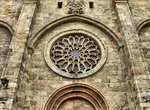
Visit Catedral de Mondoñedo, Spain (UNESCO site)
Mondoñedo is a small town and municipality in the Galician province of Lugo, Spain. Mondoñedo occupies a sheltered valley among the northern outliers of the Cantabrian Mountains. Despite being the core of the region of La Mariña, it is the city with the third biggest population after Foz and Burela. Catedral de Mondoñedo was inscribed to t... -
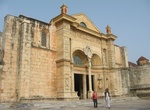
See Catedral de Santa María la Menor, Santo Domingo, Dominican Republic (UNESCO Site)
The Cathedral of Santa María la Menor in the Colonial Zone of Santo Domingo is dedicated to St. Mary of the Incarnation. It is the oldest cathedral in the Americas, begun in 1512 and completed in 1540. The Cathedral once held the titlePrimate of the Americas, it has since been the only Archdiocese to have held this title. The Cathedral was consecrated by Pope J... -
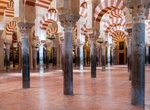
Visit Cathedral–Mosque of Córdoba, Spain (UNESCO site)
The Cathedral and former Great Mosque of Córdoba, in ecclesiastical terms the Catedral de Nuestra Señora de la Asunción (English: Cathedral of Our Lady of the Assumption), and known by the inhabitants of Córdoba as the Mezquita-Catedral (Mosque–Cathedral), is today a World Heritage Site and the cathedral of the Diocese of C&oacut... -
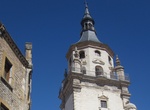
Visit Cathedral of Santa María de Vitoria, Spain (UNESCO site)
The Cathedral of Santa María de Vitoria (Catedral de Santa María de Vitoria, Cathedrale de Vitoria-Gasteiz) is a cathedral located in Vitoria, Spain. It was declaredBien de Interés Culturalin 1931. The Cathedral of Santa María rises majestically in the city's old part. It was built in the late 13th century and all throughout the 14th centur... -
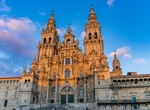
See Cathedral of Santiago de Compostela, Spain (UNESCO site)
Santiago de Compostela Cathedral (Catedral de Santiago de Compostela) is a Roman Catholic cathedral of the archdiocese of Santiago de Compostela in Galicia, Spain. The cathedral is the reputed burial-place of Saint James the Greater, one of the apostles of Jesus Christ. It is the destination of the Way of St. James, a major historical pilgrimage route since the Early ... -
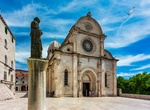
See Cathedral of St James in Šibenik, Croatia (UNESCO site)
The Cathedral of St. James in Šibenik, Croatia is a triple-nave basilica with three apses and a dome (32 m high inside) in the city of Šibenik, Croatia. It is the church of the Catholic Church in Croatia, and the see of the Šibenik diocese. It is also the most important architectural monument of the Renaissance in the entire country. Since 2000, t... -
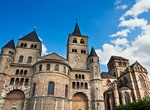
Visit Cathedral of Trier, Rhineland-Palatinate, Germany (UNESCO Site)
The High Cathedral of Saint Peter in Trier is a Roman Catholic church in Trier, Rhineland-Palatinate, Germany. It is the oldest cathedral in the country. The edifice is notable for its extremely long life span under multiple different eras each contributing some elements to its design, including the center of the main chapel being made of Roman brick laid under the di... -
Visit Cave of Altamira & Paleolithic Cave Art of Northern Spain, Spain (UNESCO site)
Cave of Altamira and Paleolithic Cave Art of Northern Spain is the name under which are grouped 18 caves located in different regions of northern Spain to represent the apogee of Paleolithic cave art developed in Europe between 35,000 and 11,000 D.C. Chief among these caves is the Cave of Altamira, located within the town of Santillana del Mar in Cantabria. It remains... -
Explore Cave of the Apocalypse, Patmos Island, Greece (UNESCO sites)
The Cave of the Apocalypse on the Greek island of Patmos is located about halfway up the mountain on the island. Look for the tuen off along the road between the villages of Chora and Skala. This cave is believed to mark the spot where John of Patmos received his visions that he recorded in the Book of Revelation. In 1999, UNESCO declared the cave a joint World Heri... -
Explore Caves of Aggtelek Karst and Slovak Karst, Hungary & Slovakia (UNESCO sites)
The Caves of Aggtelek Karst and Slovak Karst are a series of over 1000 karst caves spread out over a total area of 55,800 ha (138,000 acres) along the border of Hungary and Slovakia. With an exceptional diversity of karst structures and complex cave systems developing from both temperate and tropical processes, the caves and surrounding areas were inscribed as a UNESC... -
Explore Cedar Bay National Park, Queensland, Australia (UNESCO Site)
Cedar Bay is a 56.5 km2 (21.8 sq mi) national park in Queensland, Australia, 1,522 km (946 mi) northwest of Brisbane, 40 km (25 mi) south of Cooktown and accessible only by boat or foot. The park is one of the Wet Tropics World Heritage Area series of national parks, and is a gazetted World Heritage site. It is also known as Mangkal-Mangkalba in the dialect of the loc... -
Explore Cedars of God, Lebanon (UNESCO site)
The Cedars of God is one of the last vestiges of the extensive forests of the Cedars of Lebanon (Cedrus libani) that thrived across Mount Lebanon in ancient times. Their timber was exploited by the Phoenicians, the Assyrians, Babylonians and Persians. The wood was prized by Egyptians for shipbuilding; the Ottoman Empire also used the cedars in railway construction. In... -
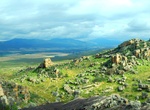
Explore Cederberg Wilderness Area, South Africa (UNESCO site)
The Cederberg mountains and nature reserve are located near Clanwilliam, approximately 300 km north of Cape Town, South Africa. The mountain range is named after the endangered Clanwilliam Cedar (Widdringtonia cedarbergensis), which is a tree endemic to the area. The mountains are noted for dramatic rock formations and San rock art. The Cederberg Wilderness Area is ad... -
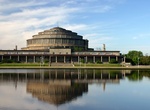
Visit Centennial Hall in Wrocław, Poland (UNESCO site)
The Centennial Hall is a historic building in Wrocław, Poland. It was constructed according to the plans of architect Max Berg in 1911–1913, when the city was part of the German Empire. As an early landmark of reinforced concrete architecture, it was listed as a UNESCO World Heritage Site in 2006. The building is frequently visited by tourists and the local... -
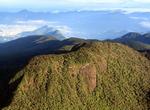
Explore Central Highlands of Sri Lanka (UNESCO site)
Central Highlands of Sri Lanka is the newest World Heritage Site in Sri Lanka. On 31 July 2010, the World Heritage Committee holding its 34th session in Brasília inscribed Central Highlands of Sri Lanka and Papahānaumokuākea of Hawaii as new World Heritage Sites. The site comprises the Peak Wilderness Protected Area, the Horton Plains National Park and the Knuc...